


Protocol Citation: Anastasiya Moiseyenko 2025. Wire hang . protocols.io https://dx.doi.org/10.17504/protocols.io.6qpvrw62plmk/v1
License: This is an open access protocol distributed under the terms of the Creative Commons Attribution License, which permits unrestricted use, distribution, and reproduction in any medium, provided the original author and source are credited
Protocol status: Working
We use this protocol and it's working
Created: July 31, 2025
Last Modified: August 01, 2025
Protocol Integer ID: 223834
Keywords: ASAPCRN, Behavior, Mice, PD, Parkinsons, Neuromotor, Strength, Grip, wire hang test, wire hang assessment the wire hang test, wire hang assessment, neuromotor pathologies in the mouse model, mouse model, mice, mouse, neuromotor pathology, test, motor function, wire hang test for mice, parkinson, wire
Funders Acknowledgements:
Aligning Science Across Parkinson’s
Grant ID: ASAP-000375
Aligning Science Across Parkinson’s
Grant ID: ASAP-020495
Abstract
The wire hang test for mice is a simple and cheap way to assess overall grip stregth, motor and neuromotor pathologies in a mouse model of Parkinson's disease. Described herein is an adapted protocol from Deacon, 2013.
Materials
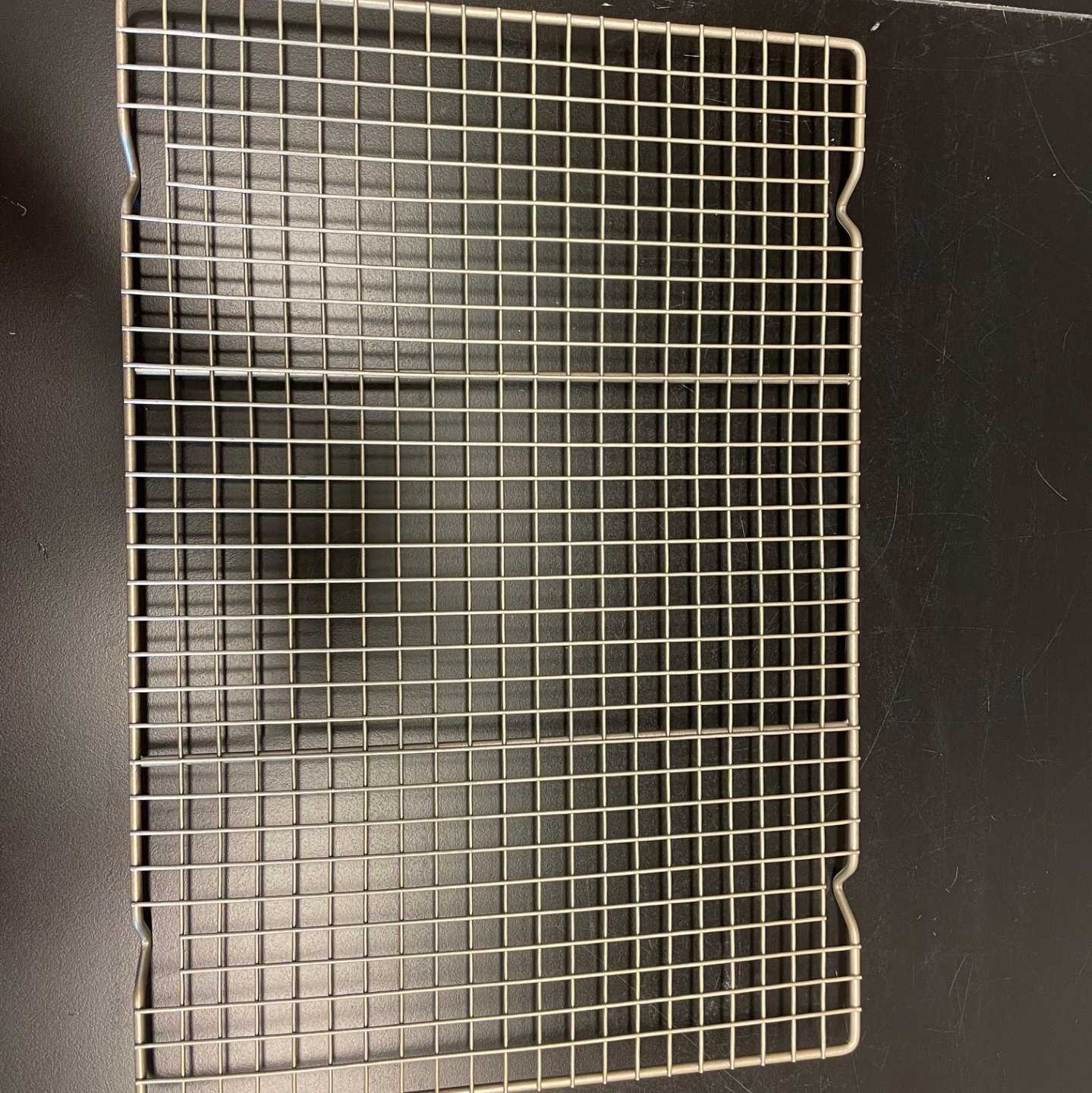
1. Wire Screen Apparatus (something similar to is a 43 cm square of wire mesh consisting of 12 mm squares of 1 mm diameter wire surrounded by a 4 cm deep wooden beading1 (Figure 1)).
3. Stop watch.
4. GoPro (if recording is desired).
5. Single cage filed with ~4” of bedding.
6. 4 empty cages.
Figure 1. Wire hang apparatus. From Deacon, 2013.
Set up
Habituate animals to behavior testing room for 1 hour prior to assay start.
Suspend the apparatus approximately 40cm using two stacked standard mouse cages, above a cage filled with bedding to provide the mice with a safe place to land when descending from the wire hang (Figure 1.)
Figure 1. Wire hang apparatus set-up.
A wire hang apparatus can be made easily for use in this protocol and requires very little material (see Figure 1 for example). The apparatus should be easily traversed by the mice, meaning the spacing of the bars should be close enough to allow for free and easy movement of the mice and the width of the bars should be thin enough to allow for full grip by the paws. According to a protocol by Deacon, 2013 the ideal measurements are as follows. “The inverted screen is a 43 cm square of wire mesh consisting of 12 mm squares of 1 mm diameter wire (Figure 1). It is surrounded by a 4 cm deep wooden beading (which prevents the occasional mouse which attempts to from climbing on to the other side)" (see protocol image and materials for examples)
Wipe down the set up with animal-safe cleaning agent before beginning any trials and between each cage.
Assessment
Begin by taking the first mouse out of its home cage and place the mouse, stomach down, onto
the top of the wire hang apparatus. Make sure to the place the mouse facing away
from you in the center of the wire hang screen.
Gently flip screen with animal, with the head of the mouse inclining first, making a full 180 degree rotation and placing the apparatus back in the start position on top of the stacked cages (the mouse should now be hanging with its back facing down).
Timing is started once the animal is hanging from the wire screen horizontally and stopped when the animal falls to the bedding underneath or remains hanging on for a maximum of 60 seconds.
Repeat Step 6 for a total of 2 trials per mouse, rotating through all animals for one trial, then moving onto the next trial, allowing animals to rest in between trials.
Clean wire hang and change out cage under the apparatus before moving onto the next cage.
Protocol references
1. Deacon RM. Measuring the strength of mice. J Vis Exp. 2013 Jun 2;(76):2610. doi: 10.3791/2610. PMID: 23770643; PMCID: PMC3725666.