Oct 08, 2025
Winkler sampling (effects of driver ant raids)
- 1Université de Montpellier
- Driver Ant Research Team



External link: https://www.researchgate.net/profile/Maximillian-Tercel
Protocol Citation: Maximillian Tercel 2025. Winkler sampling (effects of driver ant raids). protocols.io https://dx.doi.org/10.17504/protocols.io.14egnr4wql5d/v1
License: This is an open access protocol distributed under the terms of the Creative Commons Attribution License, which permits unrestricted use, distribution, and reproduction in any medium, provided the original author and source are credited
Protocol status: Working
We use this protocol and it's working
Created: September 06, 2025
Last Modified: October 08, 2025
Protocol Integer ID: 226627
Keywords: arthropod sampling, entomology, taxonomy, insect ecology, ants, Winkler extractors, leaf litter, arthropods in leaf litter, driver ant, ant, arthropod, ant raid, vast predatory swarm, larger invertebrate, entomological equipment, important predators in african rainforest, standard piece of entomological equipment, winkler extractor, winkler sampling, largest colonies of animal, prey, leaf litter, african rainforest, animal, important predator
Funders Acknowledgements:
European Union’s Horizon 2020
Grant ID: 857251
Abstract
Driver ants, Dorylus (Anomma), form some of the largest colonies of animals on Earth and are important predators in African rainforest ecosystems. This protocol describes the methods we are using to understand the effects of their raids - vast predatory swarms up to 25 m wide where ants locate and kill any prey they can overpower. We employ a fairly standard piece of entomological equipment to collect arthropods in leaf litter: Winkler extractors. We modified these Winkler extractors slightly to be able to collect larger invertebrates, ~2cm smallest dimension. There are two distinct phases of the protocol: a field section and a lab/station section.
Image Attribution
All images property of Maximillian PTG Tercel.
Materials
Equipment needed for field:
- Notebook
- Pencil
- GPS unit
- Litter sifters
- Cloth bags to store siftate
- Gardening/construction gloves
Equipment needed for lab:
- Winkler extraction bags
- White trays
- Brushes
- Ethanol (70-96%)
- Collection tubes (50 - 100 mL)
Safety warnings
Heavy gardening gloves or construction gloves are highly recommended when collecting leaf litter to avoid damage to hands. Gloves also protect from stinging and biting leaf litter arthropods.
Before start
You will need the following items before heading into the field:
- Notebook
- Pencil
- GPS unit
- Litter sifters
- Cloth bags to store siftate
- Gardening/construction gloves
- A love of army ants
Field portion
45m
Locate a driver ant raid. This is usually done by walking trails and net lanes in the rainforest and encountering a column of the ants.
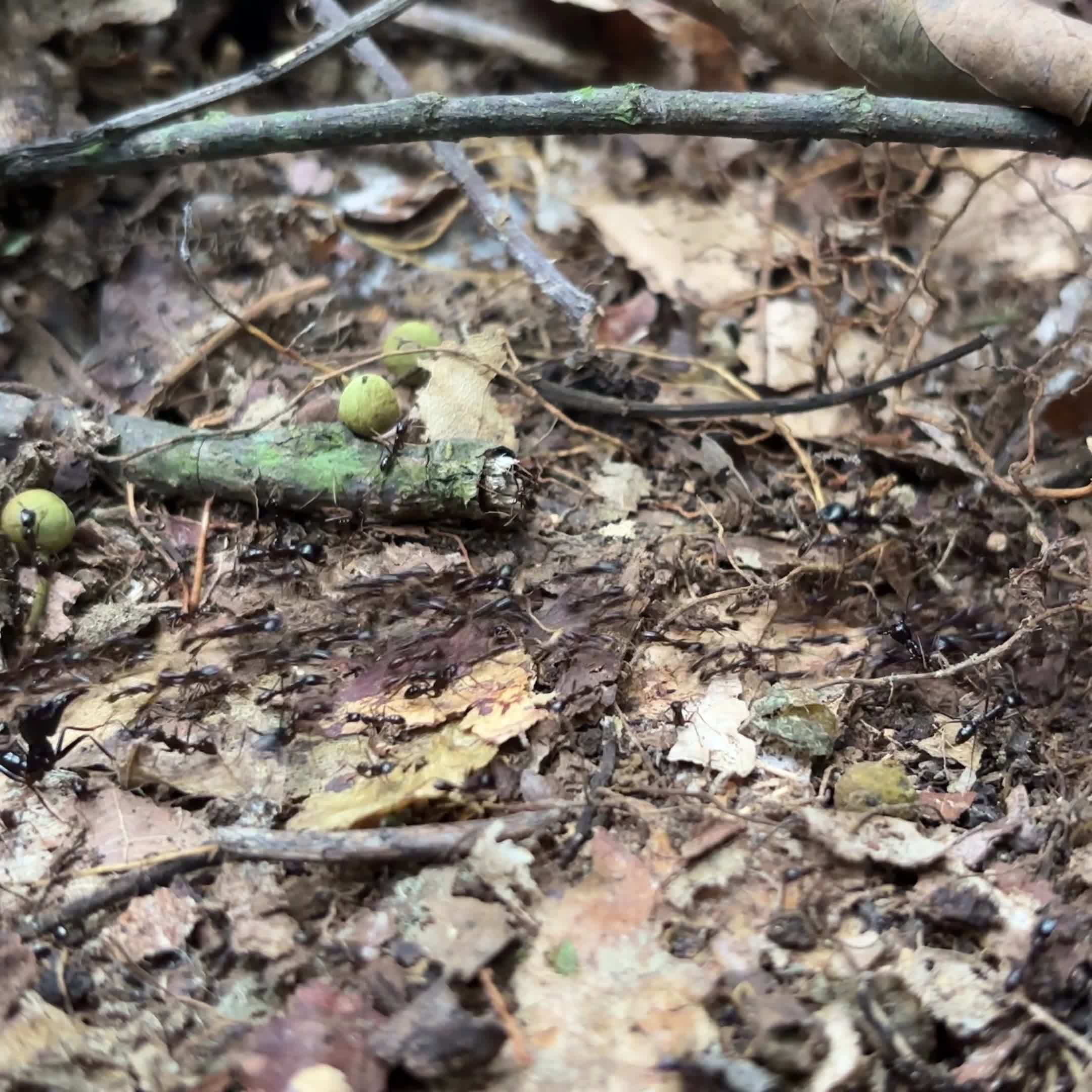
To determine the direction of the nest and raid, observe the direction prey items are being carried by the ants. The ants bring food items towards the nest.
Follow the driver ant column to the raid, i.e., heading in the opposite direction that prey items are being transported.
Once you have encountered the raid, congratulations, you are observing one of the most amazing ecological events in nature! Observe areas of the forest floor that driver ants are definitely raiding; these will eventually be the areas you take the sample. Wait for 10-15 minutes for the ants to completely pass the area to allow sampling. 00:15:00
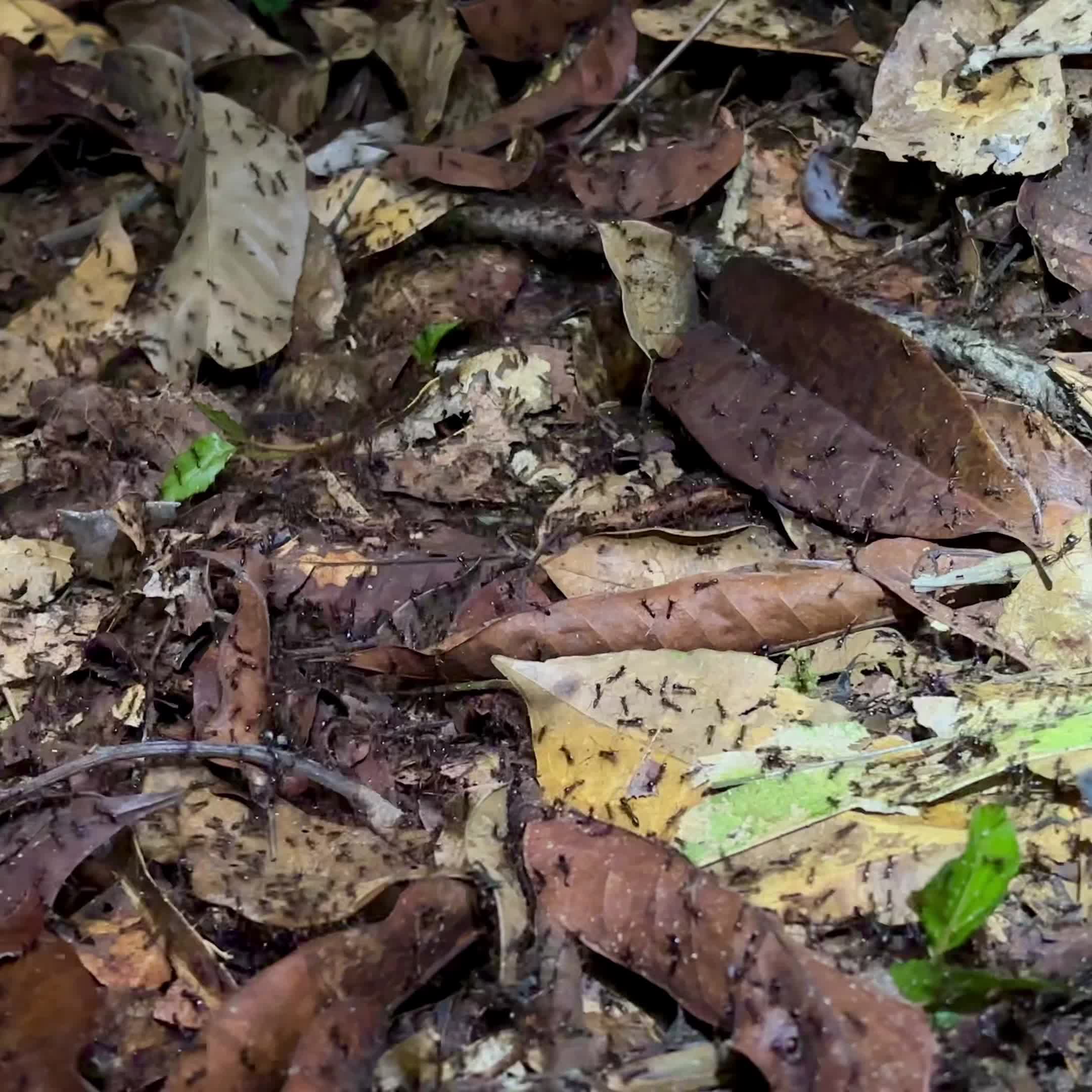
15m
Mark the area of the raid with flagging tape to facilitate finding the sample area again later. Take a GPS point and give it a unique code. E.g., "ColonyNameR001-1"
Prepare the litter sifter by tying the bottom closed. Put on the gloves and begin placing leaf litter into the sifter. Shake the sifter strongly and use your hand to disturb the leaf litter in the top section and filter it through to the litter in the lower section. Each full load of leaf litter in the top section takes about 2-3 minutes to process. Remove the remaining leaf litter in the top section once you have finished
processing it for a few minutes. Acquire about 3 L of siftate (in the lower section) for each litter sifter (6 L total). This takes 15-30 minutes depending on the litter moisture and texture. 00:30:00
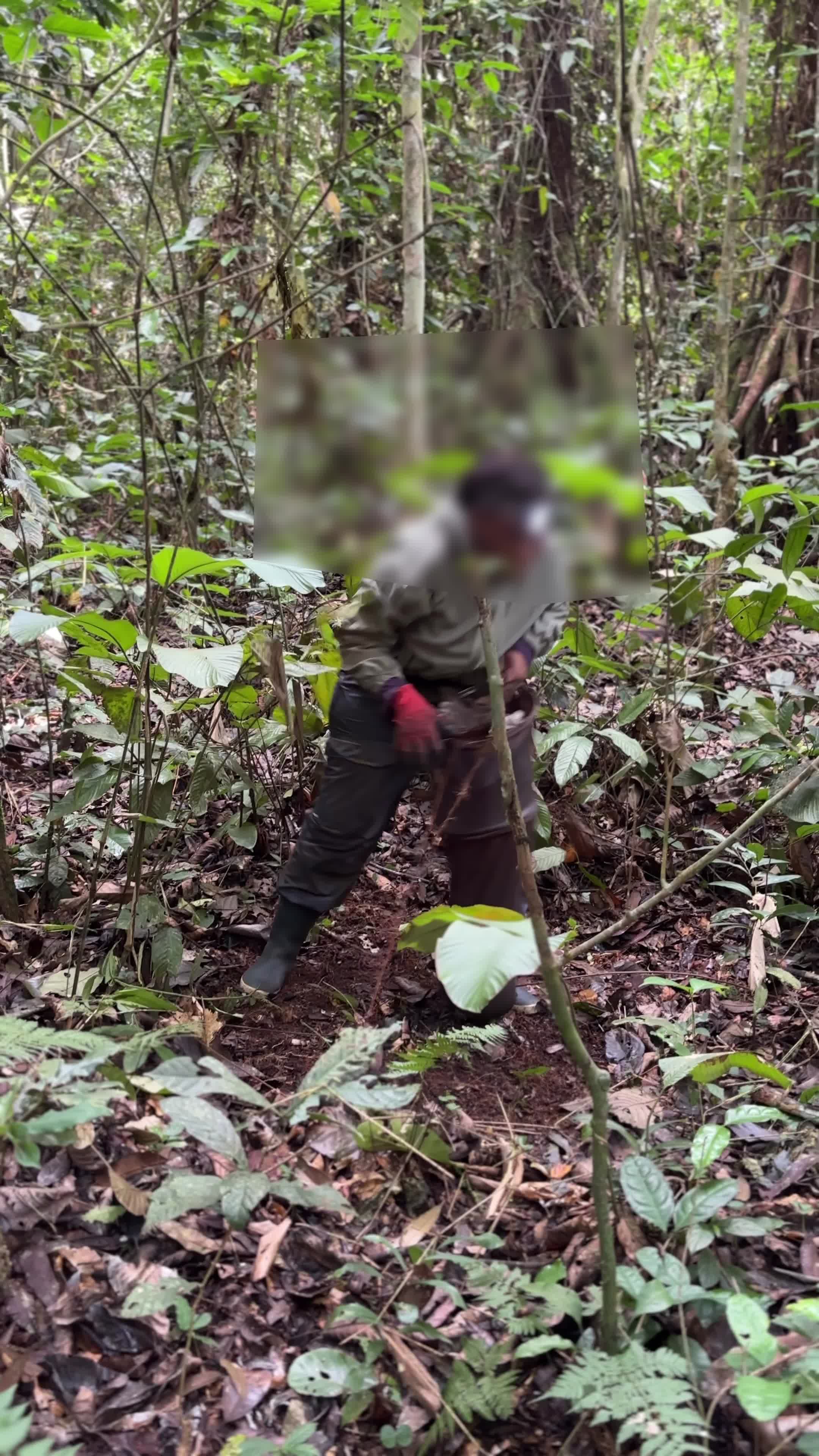
30m
It is important to primarily sample the leaf litter, not the soil. The top centimetre of soil is okay, but surface-swarming Dorylus do not dig to find prey.
Place the siftate into the cloth bags and tie shut. Label each bag with an appropriate code ready to be transported back to field station. This can be done with masking tape on the outside of the bag and a paper slip placed inside. Note: cloth bags must be used to provide airflow.
Each Winkler sample has an associated paired control. Take a note of the type of habitat and structural heterogeneity of the vegetation where the raid sample was taken. Find a nearby spot approximately 5 m away from the sampling point that was not raided but is similar to the sample area and repeat stages 6-7. Take a GPS point of the location and give it a unique code paired to the treatment sample. E.g., "ColonyNameRC001-1"
Station/lab portion
3d
Prepare the Winkler extractor bag and other materials: you will need a plastic cup ready to be filled with ethanol, the sample code written in pencil on a strip of paper, and the inner holding mesh bags for the extractor.
A Winkler extractor bag with collection cup tied below.
Place a large white tray on the floor and place the inner mesh Winkler bags on the white tray. Take the cloth bags containing the sifted litter arthropods obtained in Steps 1-8 and carefully but quickly empty the contents into the mesh bags. Several invertebrates will fall through the mesh but be sure to scoop them up with forceps, fingers, or brushes and put them back into the mesh bag with the rest of the siftate.
Place the mesh bag with the siftate into the Winkler extractor bag using the metal hooks on the side that attach to the metal frame of the Winkler extractor. Do this over the tray so that any additional invertebrates fall into the tray.
Once the inner mesh bags are inside the Winkler extractor, carefully tip the contents on the white tray into the mesh bags.
Write the sample code in pencil on a strip of paper and place it into the plastic collection cup. Half-fill the cup with ethanol. Tie the cup to the bottom of the Winkler extractor bag.
Hang the bag for 72:00:00 . Once the time has elapsed, pour the contents of the cup into sample tubes, making sure each tube has an internal (in pencil) and external lab with its unique sample code.
3d