Aug 13, 2022
Transforming Yeast (Instructor Protocol)
This protocol is a draft, published without a DOI.
- 1University of Wisconsin - Stout
- Yeast ORFans CURE



Protocol Citation: Brian Teague 2022. Transforming Yeast (Instructor Protocol). protocols.io https://dx.doi.org/
License: This is an open access protocol distributed under the terms of the Creative Commons Attribution License, which permits unrestricted use, distribution, and reproduction in any medium, provided the original author and source are credited
Protocol status: Working
We use this protocol and it's working
Created: August 12, 2022
Last Modified: August 13, 2022
Protocol Integer ID: 68580
Keywords: transforming yeast, yeast transformation, yeast, instructor protocol, protocol
Abstract
This is the instructor protocol for
The yeast transformation is adapted from Geitz and Schiestl:
Citation
Image Attribution
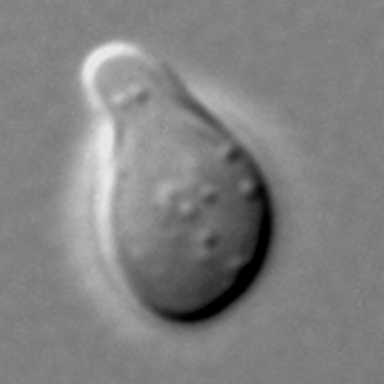
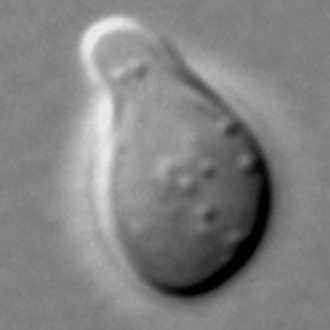
Masur, Public domain, via Wikimedia Commons
Guidelines
We use dropout media components from Sunrise Science, but I'm sure media from other vendors is fine. Double-check, though, that your "yeast nitrogen base" doesn't contain amino acids and other things.
Materials
Equipment
- Shaking incubator
- Spectrophotometer for measuring OD600
- 500 ml baffled flask (the baffles improve the aeration)
- 3x Mr Frostys (or a large styrofoam container)
- Thermocycler
Materials
- Bacto™ PeptoneThermo Fisher ScientificCatalog #211677
- BD Bacto™ Yeast Extract Becton Dickinson (BD)Catalog #212750
- α-D-GlucoseMerck MilliporeSigma (Sigma-Aldrich)Catalog #492-62-6
- Yeast Nitrogen Base (YNB)Sunrise ScienceCatalog #1500-100
- CSM-Leu-Ura PowderSunrise ScienceCatalog #1038-010
- Ammonium sulfate Merck MilliporeSigma (Sigma-Aldrich)Catalog #A4418
- Uracil Yeast Culture GradeSunrise ScienceCatalog #1906-010
- L-Leucine Yeast Culture GradeSunrise ScienceCatalog #1980-010
- Agar, technicalDifcoCatalog # DF0812-17-9
- GlycerolThermo ScientificCatalog #17904
- DMSO (dimethyl sulfoxide)Merck MilliporeSigma (Sigma-Aldrich)Catalog #D8418
- Polyethylene Glycol (PEG) 3350Electron Microscopy SciencesCatalog #19760
- Salmon Sperm DNAResearch Products International Corp (RPI)Catalog #D52150
Protocol materials
BD Bacto™ Yeast Extract Becton Dickinson (BD)Catalog #212750
DMSO (dimethyl sulfoxide)Merck MilliporeSigma (Sigma-Aldrich)Catalog #D8418
Yeast Nitrogen Base (YNB)Sunrise ScienceCatalog #1500-100
CSM-Leu-Ura PowderSunrise ScienceCatalog #1038-010
Ammonium sulfate Merck MilliporeSigma (Sigma-Aldrich)Catalog #A4418
Uracil Yeast Culture GradeSunrise ScienceCatalog #1906-010
L-Leucine Yeast Culture GradeSunrise ScienceCatalog #1980-010
GlycerolThermo ScientificCatalog #17904
Bacto™ PeptoneThermo Fisher ScientificCatalog #211677
Polyethylene Glycol (PEG) 3350Electron Microscopy SciencesCatalog #19760
Salmon Sperm DNAResearch Products International Corp (RPI)Catalog #D52150
α-D-GlucoseMerck MilliporeSigma (Sigma-Aldrich)Catalog #492-62-6
α-D-GlucoseMerck MilliporeSigma (Sigma-Aldrich)Catalog #158968
Safety warnings
Lithium acetate causes eye and skin irritation. Wear appropriate PPE, including a lab coat, gloves and safety glasses.
DMSO is a minor irritant. It also readily penetrates skin and may significantly enhance the absorption of numerous chemicals. Wear appropriate PPE, including a lab coat, gloves and safety glasses, and remove contaminated gloves and clothes promptly.
Prepare 250 ml of 2xYPD media
30m
Put 250 mL of deionized water in a 250 ml or 500 ml bottle, then add:
- 10 g Bacto™ PeptoneThermo Fisher ScientificCatalog #211677
- 5 g BD Bacto™ Yeast Extract Becton Dickinson (BD)Catalog #212750
Cap the bottle tightly and shake to resuspend the powdered components.
Note
You don't need to dissolve the powder, just get it off the bottom.
Autoclave at 121 °C for 00:30:00 on a liquid cycle.
30m
Cool, then using good sterile technique, add 25 mL of a 40 Mass / % volume solution of α-D-GlucoseMerck MilliporeSigma (Sigma-Aldrich)Catalog #492-62-6 .
Note
You need to cool the media before doing this or it will boil over.
Prepare frozen competent cell (FCC) solution
30m
To a 15 ml conical centrifuge tube, add:
- 0.5 mL GlycerolThermo ScientificCatalog #17904
- 1 mL DMSO (dimethyl sulfoxide)Merck MilliporeSigma (Sigma-Aldrich)Catalog #D8418
- Deionized water to a total volume of 10 mL
Filter-sterilize the solution into a new 10 ml tube.
Note
I like to mount a filter on a syringe, pull the plunger out the back, pour the solution into the syringe, then re-insert the plunger.
Prepare competent yeast cells
15m
The day before, transfer 5 ml of 2xYPD media into two round-bottomed test tubes. Pick a colony of yeast off of the plate into each test-tube and grow, overnight, on the roller drum or orbital shaker at 30 °C . This is your starter culture.
Note
Also put the bottle of 2xYPD into the 30 degree incubator to warm it up overnight.
The morning of the prep, measure the OD600 of the starter cultures. Pour 250 mL of the 2xYPD media into a 500ml baffled flask. Add enough starter culture so that the final OD600 is 0.5.
Shake 200 rpm, 30°C until the OD600 reaches 2.0.
Note
Starting at 3 hours, check the OD600 with a spec every 30 minutes. This may take 4-5 hours.
Harvest the cells by centrifugation 2900 x g, 00:05:00 at room temperature in a swinging bucket (or fixed-angle highspeed) centrifuge.
5m
Decant the media from the centrifuge tubes back into the baffled flask. Resuspend the pellet(s) in 125 mL of sterile water (vortexing is okay). Then, centrifuge 2900 x g, 00:05:00 .
5m
Decant the water back into the baffled flask. Resuspend the pellet(s) in a total of 0 mL l of sterile water. Again, centrifuge 2900 x g, 00:05:00
5m
Aspirate or decant the water. Resuspend the pellet in FCC for a total volume of 2.5 mL
Note
Because the volume of cells is pretty large (almost 2 ml!), you'll have to use substantially less than 2.5 ml of FCC. Use the markings on the side of the conical tube to guide you.
Transfer 50 µL aliquots to sterile microcentrifuge tubes. Load into Mr Frosty's (or the styrofoam container) and freeze overnight at -80 °C
Note
The Mr. Frostys or styrofoam container freeze the cells slowly, which is important to maintain their viability.
The next morning, transfer to a freezer box and store at -80 °C
Prepare dropout media
15m
Prepare 500 ml of synthetic defined media without leucine:
- 0.855 g Yeast Nitrogen Base (YNB)Sunrise ScienceCatalog #1500-100
- 0.335 g CSM-Leu-Ura PowderSunrise ScienceCatalog #1038-010
- 2.5 g Ammonium sulfate Merck MilliporeSigma (Sigma-Aldrich)Catalog #A4418
- 5 mL of 100X uracil solution 2 mg/mL Uracil Yeast Culture GradeSunrise ScienceCatalog #1906-010
- 10 g Agar, technicalDifcoCatalog # DF0812-17-9
Make up to 475 ml with deionized water and autoclave 121 °C 00:30:00 on a liquid cycle.
Cool to 60 °C , then add 25 mL 40 Mass / % volume α-D-GlucoseMerck MilliporeSigma (Sigma-Aldrich)Catalog #158968 and pour or pipette into petri dishes.
30m
Prepare 500 ml of synthetic defined media without uracil:
- 0.855 g Yeast Nitrogen Base (YNB)Sunrise ScienceCatalog #1500-100
- 0.335 g CSM-Leu-Ura PowderSunrise ScienceCatalog #1038-010
- 2.5 g Ammonium sulfate Merck MilliporeSigma (Sigma-Aldrich)Catalog #A4418
- 5 mL of 100X leucine solution 12 mg/mL L-Leucine Yeast Culture GradeSunrise ScienceCatalog #1980-010
- 10 g Agar, technicalDifcoCatalog # DF0812-17-9
Make up to 475 ml with deionized water and autoclave 121 °C 00:30:00 on a liquid cycle.
Cool to 60 °C , then add 25 mL 40 Mass / % volume α-D-GlucoseMerck MilliporeSigma (Sigma-Aldrich)Catalog #158968 and pour or pipette into petri dishes.
30m
Miscellaneous preparation
5m
Prepare the salmon sperm:
- If necessary, dissolve the salmon sperm in sterile TE buffer at a concentration of 2 mg/ml. (This is best done in the cold room on a magnet stir plate.)
- Make 55 µL aliquots in PCR tubes. (Strip tubes and a repeat pipettor make this easy.)
- Denature by setting a thermocycler to hold at 95 °C and putting the PCR tubes in for 00:05:00 , then moving immediately into an ice/water bath.
- Store at -20 °C
5m
Prepare the Polyethylene Glycol (PEG) 3350Electron Microscopy SciencesCatalog #19760 solution:
- Put 2 mL of deionized water in a 15 ml conical microcentrifuge tube
- Add 5 g Polyethylene Glycol (PEG) 3350Electron Microscopy SciencesCatalog #19760
- Add more deinized water until the total apparent volume is 10 mL
- Shake vigorously to suspend the PEG evenly
- Put on a roller (or nutator or rocker) until the PEG dissolves completely.
- Add more deionized water to a final volume of 10 mL .
Instructor Tips & Common Student Errors
Instructor Tips
- Particularly after transforming E. coli, students usually find this lab to be pretty straightforward.
- Students still struggle with the unit analysis required to "compute the volume containing XXXX amount of DNA". I usually provide a basic example, along the lines of "if I have a solution that is 5 g/ml and I need 10 g total, how much solution do I need?" and then suggest they use the same reasoning. I also offer to double-check their answers if they'd like.
- A common issue is "not enough PCR", especially if there have been a failed transformation or two. (There's usually plenty of plasmid.) If there's more than 100 ng of PCR DNA, I usually tell students to go ahead and try transforming anyway, with the warning that things may not be efficient and they might consider retrying their PCR while the incubation is going.
- Wait three full days before trying to pick colonies. Yeast double every 2-3 hours on dropout media like this, so it will take time before colonies are visible. They're usually visible (but small) after 2 days -- too small to do anything with.
- When interpreting their results, I usually ask students to think about why we plated on both the leucine and uracil dropout plates. What does it mean when cells are growing on one or the other? (FYI: the leucine plate is the transformation control -- it tells us whether we were successful at getting the DNA into the cells. The colonies on the uracil plate, though, necessitated both successful transformation and successful genome editing -- they're the colonies we want to move forwards with.)
Common student errors
- Didn't immediately thaw the cells in the hot water bath and remove the freezing medium. Yeast likes to freeze slowly and thaw quickly!
- Students still struggle with the unit analysis required to "compute the volume containing XXXX amount of DNA" (see above).
- Not enough plasmid or PCR (see above)
Citations
Gietz RD, Schiestl RH. Frozen competent yeast cells that can be transformed with high efficiency using the LiAc/SS carrier DNA/PEG method.