Nov 25, 2021
Version 1
Tissue extraction from whole caterpillars V.1
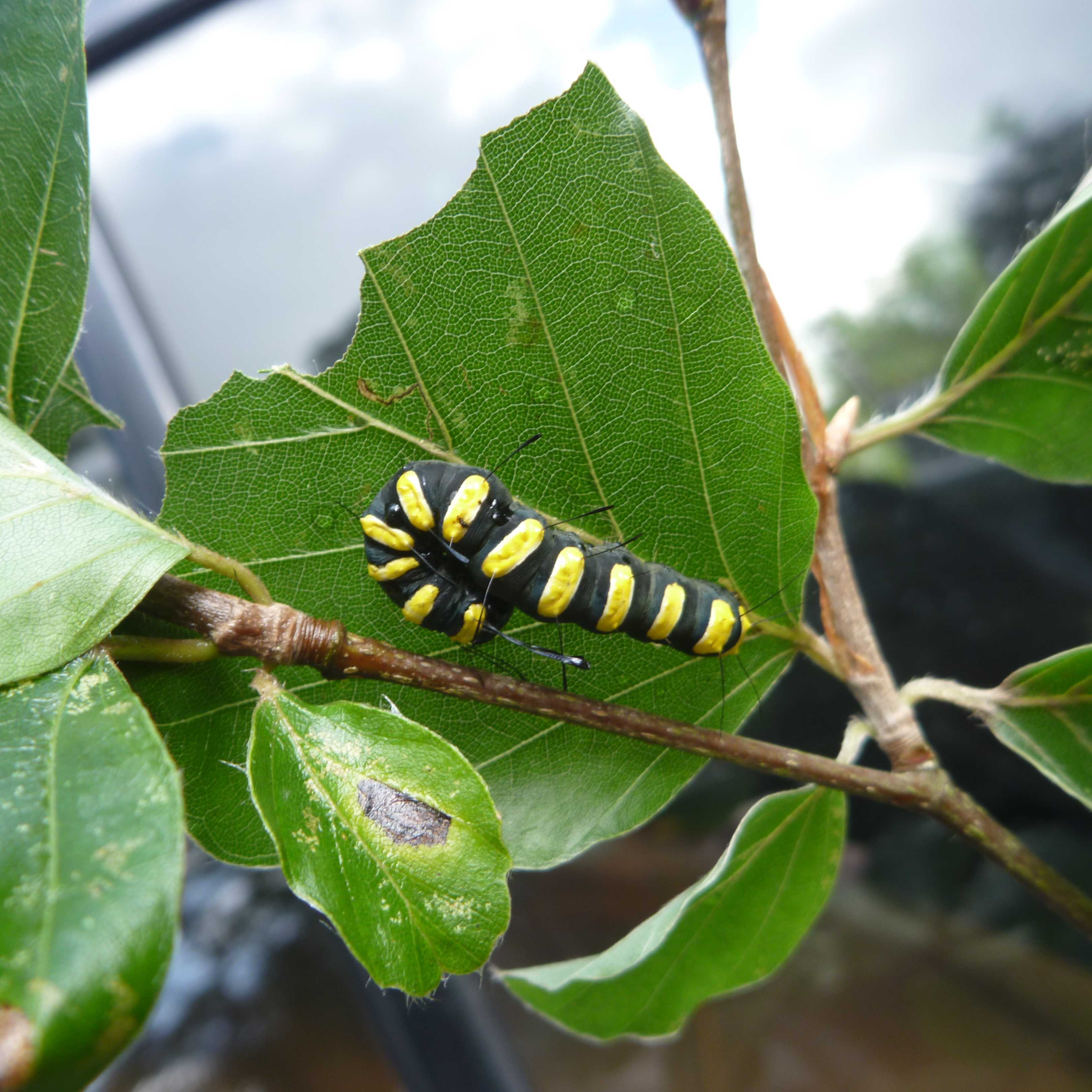
- James Kitson1
- 1Newcastle University
- Network Ecology Group



Protocol Citation: James Kitson 2021. Tissue extraction from whole caterpillars. protocols.io https://dx.doi.org/10.17504/protocols.io.bz62p9ge
License: This is an open access protocol distributed under the terms of the Creative Commons Attribution License, which permits unrestricted use, distribution, and reproduction in any medium, provided the original author and source are credited
Protocol status: Working
We use this protocol and it’s working
Created: November 18, 2021
Last Modified: November 26, 2021
Protocol Integer ID: 55226
Keywords: DNA extraction, genomic DNA, whole organism, homebrew lab, cheap, extraction from whole caterpillar, dna from lepidopteran larvae, extracting dna, whole caterpillar, lepidopteran larvae, extraction, larvae, most animal tissue with some modification, dna, most animal tissue, tissue
Abstract
This protocol is designed for extracting DNA from Lepidopteran larvae but it will work on most animal tissue with some modifications to tube volumes and homogenisation settings.
Materials
Buffers and reagents:
- Sodium chloride
- 1 M Tris-HCl
- 0.5 M EDTA
- Nuclease-free water
- SDS
- Guanidine HCl
- 100 % ethanol
- Proteinase K (10 mg/mL)
For collection and initial lysis:
- 5 mL screw-cap tube for bead-beating
- Hardened carbon steel ball bearings
For single sample spin-column protocol:
- 2 mL screw-cap tube (for archiving intermediate steps)
- 1.5 mL microcentrifuge tube (for mixing lysate and buffers before loading into the spin column)
- Silica membrane spin columns
- 1.5 mL microcentrifuge tube (to collect the eluted DNA)
For 96-well spin-column protocol:
- 2.2 mL deep well plates (or up to 1.5 mL) for initial protein denaturation
- 2.2 mL deep well plates for archiving
- 2.2 mL deep well plates for spin-column flow-through (these can be bleached and reused across sessions)
- Silica membrane 96-well spin-column plates
- 0.5 mL deep-well 96-well plates to collect eluted DNA
- Breathable plate seals
- Plate seals for long-term storage
Troubleshooting
Collection of larvae
Source steel beads (ball bearings) for tissue grinding (Tungsten beads are not usually necessary for caterpillars). We use hardened carbon steel or stainless steel bearings from simplybearings.co.uk. This protocol requires one bead per sample tube.
1w
Beads are usually shipped coated in manufacturing oil (especially the carbon steel beads). To remove this, place beads in a borosilicate glass beaker or Duran bottle with the pouring lip and lid removed then bake for at least 12 hours at 250 oC.
Figure 1: Depending on baking time, carbon steel beads will change colour, this is normal.
Note
Baked beads should be stored in a closed airtight DNA free container until needed, do not touch with bare hands to prevent contamination.
12h
Prepare Lysis Buffer 1. This should be pH 9 and comprised of the following reagents:
| A | B | C | D | |
| Reagent | Required concentration in buffer | Chemical molarity | Amount per 100 mL | |
| Sodium chloride | 120 mM | 58.44 | 0.701 g | |
| 1 M Tris-Hcl | 50 mM | - | 5 mL | |
| 0.5 M EDTA | 20 mM | - | 4 mL | |
| H2O | - | - | 91 mL |
Note
See the next step for advice on buffer volumes you will need to prepare.
30m
Prepare 5 ml screwcap collection tubes containing one 4 or 4.5 mm hardened steel bead and 2ml of Lysis Buffer 1. All volumes for sample and homogenisation and digestion assume you are using a 5 ml screwcap tube. See notes below for further detail.
Note
Note on tube and bead selection:
Tube sizes, bead sizes and buffer volumes are all dependant on individual caterpillar size. For medium-sized caterpillars (e.g. Noctua pronuba or Pieris brassicae) we use 5 ml screwcap eppendorf tubes (# 0030122313) with one 4 or 4.5 mm steel bead and 2 ml of Lysis Buffer 1. For smaller caterpillars (e.g. leaf miners) use 2 ml screwcap tubes and two 3 mm beads and for larger caterpillars (e.g. hawkmoth caterpillars) you may need to use 15 ml or even 50 ml tubes with larger or multiple steel beads*.
*When using tubes smaller or larger than 5 ml scale volumes of Lysis Buffer 1, Lysis Buffer 2 and Proteinase K throughout to match tube volume.
Note
Note on steel bead material choice:
If you are extracting already collected caterpillars in the lab for immediate DNA extraction, you can use the cheaper carbon steel ball bearings. If you plan to use pre-prepared tubes for direct collection of caterpillars into lysis buffer in the field*, use stainless steel bearings to prevent them from rusting.
*Caterpillars stored in Lysis Buffer 1 at -20 oC are extractable at least 6 months after collection.
1h
Using sterile disposable forceps, place individual caterpilars into the pre-prepared collection tubes containing the hardened steel ball bearings and Lysis Buffer 1.
Note
Be sure to label the tube with a sample number and any additional detail necessary for the study (e.g., processionary number).
Alternatively barcode your tubes with preprinted labels and use data collection software such as epicollect5 to record sample IDs and metadata.
1d
Repeat until a sufficient sample size has been collected.
Place all sample tubes from a session in a zip-lock bag and keep cold under dry ice or place in a portable freezer to freeze for transport.
The next steps depend on the intended throughput: either single sample spin-columns or 96-well spin-column plates.
Single spin-column extraction26 steps
The protocol for DNA purification in single sample spin-columns.
When ready to begin tissue digestion, defrost the tubes containing dead larvae in Lysis Buffer 1.
30m
Grind the larvae is a tissue homogeniser until homogenised.
Note
We use a Geno/Grinder 2010 at full speed (1750 RPM) for 2 minutes but different machines or even tube sizes and sample volumes will require separate optimised settings.
5m
Centrifuge at 4,000 x g for 2 min.
1m
To the lysate, add 1 mL of freshly-prepared Proteinase Buffer, a master mix of Lysis Buffer 2 and Proteinase K (detailed in the sub-steps below) and vortex to mix.
Note
Note step from 4: if you have used different tube sizes and Lysis Buffer 1 volume from the one listed for 5 ml screwcap tubes, the volume of Proteinase Buffer needs to be adjusted proportionally so that it is always 1/3 of the Lysis Buffer 1 volume.
1m
Lysis Buffer 2 should be pH 9 and comprised of the following reagents:
| A | B | C | D | |
| Reagent | Required concentration in buffer | Chemical molarity | Amount per 100 mL | |
| Sodium chloride | 120 mM | 58.44 | 0.701 g | |
| 1 M Tris-Hcl | 50 mM | - | 5 mL | |
| 0.5 M EDTA | 20 mM | - | 4 mL | |
| SDS | 3 % | - | 3 g | |
| H2O | - | - | 91 mL |
2m
Per sample, the Proteinase Buffer master mix should comprise:
| A | B | |
| Reagent | Amount per sample | |
| Lysis solution 2 | 970 μL | |
| Proteinase K (10 mg/mL) | 30 μL |
1m
Incubate at 37 °C overnight (12-16 hours)
37 °C Increase to 55 oC for shorter digestion times
16h
Centrifuge at 4000 x g for 4 minutes.
1m
Transfer 1.5 mL of the supernatant to a clean 2 mL screw-cap tube for archiving/backup.
1m
Centrifuge at 10,000 x g for 1 minute.
1m
Transfer 200 μL of the supernatant to a clean 1.5 mL microcentrifuge tube.
Note
The remaining lysate can now be stored at -20 °C for backup/future work.
1m
DNA extraction: purification
22m
Add 400 μL of master mix of Protein Denaturation Buffer and ethanol (detailed below) to each sample.
1m
Protein Denaturation Buffer should be comprised of the following reagents:
| A | B | C | D | |
| Reagent | Required concentration in buffer | Chemical molarity | Amount per 100 mL | |
| Guanidine HCl | 5 M | 95.53 | 47.7 g | |
| H2O | - | - | 100 mL |
2m
Per 96-well plate, the Protein Denaturation Buffer and ethanol master mix should comprise:
| A | B | C | |
| Reagent | Amount per sample | Amount per sample | |
| Protein Denaturation Buffer | 220 μL | 220 μL | |
| Ethanol (100 %) | 220 μL | 220 μL |
1m
Add all of the sample solution (~ 600 μL) to a well in a 96-well silica membrane spin column (we use SD5005 from NBS Biologicals)
Note
Ensure there is a suitable collection tube beneath into which the flow-through will go.
1m
Centrifuge at ≥ 6000 x g for 1 minute and discard the flow-through.
1m
Add 500 μL Wash Buffer 1 to each spin column.
1m
Wash Buffer 1 should be comprised of the following reagents:
| A | B | C | D | |
| Reagent | Required concentration in buffer | Chemical molarity | Amount per 100 mL | |
| Guanidine HCl | 7 M | 95.53 | 29.4 g | |
| Ethanol | 56 % | - | 56 mL | |
| H2O | - | - | 44 mL |
2m
Centrifuge at ≥ 6000 x g for 1 minute and discard the flow-through.
1m
Add 500 μL Wash Buffer 2 to each spin column.
1m
Wash Buffer 2 should be pH ~7 and comprised of the following reagents:
| A | B | C | D | |
| Reagent | Required concentration in buffer | Chemical molarity | Amount per 100 mL | |
| Ethanol (100 %) | 70 % | 58.44 | 70 mL | |
| 1 M Tris-Hcl | 10 mM | - | 1 mL | |
| H2O | - | - | 29 mL |
2m
Centrifuge at 20,000 x g for 3 minutes.
3m
Discard the collection tube and replace it with a new 1.5 mL microcentrifuge tube.
1m
Add 100 - 200 μL Elution Buffer directly to the silica membrane and leave it at room temperature for 5 minutes.
1m
Elution Buffer should be pH ~7 and comprised of the following reagents:
| A | B | C | D | |
| Reagent | Required concentration in buffer | Chemical molarity | Amount per 100 mL | |
| 1 M Tris-Hcl | 10 mM | - | 1 mL | |
| H2O | - | - | 99 mL |
2m
Centrifuge at ≥ 6000 x g for 1 minute. The DNA is now in the collection tube and can be taken forward to amplification.
Note
Steps 26-27 can be repeated for increased DNA yield but a lower overall concentration.
If the centrifuge cannot reach 6000 x g, a longer centrifugation (e.g., 5 minutes) will work, although should not be necessary for this step.
1m