Aug 15, 2024
Sequencing dMDA Products on the MinION using Oxford Nanopore's Rapid Barcoding Kit
- Dominic Horner1,2,
- Ester Kalef-Ezra1,2,
- Marco Toffoli1,
- Christos Proukakis1,2
- 1UCL Queen Square Institute of Neurology, London, UK;
- 2Aligning Science Across Parkinson's (ASAP) Collaborative Research Network, US
- University College London



Protocol Citation: Dominic Horner, Ester Kalef-Ezra, Marco Toffoli, Christos Proukakis 2024. Sequencing dMDA Products on the MinION using Oxford Nanopore's Rapid Barcoding Kit. protocols.io https://dx.doi.org/10.17504/protocols.io.kxygxy9odl8j/v1
License: This is an open access protocol distributed under the terms of the Creative Commons Attribution License, which permits unrestricted use, distribution, and reproduction in any medium, provided the original author and source are credited
Protocol status: Working
We use this protocol and it's working
Created: May 16, 2024
Last Modified: August 15, 2024
Protocol Integer ID: 99956
Keywords: ASAPCRN, Long Read Sequencing, PCR, Single Cell Whole Genome Sequencing, MinION, Brain, droplet Multiple Displacement Amplification, dMDA, scWGS, Oxford Nanopore Technologies, ONT, sequencing dmda product, sequencing dna, using oxford nanopore minion, oxford nanopore minion, dmda products on the minion, partitioning dna template molecule, read sequencing, miniscule amount of dna, dmda reagent, dna template molecules into droplet, whole genome amplification, finite amount of dmda reagent, sequencing, dmda product, dna of this length, using long read, sequence library, dna, dmda, generation of intermolecular chimera, identification of most structural variant, rapid barcoding library preparation kit, certain read, minion, intermolecular chimera, improvement of the mda technique, mda technique, long read
Funders Acknowledgements:
This research was funded in whole by Aligning Science Across Parkinson’s [Grant ID: 000430] through the Michael J. Fox Foundation for Parkinson’s Research (MJFF).
Grant ID: 000430
Disclaimer
DISCLAIMER – FOR INFORMATIONAL PURPOSES ONLY; USE AT YOUR OWN RISK
The protocol content here is for informational purposes only and does not constitute legal, medical, clinical, or safety advice, or otherwise; content added to protocols.io is not peer reviewed and may not have undergone a formal approval of any kind. Information presented in this protocol should not substitute for independent professional judgment, advice, diagnosis, or treatment. Any action you take or refrain from taking using or relying upon the information presented here is strictly at your own risk. You agree that neither the Company nor any of the authors, contributors, administrators, or anyone else associated with protocols.io, can be held responsible for your use of the information contained in or linked to this protocol or any of our Sites/Apps and Services.
Abstract
Using Oxford Nanopore MinION and the Rapid Barcoding library preparation kit, we perform long read sequencing on droplet multiple displacement amplification (dMDA) products generated from single nuclei. Single nuclei contain around 6.6pg of DNA, to sequence this miniscule amount of DNA using long reads a whole genome amplification (WGA) method must be used to provide enough starting material for library preparation. MDA is currently the only WGA method which produces reads >10kb in length. Sequencing DNA of this length using long reads can allow for direct resolution and identification of most structural variants, including large LINE-1 insertions and deletions. dMDA is an improvement of the MDA technique, partitioning DNA template molecules into droplets prevents the generation of intermolecular chimeras, and a finite amount of dMDA reagents being packed into each droplet, prevents overamplification of certain reads.
The expected result of this protocol is to be able to produce and sequence libraries generated from dMDA products.
Materials
| Item | Supplier | Catalogue Number | |
| Rapid Barcoding Kit | Oxford Nanopore | SQK-RPB004 | |
| MinION 9.4.1 Flowcell | Oxford Nanopore | FLO-MIN106D | |
| Ampure Xp Beads | Beckman Coulter | A63881 | |
| Long Amp Taq 2X | New England Biolabs | M0287S | |
| Qubit dsDNA High Sensitivity Assay Kit | ThermoFisher Scientific | Q33231 | |
| Nuclease Free Water (UltraPure Distilled Water, DNase + RNase Free) | Invitrogen | 10977-035 | |
| Ethanol | Sigma-Aldrich | 51976 |
Reagents
| Item | Supplier | Model | Catalogue Number | |
| Micro Centrifuge | SciQuip | SciSpin Mini | 9011001012 | |
| Thermal Cycler | Corning | Multigene Optimax | TC9610-230 | |
| Magnetic Rack (0.2mL) | BioSkryb | ResolveDNA Dual Volume Strip Tube Magnet | BSG 100226 | |
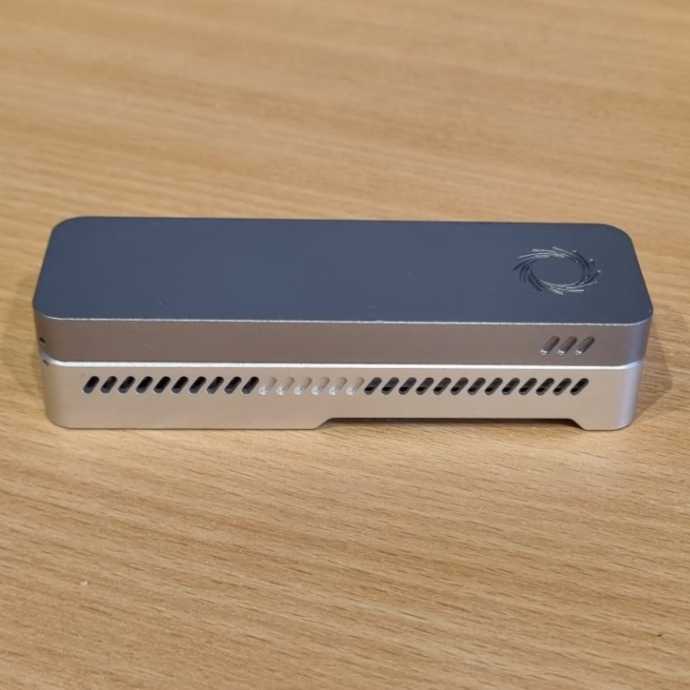
| MinION | Oxford Nanopore Technologies | MinION Mk1B | MIN-101B |
Equipment
Prepare Samples and Reagents
Remove Ampure XP beads from fridge and allow them to equilibrate to Room temperature for approximately 00:30:00 . Mix well by vortexing prior to use, ensure beads are resuspended and appear homogenous.
30m
Prepare dMDA product(s) for bead purification in 0.2ml PCR tubes.
Note
ONT rapid barcoding requires 5 ng of input DNA and unpurified dMDA products are usually
>100 ng/μl .
To prevent sample loss you may want to create a separate 1/10 sample dilution in a fresh 0.2ml tube for purification, using nuclease free water. This will help achieve a final concentration of purified product closer to 5 ng/μl .
Alternatively you can perform purification of the sample without diluting, this comes with increased risk as a failed purification can lead to greater sample loss.
Prepare a fresh solution of 70 - 80% ethanol using nuclease free water and molecular grade ethanol.
A minimum volume of 800 µL of 70 - 80% ethanol is required per sample for this protocol.
Perform a flow cell quality check the day before or on the same day as sequencing. Ensure the pore scan recognises a minimum of 800 pores remaining for sequencing.
Note
If you are new to using the MinION, ensure you have the current version of MinKNOW installed on the computer you will use with your device.
Remove your flowcell from its packaging and carefully insert the flowcell into the MinION device, underneath the clip. Connect your MinION device to the computer with the USB connector cable.
Once the device is connected, open MinKNOW and select the "Flow cell check" option. The screen will change and a "start option" will appear in the bottom right. Select this and allow the programme to run until a pore count is given, this should take around 00:30:00 .
dMDA product purification
Add Ampure XP beads in a 0.8X ratio by volume to each sample you wish to purify.
For example to purify 10 µL of sample add 8 µL of Beads.
Pipette mix 20 times using 70% of total reaction volume.
Briefly spin-down using micro centrifuge and incubate at room temperature for 00:05:00 .
5m
Place each sample onto a magnetic rack and incubate for 00:05:00 , or until supernatant is clear.
5m
Pipette off and discard supernatant, avoid touching the bead pellet.
Add 200 µL of 80% ethanol to each tube, then immediately pipette off.
If available, use a reagent reservoir and a P200 multi-channel pipette when working with multiple samples.
Repeat step 10.
Remove samples from magnetic rack and briefly spin down bead-pellet on a micro centrifuge, then return to magnetic rack and use a P10 pipette to remove any excess ethanol.
Note
It is important to remove as much excess ethanol as possible during this stage, as it may inhibit downstream PCR.
Leave tube lids open and allow beads to dry on Magnetic rack for around 00:00:30 .
Be careful not to over-dry the beads as this may make it difficult to get them back to go back into solution during the following step.
30s
Remove samples from the rack and resuspend beads in 11-21 µL of Nuclease free water. Mix well by pipetting 15 times at 70% total reaction volume, or until beads are completely resuspended.
Incubate at Room temperature for 00:05:00 .
5m
Return samples to the magnetic rack and allow beads to separate for 00:02:00 or until supernatant becomes is clear.
2m
Transfer 10-20 µL of supernatant to a fresh, labelled, 0.2 ml PCR tube and prepare for Qubit quantification.
Quantify 1 µL of sample using dsDNA HS qubit assay, following manufacturers protocol.
Record concentration and proceed to "Perform Rapid PCR Barcoding".
Alternatively, store samples at 4 °C Overnight or for longer term storage store at -20 °C .
Rapid barcoding PCR
8m
Thaw the following components of the Rapid PCR Barcoding and sequencing kit (SQK-RBP004)
On ice :
Fragmentation Mix (FRM)
Rapid Adapter (RAP)
and thaw the Barcodes (RLB 01-12A) you intend to use at Room temperature for 00:30:00 .
30m
Per sample, in fresh, labelled 0.2 ml tubes transfer 1-5 ng of sample in 3 µL of nuclease free water. Mix gently by flicking the side of the tube and spin down briefly in a microcentrifuge.
Note
Tip: You will likely have samples at a concentration >1-5ng/µl following purification of dMDA products. Create an aliquot of each sample in a 0.2ml PCR tube then dilute to a desired concentration of 1-5ng/µl in nuclease free water. Transfer 1µl of each into fresh tubes for this step and make up the volume of each sample to 3µl with nuclease free water.
5m
Add 1 µL of Fragmentation Mix to each 3 µL sample, mix gently by flicking and spin down in a microcentrifuge.
1m
Transfer all tubes to a thermal cycle and incubate at 30 °C for 00:01:00 then 80 °C for 00:01:00 . Once finished briefly place tubes On ice to cool down.
2m
To each PCR tube containing 4 µL of tagmented DNA add20 µL of nuclease free water, 1 µL of desired barcode (RLB 01-12A, at10 μM ) and 25 µL of LongAmp Taq 2x master mix.
Mix gently by flicking the tubes and then spin briefly down in microcentrifuge.
Transfer samples to a thermal cycler and begin barcoding PCR using the cycling conditions in the table below:
| Step | Time (MM:SS) | Temperature | Cycles | |
| Initial Denaturation | 03:00 | 95°C | 1 | |
| Denaturation | 00:15 | 95°C | 14 | |
| Annealing | 00:15 | 56°C | ||
| Extension | 06:00 | 65°C | ||
| Final Extension | 06:00 | 65°C | 1 | |
| Hold | ∞ | 4°C | 1 |
PCR conditions for Rapid Barcoding PCR.
PCR cleanup
10m
Transfer each sample to fresh, labelled 1.5 ml Eppendorf DNA LoBind tubes.
Prepare a fresh solution of 70 - 80% Ethanol, a minimum volume of 400 µL per sample is required for PCR clean-up.
Resuspend Ampure XP Beads, vortex until beads are resuspended and appear homogenous.
Add 30 µL of Ampure beads to each reaction and pipette mix 15 times using 70% total reaction volume.
Incubate samples on a Hula mixer for 00:05:00 at Room temperature .
5m
Remove samples from the Hula mixer and briefly spin down in a microcentrifuge.
Place samples on a magnetic rack and allow beads to pellet for 00:05:00 or until supernatant is clear. Then, keeping the tubes on the magnetic rack pipette off and discard supernatant.
5m
Keeping the tubes containing the beads on the magnetic rack, add 200 µL of 70 - 80% Ethanol to each and then immediately pipette off and discard. Be careful not to disturb the bead pellets.
Repeat step 34.
Remove tubes from magnetic rack and briefly spin down in microcentrifuge.
Return tubes to the magnetic rack and remove excess ethanol from each tube using a P10 pipette.
Note
It is important to remove as much excess ethanol as possible during this stage, as it may inhibit downstream PCR.
Allow beads to dry for around 00:00:30 . Do not dry beads to point of cracking.
30s
Remove tubes from magnetic rack and resuspend in 11 µL of 10 mM Tris-HCl 8 with 50 mM NaCl. Incubate for 00:02:00 at Room temperature .
2m
Return tubes to the magnetic rack and allow beads to pellet for 00:05:00 or until the supernatant is clear.
5m
For each sample, transfer 10 µL of eluate into labelled, fresh 1.5 ml tubes and dispose of pelleted beads.
Quantify 1 µL of each purified Library using the Qubit dsDNA HS assay kit.
Library pooling, flow cell loading, and sequencing
5m
Dilute and pool samples as necessary to generate a final pool of barcoded libraries, with a molarity between 50-100 fmol in 10 µL of 10 mM Tris-HCl 8 with 50 mM NaCl.
Note
To calculate the molarity of your samples, you need their concentration in ng/µl which can be obtained from Qubit quantification.
After PCR the libraries should be normalised to ~2 kb due to tagmentation by topoisomerase.
If you wish to confirm, running your libraries on a D5000 Agilent TapeStation screentape following the manufacturers protocol should display a peak around this size.
A pool should be made up of equimolar libraries, which means you should take the target of 50-100 fmol and divide it by the total number of samples you wish to run, this will give you the molarity that each sample should be added to create a balanced pool.
For example, a pool of DNA at 100 fmol made up of 16 libraries requires a total of 6.25 fmol per library.
Once you know the concentration, the length of your sample in kb, and the target molarity per library, you can use an online calculator e.g. https://nebiocalculator.neb.com/#!/dsdnaamt to work out the total mass of DNA you will need for each sample to achieve that.
Alternatively you can use the following formula and calculate it manually:
mass of dsDNA (g) = moles of dsDNA (mol) x ((length of dsDNA (bp) x 615.96 g/mol/bp) + 36.04 g/mol)
For example: 6.25*10-15 * ((2000*615.96) +36.04) = 7.6995*10−9
Therefore for 6.25 fmol we would need 7.7 ng of 2 kb dsDNA sample.
Add 1 µL of Rapid Adaptor Protein (RAP) to the pool.
Note
You will waste the pool if you try adding it without this, it's responsible for processing your DNA through the nanopore.
Mix the tube gently by flicking and spin down briefly using a microcentrifuge.
Incubate the reaction for 00:05:00 at Room temperature .
Note
Following this, the pool should be stored on ice until ready to load.
5m
Thaw sequencing buffer (SQB), loading beads (LB), flush tether (FLT), and one tube of flush buffer (FB) at Room temperature . Mix reagents by vortexing and spin down using a microcentrifuge.
Prepare a flow cell priming mix by adding 30 µL of flush tether directly to a tube of thawed and mixed flush buffer, then mix by vortexing.
Open the MinION device and slide the flow cell under the clip.
Open the priming port by sliding it 90° Clockwise.
Take a P1000 pipette, set it to 200 µL and gently press the pipette tip into the priming port.
Without pressing down on the pipette, slowly alter the volume to 220-230 µL . Stop turning when you notice a small amount of liquid enter the pipette tip.
Note
Visually check to ensure that there is still green storage buffer covering the sensor array at this point. If liquid does not cover the flow cell or large bubbles get inside the sensor array it will kill the pores and can render the flow cell essentially useless.
Load 800 µL of priming mix into the flow cell priming port. Adopting a similar method to before, this time place the pipette tip into the priming port and slowly reduce the volume, until almost all of the priming mix in the tip has entered the priming port. To avoid introducing bubbles leave the last 20-40 µL in the tip.
Wait for 00:05:00 and during this time prepare the pool for loading.
5m
To prepare the pool for loading, in a new tube add 30 µL of Sequencing Buffer (SQB),25.5 µL of Loading Beads (LB), mix immediately before use, 4.5 µL of nuclease free water, and 11 µL of the DNA sequencing pool + RAP.
Note
It is critical to mix the Loading Beads immediately before use, they quickly settle back to the bottom of their tube.
Gently lift the SpotON port cover making the SpotON sample port accessible.
Load 200 µL of priming mix into the flow cell PRIMING port, by gently pressing the tip of a P1000 pipette into the port and slowly reducing the pipette volume until 20-30 µL remains in the tip, to avoid introducing bubbles.
Note
Do not add the priming mix to the SpotON port.
Mix the prepared pool gently, pipette up and down 15 times using the full 75 µL volume immediately prior to loading, to ensure beads are well mixed with sample and buffer.
Add75 µL of pool to the SpotON sample port in a drop-wise fashion. Allow each droplet to be pulled into the flow cell before adding the next.
Note
Tip: Hover your pipette over the SpotON port and use a finger to stabilise the shaft. Slowly press down on the plunger and stop once a droplet forms at the end of the pipette tip. Lower the tip towards the port to deposit the droplet, then raise it up and repeat this process until all of the pool has been deposited. If a droplet gets stuck for a few seconds while loading, try and use the tip of your pipette to coax the droplet in before you attempt to load the next one.
Gently return the SpotON sample port cover, ensure the bung enters the hole. Close the priming port and replace the MinION device lid.
Take the MinION device to a computer loaded with MinKNOW and setup experiment according to Oxford Nanopore's guidelines.
Protocol references
The Upstream protocol to generate dMDA products can be found here:
Ester Kalef-Ezra, Diego Perez-Rodriguez, Christos Proukakis 2023. Manual isolation of nuclei from human brain using CellRaft device and single nucleus Whole Genome Amplification. protocols.io https://dx.doi.org/10.17504/protocols.io.kxygxzjjov8j/v1
The protocol for Nanopore rapid barcoding kit can be found here:
For use of Beckman Coulter Ampure XP beads, their protocols can be found here:
The workflow was inspired by the work of Adam Ameurs group in this paper:
Hård, J., Mold, J.E., Eisfeldt, J. et al. Long-read whole-genome analysis of human single cells. Nat Commun 14, 5164 (2023). https://doi.org/10.1038/s41467-023-40898-3