Sep 29, 2025
Sanger Tree of Life HMW DNA Extraction: Automated Low-Input Plant Organic HMW DNA Extraction (LoPOE) of Bryophyta
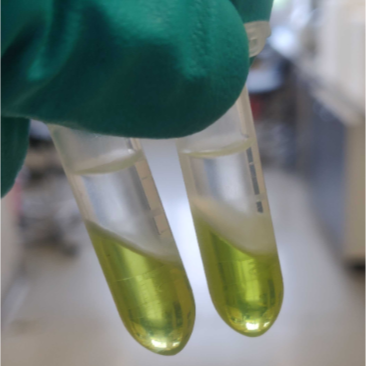
- 1ConstructiveBio.;
- 2Tree of Life, Wellcome Sanger Institute, Hinxton, Cambridgeshire, CB10 1SA
- Tree of Life at the Wellcome Sanger Institute
- Earth BioGenome Project


Protocol Citation: Benjamin Jackson, Caroline Howard 2025. Sanger Tree of Life HMW DNA Extraction: Automated Low-Input Plant Organic HMW DNA Extraction (LoPOE) of Bryophyta. protocols.io https://dx.doi.org/10.17504/protocols.io.bp2l6dy6rvqe/v1
Manuscript citation:
License: This is an open access protocol distributed under the terms of the Creative Commons Attribution License, which permits unrestricted use, distribution, and reproduction in any medium, provided the original author and source are credited
Protocol status: Working
We use this protocol and it's working
Created: February 06, 2025
Last Modified: September 29, 2025
Protocol Integer ID: 119700
Keywords: bryophyta, long read sequencing, next generation sequencing, organic extraction, plant extraction, HMW DNA extraction, HMW DNA, bryophyte extraction, PacBio, chloroform phase separation, SpeedBeads, automated bryophte DNA extraction, HMW DNA bryophtye extraction, KingFisher Apex, KingFisher, input plant organic hmw dna extraction, sanger tree of life hmw dna extraction, life hmw dna extraction, sanger tree of life hmw dna fragmentation protocol, automated plant organic hmw dna extraction, life hmw dna fragmentation protocol, hmw dna fragmentation, hmw dna, dna capture, dna isolation, bryophyta species, bryophyta this protocol, genomic dna spri, high molecular weight gdna, dna degradation, dna concentration, dna, bryophyta, purification
Funders Acknowledgements:
Wellcome Trust
Grant ID: 206194
Wellcome Trust
Grant ID: 218328
Gordon and Betty Moore Foundation
Grant ID: GBMF8897
Abstract
This protocol is a modified version of the Sanger Tree of Life’s ‘standard-input’ Automated Plant Organic HMW DNA Extraction (POE) procedure, designed specifically for Bryophyta species with low (<30 mg) or exceptionally low (<10 mg) whole-specimen tissue masses. Low-input POE (LoPOE) is divided into five stages: cell/tissue lysis with an SDS-based buffer with additives to prevent DNA degradation, centrifugation (input mass dependent) and DS-protein complex precipitation with potassium acetate, DNA isolation by one chloroform phase separation, DNA capture/purification with a 1X SpeedBead SPRI (0.45X SPRI omitted), and DNA concentration using the Eppendorf Concentrator plus.
This protocol generally yields a sufficient quantity of high purity, ultra HMW (uHMW; 100 kb+) DNA for either LI or ULI library preparation, therefore DNA may be directed towards any of the Sanger Tree of Life HMW DNA Fragmentation protocols. However, outcomes are dependent on a large number of factors, including: the tissue mass input, species, tissue type, sample quality and consistency of the homogenate.
Acronyms
HMW: high molecular weight
uHMW: ultra high molecular weight
gDNA: genomic DNA
SPRI: solid-phase reversible immobilisation
LI: low input
ULI: ultra-low input
Guidelines
- A trained user can expect to comfortably process 24 samples per session, with 2–3 hours of handling time over a start to finish period of 4–6 hours. This estimation excludes the overnight incubation of eluates to solubilise DNA and subsequent QC checks.
Additional Notes
- It is recommended to split larger numbers of samples (12+) into 2 batches during phase separation, starting step 8 on the second batch once the first is almost ready to come off the tube rotator.
- Tri-coded FluidX tubes are used throughout the Tree of Life programme in order to track samples, therefore all routine DNA extracts are stored in FluidX tubes.
- Both the KingFisher Apex protocol script and the KFX.file have been made available for this protocol – the KFX.file requires ‘BindIx software for KingFisher Apex’ to allow the KingFisher Apex protocol to be viewed on a PC or laptop. Alternatively, the file can be transferred directly onto a KingFisher Apex instrument using a USB.
Materials
- Wet ice
- Dry ice
- Weighing boats (SLS Cat. no. bal1820sp)
- 2 mL DNA Lo-Bind microcentrifuge tubes (Eppendorf Cat. no. 0030108078)
- 15 mL or 50 mL centrifuge tubes
- Thermo Fisher KingFisher™ 96-well Deep-well plates (Thermo Fisher Cat. no. 95040450)
- Thermo Fisher KingFisher™ 96 Tip Comb (Thermo Fisher Cat. no. 97002570)
- Thermo Fisher KingFisher™ 200 µL standard 96-well Plate (Thermo Fisher Cat. no. 97002084)
- Chloroform:isoamyl alcohol (24:1, v/v) (Cat. no. 25666-100ML)
- 100% absolute ethanol
- Buffer EB (Qiagen Cat. no. 19086)
- AMPure PB beads (Pacific Biosciences Cat. no. 100-265-900)
- Sera-Mag™ magnetic carboxylate modified particles (Cat. no. GE24152105050250)
- Nuclease-free water (Cat. no. AM9932)
- Tris Base
- EDTA (0.1M stock concentration, pH 8)
- NaCl (5 M stock concentration) (Cat. no. 59222C-500ML)
- SDS (Sodium Dodecyl Sulfate Solution 10%)
- EGTA (Cat. no. 324626-25GM)
- PVP-40 (polyvinylpyrrolidone, M.W. 40,000) (Cat. no. PVP40-50G)
- Sodium metabisulphite (Cat. no. 13459-500G)
- Qiagen Proteinase K (Cat. no. 19133)
- DTT (Dithiothreitol, Stock concentration 1M) (Cat. no. D0632-1G)
- QIAGEN RNase A (Cat. no. 19101)
- Potassium acetate (Cat. no. P1147-500G)
- PEG 8000 (Cat. no. P5413-500-G)
- Tris-HCl (1M Stock concentration, pH 8.0)
- Tween-20 (Cat. no. 11332465001)
- 1 × phosphate-buffered saline (PBS)
- Terumo™ 3-Part 50mL Luer Lock Syringes (Cat. no. 15349067)
- Merck Millex™-HP Sterile Polyethersulfone Syringe Filter Units, 0.45 μm (Cat. no. 16427565)
Equipment
- Pipettes from 0.5 to 5000 μL and filtered tips
- Wide-bore pipette tips (200 and 1000 μL)
- Eppendorf ThermoMixer C (Cat. no. 5382000031)
- Eppendorf SmartBlock 2.0 mL (Cat. no. 5362000035)
- Eppendorf SmartBlock 50 mL (Cat. no. 5365000028)
- Vortex (Vortex Genie™ 2 SI-0266)
- Eppendorf Refrigerated Centrifuge 5425 (Cat. No. 5405000760)
- Mettler Toledo Analytic Balance ME204 (Material No. 30029066)
- Chemical fume hood
- HulaMixer Sample Mixer (Cat. no. 15920D)
- Kingfisher™ Apex instrument (Cat. no. 5400930)
- Corning® CoolRack CF45 (Cat. no. 432051) or equivalent
- Eppendorf Concentrator Plus (Cat. no. 5305000568)
Reagent Recipes
The below recipes should be prepared as required during the protocol.
Add reagents in order as seen below.
Plant direct lysis buffer
| Reagent | Target concentration | Molecular weight (g/mol) | Stock concentration | Input from stock per sample (550 μL total) | |
| Nuclease-free water | - | - | - | 95 μL | |
| Tris, pH 8.0 | 100 mM | 157.60 | 2 M | 30 μL | |
| EDTA, pH 8.0 | 50 mM | 292.24 | 0.1 M | 300 μL | |
| NaCl | 500 mM | 58.44 | 5 M | 60 μL | |
| SDS | 1.5% (v:v) | - | 10% | 90 μL | |
| EGTA | 6 mM | 380.35 | Powder | 1.37 mg | |
| PVP-40 | 1% (w:v) | 40,000 | Powder | 6 mg | |
| Sodium metabisulphite | 1% (w:v) | 190.107 | Powder | 6mg | |
| (Add Proteinase K and DTT to the lysis buffer directly prior to mixing with the sample) | |||||
| Proteinase K | - | - | 20 mg/mL | 20 μL | |
| DTT | 5 mM | 154.253 | Powder | 0.46 mg | |
| (Add RNase A after 15 mins of incubation, 55°C at 600 rpm) | |||||
| RNase A | - | - | 100 mg/μL | 4 μL | |
RNase A and Proteinase K are provided with the Qiagen MagAttract HMW DNA kit.
DTT is unstable in solution. Only appropriately stored crystalline powder or freshly-made DTT solutions should be used.
The below recipes should be prepared prior to starting the protocol.
Add reagents in the order as shown below.
2M Tris buffer (pH 8.0)
| Reagent | Target concentration | Molecular weight (g/mol) | Stock concentration | Input from stock (500 mL total) | |
| Tris Base | 2 M | 121.14 | Powder | 121.14 | |
| Nuclease-free water | - | - | - | Up to 500 mL | |
| (Adjust pH to 8.0) | |||||
| Store stock at RT for up to 3 years | |||||
Potassium acetate solution (KAc; pH 7.4)
| Reagent | Target concentration | Molecular weight (g/mol) | Stock concentration | Input from stock (500 mL total) | |
| Potassium acetate | 5 M | 98.14 | Powder | 245.35 | |
| Nuclease-free water | - | - | - | Up to 500 mL | |
| (Adjust pH to 7.4) | |||||
| Store stock at RT for up to 3 years | |||||
The below stock recipes outline the process for preparing the SpeedBead solution.
50% PEG 8000
| Reagent | Target concentration | Molecular weight (g/mol) | Stock concentration | Input from stock (500 mL total) | |
| PEG 8000 | 50% (w/v) | 8000 | Powder | 7.5 g | |
| Nuclease-free water | - | - | - | 6 mL | |
| (Incubate for 60 mins, 75°C at 600 rpm, routinely vortexing until fully dissolved) | |||||
| Nuclease-free water | - | - | - | Up to 15 mL | |
| Should be prepared fresh and allowed to cool before use in the Bead Binding solution | |||||
10% Tween-20
| Reagent | Target concentration | Molecular weight (g/mol) | Stock concentration | Input from stock (500 mL total) | |
| Nuclease-free water | - | - | - | 44 mL | |
| Tris-HCl, pH 8.0 | 20 mM | 157.60 | 1 M | 1 mL | |
| Tween-20 | 10% (v/v) | 1,227.54 | 100% (v/v) | 5 mL | |
| (Place on a tube rotator for 30 mins, 20 rpm, ensuring tween is dissolved) | |||||
| Store protected from light at RT for up to 1 year (replace if solution is yellowed) | |||||
Bead wash suspension
| Reagent | Target concentration | Molecular weight (g/mol) | Stock concentration | Input from stock (500 mL total) | |
| Cytiva speedbead stock solution, 4°C | 0.2 % (w/v) | - | 0.5% (w/v) | 800 μL | |
| Wash beads 4 times before use to remove sodium azide (see below) | |||||
| Nuclease-free water | - | - | - | Up to 2.0 mL | |
| Should be prepared fresh before use in the SpeedBead solution | |||||
- Vortex thoroughly to resuspend the beads stock solution.
- Pipette 800 μL of Cytiva speedbead stock solution into a 2 mL LoBind microcentrifuge tube on a magnetic stand and wait for the beads to migrate to the magnet.
- When the supernatant is completely clear, remove and discard the supernatant from the tube without disturbing the beads.
- Add 1000 μL nuclease-free water to the tube.
- Vortex the tube to resuspend beads.
- Centrifuge briefly to remove droplets from tube lid.
- Place the tube on a magnetic stand until the supernatant is completely clear and beads are bound towards the magnet.
- Remove and discard the supernatant without disturbing beads.
- Repeat steps 5 to 9 three times.
- Add nuclease-free water up to the 2 mL mark.
- Vortex tube to resuspend beads.
- Centrifuge briefly to remove droplets from tube lid.
- Bead wash suspension can now be added to the SpeedBead solution.
Bead Binding solution
| Reagent | Target concentration | Molecular weight (g/mol) | Stock concentration | Input from stock (500 mL total) | |
| Tris-HCl, pH 8.0 | 10 mM | 157.60 | 1 M | 400 μL | |
| EDTA, pH 8.0 | 1 mM | 292.24 | 0.1 M | 400 μL | |
| NaCl | 1.6 M | 58.44 | 5 M | 12.8 mL | |
| Tween-20 | 0.05 % (v/v) | 1,227.54 | 10% (v/v) | 200 μL | |
| PEG 8000 | 18% (w/v) | 8000 | 50% (w/v) | 14.4 mL | |
| Nuclease-free water | - | - | - | Up to 40 mL | |
| Filter sterilise through a 0.45 uM filter into a fresh 50 mL falcon. Should be prepared fresh before use in the SpeedBead solution. | |||||
Ensure the exact volume of 50% PEG 8000 is added, as this is crucial for DNA binding (solution is viscous and difficult to pipette).
SpeedBead solution
| Reagent | Target concentration | Molecular weight (g/mol) | Stock concentration | Input from stock (500 mL total) | |
| Bead binding solution | - | - | - | 38 mL | |
| Bead wash suspension | 0.01 % (v/v) | - | 0.2% (v/v) | 2 mL | |
| Store at 4°C in the dark for up to 3 months. | |||||
40 mL of SpeedBead solution is enough for 80 samples.
KingFisher™ Apex LoPOE Protocol Script:
KFX file:  LoPOE Single SPRI.kfx2.3KB
LoPOE Single SPRI.kfx2.3KB - Pick Up Tip - Tip Plate 1
- Bind 1 - Sample Plate Pre-collect beads: Off Release beads: On 00:10:00 Medium Heating & Cooling: Off Mixing 1# 00:02:00 Slow Looping: 4 2# 00:01:55 Paused Tip position: Tip edge in liquid 3# 00:00:05 Medium Postmix: Off Collect beads: On 8 Count 30 Seconds
- Ethanol Wash 1.1 - Ethanol Wash 1.1 Plate Pre-collect beads: Off Release beads: On 00:00:10 Bottom mix Heating & Cooling: Off Mixing 1# 00:00:20 Medium Postmix: Off Collect beads: On 1 Count 1 Second
- Ethanol Wash 1.2 - Ethanol Wash 1.2 Plate Pre-collect beads: Off Release beads: On 00:00:10 Bottom mix Heating & Cooling: Off Mixing 1# 00:00:20 Medium Postmix: Off Collect beads: On 1 Count 1 Second
- Air Dry 1 - Ethanol Wash 1.2 Plate Duration: 00:01:00 Above well
- Elute 1 - Elution Plate 1 Pre-collect beads: Off Release beads: On 00:00:00 Heating & Cooling: On 37℃ Preheat: On Mixing: 1# 00:01:00 Slow Looping: 4 2# 00:01:28 Paused Tip position: Tip edge in liquid 3# 00:00:02 Medium Postmix: On 00:00:30 Slow Collect beads: On 10 Count 30 Seconds
- Elute 2 - Elution Plate 2 Pre-collect beads: Off Release beads: On 00:00:00 Heating & Cooling: On 37℃ Preheat: On Mixing: 1# 00:01:00 Slow Looping: 4 2# 00:01:25 Paused Tip position: Tip edge in liquid 3# 00:00:02 Medium Postmix: On 00:00:30 Slow Collect beads: On 10 Count 30 Seconds
- Leave Tip 2 - Ethanol Wash 1.2 Plate
Protocol PDF:  Sanger Tree of Life HMW DNA Extraction_ Automated Low-Input Plant Organic HMW gDNA Extraction of Bryophyta.pdf264.5KB
Sanger Tree of Life HMW DNA Extraction_ Automated Low-Input Plant Organic HMW gDNA Extraction of Bryophyta.pdf264.5KB Safety warnings
- Powder-free nitrile gloves, eye protection and a lab coat should be worn by the operator when performing this procedure.
- Glove liners are strongly recommended when handling cryogenic substances.
- Eye protection and silver shield/chemical resistant gloves should be worn when handling chloroform, with all handling performed in a chemical fume hood.
- Waste needs to be collected in a suitable container (e.g. plastic screw-top jar or Biobin) and disposed of in accordance with local regulations.
- Liquid waste needs to be collected in a suitable container (e.g. glass screw-top jar) and disposed of in accordance with local regulations.
- Do not open the door of the KingFisher™ Apex instrument whilst it is in operation.
Before start
- Ensure adequate volumes of Speedbead solution have been prepared prior to starting the protocol, 500 μL is required per sample (recipe in the Materials section).
- Ensure cryogenically disrupted Bryophyta tissue is completely disrupted into a fine powder; avoid matted/clumped powder. Complete disruption is crucial to ensure optimal DNA yield and integrity; poorly disrupted tissue can drastically decrease extraction efficiency and quantifiable outcomes. Tissues should be cryogenically disrupted using the parameters specified for Bryophyta tissues (1400 rpm x 30 seconds in 1.0 mL FluidX): see ‘Sanger Tree of Life Sample Homogenisation: Cryogenic Bead Beating of Samples with the FastPrep-96’ for more details.
- It is recommended to prepare the APEX Kingfisher plates for the LoPOE 1X SPRI in advance (see step 12) - this can be done during waiting steps 7.2-7.3.
Sample Lysis
Prepare an adequate volume of the ‘Plant Direct Lysis Buffer’ (recipe in the Materials section).
Preheat the lysis buffer for 15 minutes, 65 °C at 400 rpm on a ThermoMixer prior to use, ensuring the total dissolution of reagents.
Add DTT and Proteinase K to the lysis buffer immediately prior to use, ensuring both reagents are thoroughly mixed.
Transfer the 1.0 mL FluidX tubes, with 2.0 mL adaptor sleeves, containing 1 to 30 mg of cryogenically disrupted frozen tissue sample to a cold block on wet ice and incubate for ~10 minutes.
Perform the sample lysis:
Add 550 μL preheated lysis buffer (65 °C) to the first sample and gently invert the tube without ‘rattling’ the zirconia bead inside, then place with the 2.0 mL adaptor sleeve on to a ThermoMixer at 55 °C, 900 rpm. Repeat for each sample.
After 15 minutes, add 4 µL RNase A to each sample.
Incubate for another 30 minutes, 55°C at 900 rpm.
Do not agitate by mixing for the last 15 minutes of lysis; allow any unlysed sediment to settle at the bottom of the tube.
Whilst the samples are incubating, prepare fresh 2 mL LoBind microcentrifuge tubes containing 100 μL potassium acetate (5 M; pH 7.4; 4 °C) for each sample, and place on wet ice.
Inclusion of centrifugation at this step is determined per sample by the mass of prepped tissue entering the extraction:
If mass was >10 mg: Remove the samples from the heat block and allow the lysate to settle for 5 minutes at RT, then centrifuge with 2.0 mL adaptor sleeve for 10 minutes, 8,000 rpm at room temperature. Avoid the pellet debris when aspirating.
If mass was <10 mg: Do not centrifuge, remove the samples from the heat block and proceed to step 5 once other samples have finished centrifuging. Include all of the lysate (including debris) when aspirating.
Double check the order of samples once the centrifuged samples have returned to the rack.
Use a wide-bore P1000 pipette tip, followed by a normal-bore P200 pipette tip at a slow pipetting speed, to transfer the supernatant (or full lysate if not centrifuged) to the correspondingly labelled 2 mL LoBind microcentrifuge tubes containing 100 μL cold 5 M potassium acetate, and gently mix by inversion until homogenous.
On precipitation, the supernatant should become whitish, opaque, and slightly viscous.
Incubate the samples on wet ice for 5–10 minutes (up to 60 minutes).
- 500 μL of Speedbead solution per sample should now be removed from the fridge to equilibrate to room temperature.
- A 2 mL centrifuge should now be pre-chilled to 4 °C.
Chloroform Phase Separation
Perform the chloroform separation (C:IA) in the fume hood:
Add 700 μL cold chloroform:isoamyl alcohol (24:1, v/v; -20°C) to the samples.
Mix on a Hulamixer at 25 rpm for 5 minutes.
Centrifuge for 10 minutes, 21,000 g at 4°C.
Make sure the hinge of the 2 mL LoBind microcentrifuge tubes are placed into the centrifuge facing outwards.
Transfer up to 700 μL of the aqueous phase (top layer) to a fresh 2 mL LoBind microcentrifuge tube using a wide-bore P1000 pipette tip.
Carefully aspirate from the top of the aqueous phase to avoid ’dragging’ contaminants from the interphase into the pipette.
Centrifuge for 10 minutes, 15,000 g at 4°C.
Make sure the hinge of the 2 mL LoBind microcentrifuge tubes are placed into the centrifuge facing outwards.
Transfer up to 700 μL of the aqueous phase (top layer) of each sample into an empty well of the ‘LoPOE Sample Plate’ (see step 11) using a wide-bore P1000 pipette tip, avoiding any residual precipitate pellet.
Add 500 μL of SpeedBead solution to each well containing sample.
Ensure the SpeedBead solution is well mixed by shaking/vortexing before use, no beads should be seen at the base of the falcon when inverted.
Loading and Running the KingFisher™ Apex
Label six 96-well deep-well KingFisher™ Apex plates with the following labels, and fill all applicable wells of each plate with their corresponding reagents (see table below).
| Plate Name | Reagent(s) required | |
| LoPOE Tip plate 1 | 96-well tip comb (no reagent) | |
| LoPOE Sample plate | Up to 700 µL of aqueous phase of sample + 500 μL SpeedBead solution (step 9 & 10) | |
| LoPOE Ethanol wash 1.1 | 1 mL 80% EtOH | |
| LoPOE Ethanol wash 1.2 | 1 mL 80% EtOH | |
| LoPOE Elution plate 1 | 150 µL Buffer EB | |
| LoPOE Elution plate 2 | 150 µL Buffer EB |
Switch on the KingFisher Apex and select ‘Run protocol’.
Select the required DNA extraction protocol ‘LoPOE single SPRI’ in the protocol list on the KingFisher™ Apex (details in KingFisher™ Apex POE Protocol Script/attached KFX file in the Materials section) and select using the play button.
Load the filled plates onto the instrument following the instructions provided on screen and click play once ready.
The instrument will prompt once the 1X SpeedBead SPRI is finished; this will take approximately 90 minutes.
Remove ‘LoPOE elution plates’ 1 and 2, then use a 8-channel wide-bore P200 pipette to transfer both elutions per sample to single 0.7 mL FluidX tubes.
- Do not place lids back on until after concentrating (step 17) to avoid swapping-caused contamination
Transfer the 0.7 mL FluidX tubes containing ~400 µL elution, with 2.0 mL adaptor sleeve and lids removed, to the Eppendorf Concentrator Plus and run for 60 minutes at 60°C, setting ‘V-AQ’.
Remove samples from the Eppendorf Concentrator Plus, screw lids onto the tubes, and then incubate the samples overnight at room temperature.
Proceed to appropriate QC checks and downstream processing.
The DNA extract can be stored long-term at 4 °C.
Protocol references
Jackson, B. and Howard, C. (2024) Sanger Tree of Life HMW DNA Extraction: Automated Plant Organic HMW gDNA Extraction (POE)