Sep 18, 2025
Routine Purification of 2,5-dihydroxybenzoic acid (DHB)
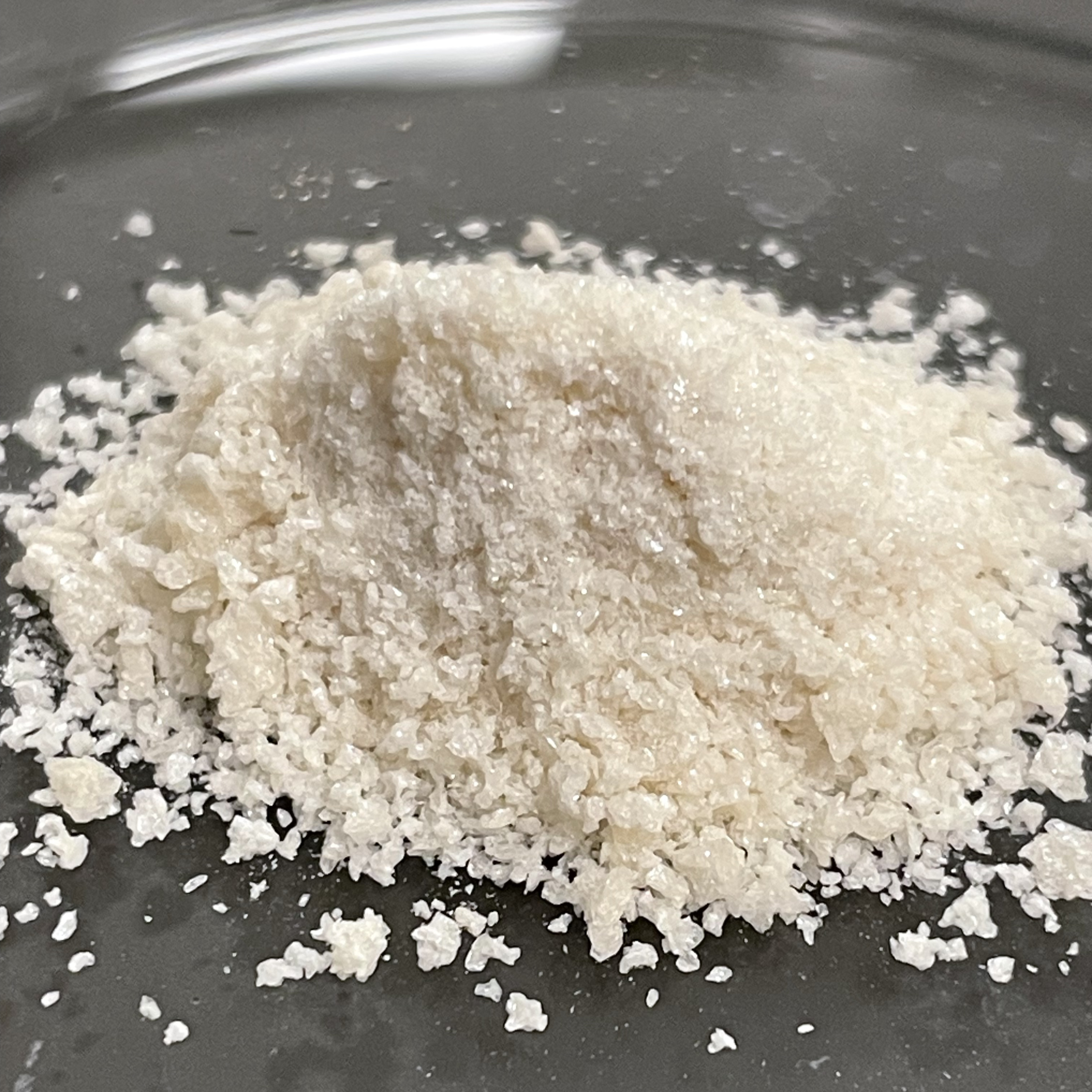
- Emily R. Sekera1,
- John J. Bowling1,
- Jeremy J. Wolff2
- 1St. Jude Children's Research Hospital;
- 2Bruker Daltonics Inc.



Protocol Citation: Emily R. Sekera, John J. Bowling, Jeremy J. Wolff 2025. Routine Purification of 2,5-dihydroxybenzoic acid (DHB). protocols.io https://dx.doi.org/10.17504/protocols.io.kqdg312b1l25/v1
License: This is an open access protocol distributed under the terms of the Creative Commons Attribution License, which permits unrestricted use, distribution, and reproduction in any medium, provided the original author and source are credited
Protocol status: Working
We use this protocol and it's working
Created: August 26, 2025
Last Modified: September 18, 2025
Protocol Integer ID: 225544
Keywords: MALDI, MSI, DHB, mass spectrometry imaging, gentisic acid, dihydroxybenzoic acid, laser desorption, assisted laser desorption, purified dhb, removal of impurity, generation of maldi imaging dataset, maldi imaging dataset, purified matrix, purification process, routine purification, formic acid, ionization
Abstract
This protocol details the procedures and workflows for the generation of purified 2,5-dihydroxybenzoic acid (DHB) to be used in matrix assisted laser desorption/ionization (MALDI) experiments. The purification process involves dissolving the crude matrix to create a super-saturated solution within acetone and formic acid, followed by an overnight incubation to facilitate the removal of impurities. This method provides a reproducible and scalable approach to generating purified DHB. The purified matrix is essential for maintaining clean instrumentation and generation of MALDI imaging datasets with less contaminants. Purified DHB has been successful in imaging a wide range of small molecules (100-2,000 Da) in both positive and negative ion modes.
Materials
Chemicals
- 2,5-dihydroxybenzoic acid (DHB 98%)
- Acetone (LC-MS Grade)
- Formic Acid (ACS Grade 98%)
Consumables
- 50 mL Falcon tube (or other suitable container)
- Serological Pipette (glass or plastic)
Equipment
- Sonicator
- Centrifuge capable of 2,000 rpm
- Refrigerator
- Vacuum drying apparatus
- Chemical Waste
Safety warnings
All transfer steps should be performed in a certified chemical hood using appropriate PPE.
Procedure
1h 30m
Prepare a saturated solution of DHB in acetone using a 50 mL Falcon tube or another suitable container, depending on the amount of DHB being purified. A sonicator should be used to ensure complete dissolution of DHB.
Centrifuge the DHB solution for approximately 30 seconds at 2000 rpm, 25°C to pull any undissolved DHB to the bottom of the container.
Note
The solubility of DHB in acetone at room temperature is approximately 50 mg/mL.
Decant the supernatant into a new Falcon tube up to 15 mL. For example, 30 mL of acetone is used; this should be split into two 15 mL aliquots for the next step.
Add formic acid to the saturated DHB solution to an approximate ratio of 2:1. For example, add 30 mL of formic acid to 15 mL of the saturated DHB solution. The solution may start to become cloudy.
Note
Adding more formic acid accelerates the precipitation.
Place the solutions in a refrigerator for a minimum of 45 minutes or overnight, to complete precipitation of DHB from the solution.
Briefly centrifuge the solutions at 2000 rpm, 25°C to collect all precipitant to the bottom of the tube.
Carefully decant and discard the formic acid:acetone supernatant into an appropriate waste container.
Note
You should observe a discoloration of the supernatant.
Dry the DHB under vacuum for 30 minutes or until dry using an appropriate technique available in your laboratory.
Purity Validation Methods
Test the DHB purification using available methods. Some options are shown below.
Melting point
Determination of effective purification by melting point apparatus should be performed in triplicate. Higher purity will lead to lower average MP, typically 1-2 ºC lower following purificationtermination of effective purification by melting point apparatus should be performed in triplicate. Higher purity will lead to lower average MP, typically 1-2 ºC lower following purification.
High resolution mass spectrometry analysis can assess the purity of the sample in m/z regions of interest. Displayed below are examples of ESI spectra (100 μg/mL) acquired using a Bruker 7T SolariX FT-ICR-MS in both positive and negative ionization modes.
Researchers may also wish to assess using MALDI. Reference peaks for commonly observed matrix clusters can be found in the attached citation.
Citation
LINK
Expanded mass spectra for DHB pre-purification (A&B) and post purification (C&D) in both negative (A&C, [M-H]-) and positive (B&D, [M+H]+) and ion modes.
Expanded mass spectra for DHB pre-purification (E&G) and post purification (F&H) in both negative (A&C, [2M-H]-) and positive (G, NA) and ion modes.
Representative mass spectra for DHB pre-purification (I&J) and post purification (K&L) in both negative (I&J) and positive (K&L) and ion modes.
Citations
Step 9.2
Treu A, Römpp A. Matrix ions as internal standard for high mass accuracy matrix-assisted laser desorption/ionization mass spectrometry imaging.
https://doi.org/10.1002/rcm.9110Acknowledgements
Acknowledgements
The authors gratefully acknowledge the invaluable support and guidance provided by the members of the Amster laboratory, especially Drs. I. Jonathan Amster, Jeremy Wolff, Todd Mize, Bill Simonsick, and Mr. Art Kleps. We are particularly thankful to Dr. Bill Simonsick and Mr. Art Kleps, whose contributions and dedication to their field continue to inspire us, and we honor their memory. Portions of this work was made possible through the generous support of the American Lebanese Syrian Associated Charities (ALSAC).