May 23, 2023
RCA-NGS for RNA viruses with ONT V14 chemistry
Forked from RCA-NGS for RNA viruses
- Masayasu Misu1,2,
- Tomoki Yoshikawa1,
- Satoko Sugimoto1,
- Yuki Takamatsu1,
- Takeshi Kurosu1,
- Yukiteru Ouji2,
- Masahide Yoshikawa2,
- Masayuki Shimojima1,
- Hideki Ebihara1,
- Masayuki Saijo1
- 1Department of Virology I, National Institute of Infectious Diseases;
- 2Department of Pathogen, Infection and Immunity, Nara Medical University
- MinION



Protocol Citation: Masayasu Misu, Tomoki Yoshikawa, Satoko Sugimoto, Yuki Takamatsu, Takeshi Kurosu, Yukiteru Ouji, Masahide Yoshikawa, Masayuki Shimojima, Hideki Ebihara, Masayuki Saijo 2023. RCA-NGS for RNA viruses with ONT V14 chemistry. protocols.io https://dx.doi.org/10.17504/protocols.io.n92ldpx89l5b/v1
License: This is an open access protocol distributed under the terms of the Creative Commons Attribution License, which permits unrestricted use, distribution, and reproduction in any medium, provided the original author and source are credited
Protocol status: Working
We use this protocol and it's working
Created: April 10, 2023
Last Modified: May 23, 2023
Protocol Integer ID: 80235
Keywords: Oxford Nanopore Technology, RNA virus, Sequence method, MinION, Nanopore sequencing, RCA-NGS, ngs for rna virus, amplification of the viral genomic cdna, viral genome sequence determination, nucleic acid amplification with virus, terminal of viral genome sequence determination, viral genome by nuclease treatment, whole rna viral genome, viral genomic cdna, viral genome, rna virus, isothermal dna amplification technique, nucleic acid amplification, physical viral particle enrichment, whole rna, rna, rna other than the rna, virus, v14 chemistry of ont, removal of unwanted dna, nuclease treatment, ont v14 chemistry, specific pcr primer, genome, segmented genome, sequencing
Abstract
Note that this version of the protocl was adopted to V14 chemistry of ONT.
This RCA-NGS were optimized for an NGS machine, MinION. These methods do not require nucleic acid amplification with virus-specific PCR primers, physical viral particle enrichment, and RACE.
These methods enable whole RNA viral genome sequencing by combining the following techniques:
1) removal of unwanted DNA and RNA other than the RNA viral genome by nuclease treatment
2) the terminal of viral genome sequence determination by barcoded linkers ligation
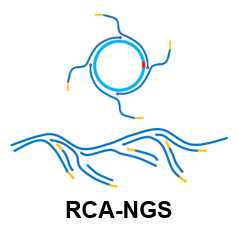
3) Amplification of the viral genomic cDNA using an isothermal DNA amplification technique, such as rolling circle amplification (RCA).
This method can be exploited to determine any whole RNA viral genomes (i.e., single-stranded, double-stranded, positive-stranded, negative-stranded, non-segmented or multi-segmented genomes).
Materials
- Micrococcal Nuclease - 320,000 gel unitsNew England BiolabsCatalog #M0247S
- High Pure Viral RNA KitRocheCatalog #11858882001
- Turbo DNA-free KitInvitrogen - Thermo FisherCatalog #AM1907
- NucleoSpin RNA Clean-up XS - Takara, Catalog #740903.10
- T4 RNA Ligase 2, truncated KQ - 2,000 unitsNew England BiolabsCatalog #M0373S
- The barcode-polyA linker DNA (e.g., The cSP6-polyA linker DNA)
- Superscript IVThermo Fisher ScientificCatalog #18090050
- SP6 primer (e.g., 5′ phosphorylated SP6 primer)
- Deoxynucleotide (dNTP) Solution MixNew England BiolabsCatalog #N0447S
- Superase-In RNase InhibitorThermofisherCatalog #AM2694
- Dr.GenTLE Precipitation Carrier - Takara Catalog #9094
- RNase H - 250 unitsNew England BiolabsCatalog #M0297S
- Agencourt AMPure XPBeckman CoulterCatalog #A63880
- CircLigase II ssDNA Ligase - Biosearch Technologies Catalog #CL9021K
- GenomiPhi V3 Ready-To-Go DNA Amplification Kit - Cytiva Catalog #25-6601-24
- T7 Endonuclease I - 250 unitsNew England BiolabsCatalog #M0302S
- NEBNext FFPE DNA Repair Mix - 24 rxnsNew England BiolabsCatalog #M6630S
- NEBNext Ultra II End Repair/dA-Tailing Module - 24 rxnsNew England BiolabsCatalog #E7546S
- Blunt/TA Ligase Master Mix - 50 rxnsNew England BiolabsCatalog #M0367S
- NEBNext Quick Ligation Module - 20 rxnsNew England BiolabsCatalog #E6056S
- Native Barcoding Kit 24 V14 - Oxford Nanopore Technologies Catalog #SQK-NBD114.24
- Qubit 4 FluorometerThermo Fisher ScientificCatalog #Q33238
- Qubit 1X dsDNA HS Assay KitThermo Fisher ScientificCatalog #Q33230
- DNA LoBind Tube 1.5ml EppendorfCatalog #022431021
- 0.2 ml PCR Tube stripsEppendorfCatalog #0030124359
- 100 % ethanol
- 70 % ethanol
- TE(pH8.0)
- nuclease-free H2O
Protocol materials
High Pure Viral RNA KitRocheCatalog #11858882001
Blunt/TA Ligase Master Mix - 50 rxnsNew England BiolabsCatalog #M0367S
NEBNext Quick Ligation Module - 20 rxnsNew England BiolabsCatalog #E6056S
T4 RNA Ligase 2, truncated KQ - 2,000 unitsNew England BiolabsCatalog #M0373S
Superscript IVThermo Fisher ScientificCatalog #18090050
Micrococcal Nuclease - 320,000 gel unitsNew England BiolabsCatalog #M0247S
NEBNext Ultra II End Repair/dA-Tailing Module - 24 rxnsNew England BiolabsCatalog #E7546S
Qubit 4 FluorometerThermo Fisher ScientificCatalog #Q33238
NEBNext FFPE DNA Repair Mix - 24 rxnsNew England BiolabsCatalog #M6630S
T7 Endonuclease I - 250 unitsNew England BiolabsCatalog #M0302S
Qubit 1X dsDNA HS Assay KitThermo Fisher ScientificCatalog #Q33230
0.2 ml PCR Tube stripsEppendorfCatalog #0030124359
Turbo DNA-free KitInvitrogen - Thermo FisherCatalog #AM1907
Deoxynucleotide (dNTP) Solution MixNew England BiolabsCatalog #N0447S
Superase-In RNase InhibitorThermofisherCatalog #AM2694
RNase H - 250 unitsNew England BiolabsCatalog #M0297S
Agencourt AMPure XPBeckman CoulterCatalog #A63880
DNA LoBind Tube 1.5ml EppendorfCatalog #022431021
Safety warnings
Follow your facility's regulations and biosafety practices.
Before start
This method was only confirmed to work with the working stocks that contain isolated RNA viruses at least 3.0 × 10⁵ TCID50 per ml.
It is recommended to check no bacterial contamination(e.g., Mycoplasma spp.).
Preparation for virus supernatant
Centrifuge the working stock virus to remove debris.
6000 x g, Room temperature, 00:10:00
10m
Transfer 180 µL virus supernatant to a 1.5ml screw cap tube.
Unwanted DNA and RNA mainly originating from the virus-infected cells are digested usingMicrococcal Nuclease - 320,000 gel unitsNew England BiolabsCatalog #M0247S .
Total 201 μl reaction
- 180 µL virus supernatant
- 20 µL 10X Micrococcal Nuclease Reaction Buffer
- 1 µL Micrococcal nuclease
Mix by pipetting and spin down.
37 °C water bath 01:00:00
1h
The viral genomic RNA extraction
The viral genomic RNA extraction is performed using High Pure Viral RNA KitRocheCatalog #11858882001 .
Add 400 µL of binding buffer (with 4 µL PolyA carrier RNA).
Mix gently by ~5 times pipetting and flicking thoroughly the tube, and spin down.
Room temperature 00:10:00
10m
Transfer the sample to a High Pure Filter Tube.
8000 x g, Room temperature, 00:01:00
Discard the flow-through liquid and Collection Tube, and insert the Filter Tube into a new Collection Tube.
1m
Add 500 µL of inhibitor removal bo transfer the sample to a High Pure Filter Tube.
8000 x g, Room temperature, 00:01:00
Discard the flow-through liquid and Collection Tube, and insert the Filter Tube into a new Collection Tube.
1m
Add 450 µL of wash buffer.
8000 x g, Room temperature, 00:01:00
Discard the flow-through liquid and Collection Tube, and insert the Filter Tube into a new Collection Tube.
1m
Add 450 µL of wash buffer.
13000 x g, Room temperature, 00:01:00 and discard the flow-through liquid.
Discard the Collection Tube and insert the Filter Tube into a 1.5 ml tube -DNA LoBind Tube 1.5ml EppendorfCatalog #022431021 .
1m
Add 50 µL Elution Buffer.
13000 x g, Room temperature, 00:01:00
Note
The eluted RNA can be stored at -80℃.
1m
Remove unwanted DNA
Unwanted DNA mainly from the virus-infected cells in the RNA sample is digested using a Turbo DNA-free KitInvitrogen - Thermo FisherCatalog #AM1907 .
Total 56 μl reaction
- 50 µL the eluted RNA
- 5 µL 10X reaction buffer
- 1 µL DNase I
Mix gently by pipetting and spin down.
37 °C 00:30:00
30m
The viral RNA is purified using NucleoSpin RNA Clean-up XS - Takara, Catalog #740903.10.
Add an equal volume 56 µL of Buffer RCU and mix gently.
Transfer the sample to a NucleoSpin RNA XS Column.
11000 x g, Room temperature, 00:01:00
1m
Wash the column by 400 µL Buffer RA3.
11000 x g, Room temperature, 00:01:00
Discard the flow-through liquid and Collection Tube, and insert the NucleoSpin RNA XS Column into a new Collection Tube.
1m
Wash the column by 200 µL Buffer RA3.
11000 x g, Room temperature, 00:02:00
Discard the flow-through liquid and Collection Tube, and insert the NucleoSpin RNA XS Column into a Nuclease-free Collection Tube(1.5 ml).
2m
Add 10 µL RNase-free H2O.
11000 x g, Room temperature, 00:01:00
Transfer the sample to a 0.2 ml PCR tube -0.2 ml PCR Tube stripsEppendorfCatalog #0030124359 .
1m
cSP6-polyA Linker DNA ligation
The viral RNA is ligated with cSP6-polyA Linker DNA usingT4 RNA Ligase 2, truncated KQ - 2,000 unitsNew England BiolabsCatalog #M0373S .
The RNA is ligated to the 3' end with the barcoded(complementary sequence of SP6 (cSP6)) polyA linker DNA. It is able to identify the 3’ terminal viral genome sequence. The PolyA sequence is required for reverse transcription for ONT kit (SQK-PBK004/ PCS109).
Note
The cSP6-polyA linker DNA (5'-5rApp-CTATAGTGTCACCTAAATCAAAAAAAAAAAAAAAAAAAA-3ddC-3'), which is pre-adenylated at the 5' terminal (5rApp), and consists of the complementary sequence of SP6 (CTATAGTGTCACCTAAATC), oligo (dA) 20, and dideoxycytidine (3ddC) at the 3' terminal, was synthesised for 3' linker ligation by Integrated DNA Technologies (Coralville, IA).
Total 20 μl reaction
- 10 µL Purified RNA
- 1 µL 10 μM the cSP6-polyA linker DNA
- 2 µL 10X T4 RNA Ligase Reaction Buffer
- 6 µL 50% PEG8000 solution
- 1 µL T4 RNA Ligase 2, truncated KQ
Mix gently by pipetting and spin down.
Incubate 25 °C 00:15:00
15m
The linker-ligated viral RNA is purified using NucleoSpin RNA Clean-up XS - Takara, Catalog #740903.10
Fill the sample to 100 μl with 80 μl TE (pH 8.0) and add 100 μl (equal volume) of Buffer RCU.
Eluted the RNA in 10 µL RNase-free H2O and transfer the sample to a 0.2 ml PCR tube.
Reverse transcription
The viral RNA is reverse transcribed using Superscript IVThermo Fisher ScientificCatalog #18090050 .
5′ phosphorylated SP6 primer is used for reverse transcription.
Note
SP6 primer (5′ phosphorylated SP6 primer); 5' [Phos]GATTTAGGTGACACTATAG 3'
5' phosphorylation is due to circularization.
Set up pre-mixture
- 10 µL RNA (~ 50ng)
- 1 µL 50 μM SP6 primer
- 1 µL nuclease-free H2O
- 1 µL 10mM dNTP - Deoxynucleotide (dNTP) Solution MixNew England BiolabsCatalog #N0447S
Mix gently by flicking the tube, and spin down.
65 °C 00:05:00 and 4 °C 00:01:00
6m
Total 20 μl reaction
- 13 µL pre-mixture sample
- 4 µL 5X SSIV Buffer
- 1 µL 100mM DTT
- 1 µL RNase OUT - Superase-In RNase InhibitorThermofisherCatalog #AM2694
- 1 µL SuperScript IV Reverse Transcriptase
Mix gently by flicking the tube, and spin down.
55 °C 00:10:00
80 °C 00:10:00
20m
RNase H treatment
20m
Add 1 µL RNase H - 250 unitsNew England BiolabsCatalog #M0297S .
37 °C 00:20:00
20m
cDNA purification using AMPure XP
cDNA is purified using Agencourt AMPure XPBeckman CoulterCatalog #A63880
Prepare AMpure XP beads for use; resuspend by vortexing.
Transfer amplified DNA sample to 1.5ml low binding tube.
Add 36 µL (X1.8 volume) AMPure XP reagent and mix by pipetting.
Incubate on rotor mixer.
00:05:00 Room temperature
Spin down and pellet on a magnet.
Wait for 00:01:00 and pipette off the supernatant.
Wash twice by 100 µL 70 % ethanol and remove the ethanol using a pipette and discard.
Spin down and pipette off any residual ethanol.
Resuspend pellet in 12 µL TE(pH 8.0).
Incubate on a rotor mixer.
00:05:00 Room temperature
5m
Spin down and pellet the beads on the magnet until the elute is clear and colourless.
Remove and retain 12 µL elute into a new tube.
(Optional step) Short cDNA fragment removal
Short cDNA fragment is removed from the viral RNA sample using Agencourt AMPure XPBeckman CoulterCatalog #A63880
Prepare AMpure XP beads for use; resuspend by vortexing.
Transfer amplified DNA sample to 1.5ml low binding tube.
Note
If a significant proportion of the reads obtained from an NGS run fail to match with the NCBI-nr database (i.e., no hits), it could indicate a large number of short cDNA fragments in the sample. In such instances, re-performing the optional step following step 11 by adding x1.8 volume of AMPure XP could significantly enhance the outcomes.
Add 8 µL of TE to the 12 µL of elute to adjust 20 µL .
Size selection of the cDNA sample is performed using Agencourt AMPure XPBeckman CoulterCatalog #A63880 .
X0.8 volume of AMPure beads recovers more than 200 bp of nucleic acids.
Add 16 µL (X0.8 volume) AMPure beads and mix by pipetting.
Incubate on rotor mixer.
00:05:00 Room temperature
Spin down and pellet on a magnet.
Wait for 00:01:00 and pipette off the supernatant.
Wash twice by 100 µL 70 % ethanol and remove the ethanol using a pipette and discard.
Spin down and pipette off any residual ethanol.
Resuspend pellet in 12 µL nuclease-free water.
Incubate on a rotor mixer.
00:05:00 Room temperature
5m
Spin down and pellet the beads on the magnet until the elute is clear and colourless.
Remove retain 12 µL elute into a new tube.
Circularization of cDNA
1h 10m
The cDNA is circularized using CircLigase II ssDNA Ligase - Biosearch Technologies Catalog #CL9021K.
Total 20 μl reaction
- 12 µL cDNA
- 2 µL 10X reaction buffer
- 1 µL 50 mM MnCl2
- 4 µL 5M Betaine
- 1 µL CircLigase II
Mix by pipetting and spin down.
60 °C 01:00:00
80 °C 00:10:00
1h 10m
cDNA is purified using Agencourt AMPure XPBeckman CoulterCatalog #A63880
(Add 36 µL (X1.8 volume) AMPure beads)
Elute the pellet in 10 µL nuclease-free H2O.
Amplification of cDNA by rolling circle amplification (RCA)
cDNA is amplified by Rolling circle amplification (RCA) using GenomiPhi V3 Ready-To-Go DNA Amplification Kit - Cytiva Catalog #25-6601-24.
Total 20 μl reaction
- 10 µL cDNA
- 10 µL 2X denaturation buffer
Mix by pipetting and spin down.
95 °C 00:03:00
4 °C on ice
3m
Add 20 μl denatured sample to Ready to go GenomiPhi cake.
30 °C 04:00:00
65 °C 00:10:00
4h 10m
The cDNA is purified using Agencourt AMPure XPBeckman CoulterCatalog #A63880
(Add 36 µL (X1.8 volume) AMPure beads)
Elute the pellet in 40 µL nuclease-free H2O.
DNA concentration is measured using a Qubit 4 Fluorometer with Qubit 1X dsDNA HS Assay KitThermo Fisher ScientificCatalog #Q33230 .
- 199 µL 1X working solution
- 1 µL DNA
Mix by vortexing.
Incubate 00:02:00 Room temperature and measure.
Note
Confirm the total amplified cDNA to be over 1500 ng, as confirmed using, for instance, a Qubit 4 Fluorometer and Qubit 1X dsDNA HS Assay Kit.
T7 endonuclease treatment
The amplified cDNA by RCA is digested using T7 Endonuclease I - 250 unitsNew England BiolabsCatalog #M0302S to remove branching.
The following protocol is modified based on the Native barcoding amplicons (with EXP-NBD104, EXPNBD114,and SQK-LSK109) protocol (NBA_9093_v109_revA_12Nov2019) provided by Oxford Nanopore Technologies website.
Total 30 μl reaction
- x µL (1.0 μg) DNA
- 3 µL NEBuffer 2
- 1.5 µL T7 endonuclease I
- 25-x µL nuclease-free H2O
Mix by pipetting and spin down.
37 °C 00:30:00
30m
The cDNA is purified using Agencourt AMPure XPBeckman CoulterCatalog #A63880 .
(Add 30 µL (X1.0 volume) AMPure beads)
Resuspend pellet in 13 µL nuclease-free H2O.
DNA repair and end-prep
The purified cDNA is end-prepped using
NEBNext FFPE DNA Repair Mix - 24 rxnsNew England BiolabsCatalog #M6630S and
NEBNext Ultra II End Repair/dA-Tailing Module - 24 rxnsNew England BiolabsCatalog #E7546S
Total 15 μl reaction
- 12 µL DNA
- 0.875 µL NEB Next FFPE DNA repair buffer
- 0.5 µL NEB Next FFPE DNA repair Mix
- 0.875 µL Ultra II end-prep reaction buffer
- 0.75 µL Ultra II end-prep reaction Mix
Mix by pipetting and spin down.
20 °C 00:30:00
65 °C 00:05:00
35m
The cDNA is purified using Agencourt AMPure XPBeckman CoulterCatalog #A63880 .
(Add 15 µL (X1.0 volume) AMPure beads)
Resuspend pellet in 10 µL nuclease-free H2O.
DNA concentration is measured using a Qubit 4 Fluorometer with Qubit 1X dsDNA HS Assay KitThermo Fisher ScientificCatalog #Q33230 .
- 199 µL 1X working solution
- 1 µL DNA
Mix by vortexing.
Incubate 00:02:00 Room temperature and measure.
Note
Confirm the purified cDNA to be approximately 700 ng or more using, for instance, Qubit 4 Fluorometer with a Qubit 1X dsDNA HS Assay Kit.
Note
The cDNA can be stored at 4℃ overnihgt.
2m
Native barcode ligation
The end-prepped cDNA is ligated with native barcode using Native Barcoding Kit V14 - Oxford Nanopore Technologies Catalog #SQK-NBD114.24 and Blunt/TA Ligase Master Mix - 50 rxnsNew England BiolabsCatalog #M0367S .
Total 20 μl reaction
- x µL DNA(about 400ng)
- 1.5 µL native barcode
- 10 µL Blunt/TA ligase master mix
- 8.5-x µL nuclease-free H2O
Mix by pipetting and spin down.
25 °C 00:20:00
20m
Add 20 µL TE(pH8.0).
The cDNA is purified using Agencourt AMPure XPBeckman CoulterCatalog #A63880 .
(Add 20 µL (X1.0 volume) AMPure beads)
Resuspend pellet in 12 µL nuclease-free H2O.
DNA concentration is measured using a Qubit 4 Fluorometer with Qubit 1X dsDNA HS Assay KitThermo Fisher ScientificCatalog #Q33230 .
- 199 µL 1X working solution
- 1 µL DNA
Mix by vortexing.
Incubate 00:02:00 Room temperature and measure.
Convert nanogram(ng) into femtomole(fmol) by a calculator.
Note
The molar concentration of the cDNA sample can be converted based on the length of the major band confirmed by electrophoresis after T7 endonuclease treatment. Typically, the fragment lengths are around 2000 bases pairs.
Adaptor ligation
20m
Pool each barcoded sample into a 0.2ml PCR tube (Total 100–200 fmol).
Note
Even when the V14 kit was used, we have good results with using total 100 to 200 fmol of samples.
Adaptor Ligation with pooled samples is performed using
Ligation Sequencing Kit - Oxford Nanopore Technologies Catalog #SQK-NBD114.24 and
NEBNext Quick Ligation Module - 20 rxnsNew England BiolabsCatalog #E6056S .
Total 20 μl reaction
- x µL DNA (100-200 fmol)
- 2 µL Native Adapter (NA)
- 4 µL NEB Next Quick Ligation Reaction Buffer(5X)
- 2 µL Quick T4 DNA ligase
- 12-x µL nuclease-free H2O
mix gently and incubate.
25 °C 00:20:00
20m
The adaptor-ligated cDNA is purified using Agencourt AMPure XPBeckman CoulterCatalog #A63880 .
Prepare AMpure XP beads for use; resuspend by vortexing.
Transfer amplified DNA sample to 1.5ml low binding tube.
Add 10 µL (X0.5 volume) AMPure XP reagent and mix by pipetting.
Incubate on a rotor mixer.
00:05:00 Room temperature
Spin down and pellet on a magnet. Wait for 00:01:00 and pipette off the supernatant.
- Wash twice by 100 µL Short Fragment Buffer(SFB) and remove the SFB using a pipette and discard.
Spin down and pipette off any residual SFB.
- Resuspend pellet in 13 µL Elution Buffer (EB)
00:05:00 Room temperature and tapping occasionally.
5m
Spin down and pellet the beads on the magnet until the elute is clear and colourless.
Remove retain 13 µL elute into a new tube.
DNA concentration is measured using a Qubit 4 Fluorometer with Qubit 1X dsDNA HS Assay KitThermo Fisher ScientificCatalog #Q33230 .
- 199 µL 1X working solution
- 1 µL DNA
Mix by vortexing.
Incubate 00:02:00 Room temperature and measure.
Sequencing by MinION
Sequencing according to the manufacturer's instructions.