Sep 09, 2025
Rapid, in-situ fungal DNA extraction ("Toothpick Method")
- Harte Singer1,2,3,4
- 1FUNDIS;
- 2North American Mycological Association;
- 3Dikarya LLC;
- 4California State University, East Bay


Protocol Citation: Harte Singer 2025. Rapid, in-situ fungal DNA extraction ("Toothpick Method"). protocols.io https://dx.doi.org/10.17504/protocols.io.q26g7n5n8lwz/v1
License: This is an open access protocol distributed under the terms of the Creative Commons Attribution License, which permits unrestricted use, distribution, and reproduction in any medium, provided the original author and source are credited
Protocol status: Working
We use this protocol and it's working
Created: September 08, 2025
Last Modified: September 09, 2025
Protocol Integer ID: 226755
Keywords: fresh fungal tissue for dna barcoding, situ fungal dna extraction, fungal dna extraction, sampling fresh fungal tissue, dna barcoding, dna, tissue for extended storage
Abstract
An explanation of a simple, affordable, and versatile protocol for sampling fresh fungal tissue for DNA barcoding. Can be use to stabilize tissue for extended storage without refrigeration.
Materials
Individually wrapped wooden toothpicks (cellophane-wrapped is ideal)
100 uL filtered pipette tips Amazon $40 (As long as they are universal and not for the LTS system, they should work)
Preparing PCR tubes for extraction
10m 3s
Pour an appropriate volume of XNA (dx.doi.org/10.17504/protocols.io.14egnyq8pv5d/v1) into a brand-new reagent reservoir. Each tube will need 30 µL so use that to determine the amount you need. Add a little extra to account for pipetting error and variability.
Using a 5-50 uL 8-channel micropipette, add 30 µL of XNA buffer into 0.2 uL individual attached-cap PCR tubes. You can also use a p200 single-channel micropipette, however it is much slower. Close the caps after adding buffer.
Label or mark the PCR tubes before DNA extraction so that you can easily reference which sample is in which tube. For a guide on how to sample tissue and a suggestion on how to label, see this protocol which is designed around using dried tissue dx.doi.org/10.17504/protocols.io.eq2lyw93rvx9/v2
Open the cap of a tube of buffer, insert the toothpick tip that now has fungal tissue on it and swirl around the buffer for 00:00:03 . Remove and discard the toothpick, close the cap of the PCR tube, and mark the location of the sample in your notes.
3s
Remove the wrapper of a fresh toothpick by pushing the toothpick through the wrapper. Avoid touching the exposed toothpick or otherwise introducing contamination.
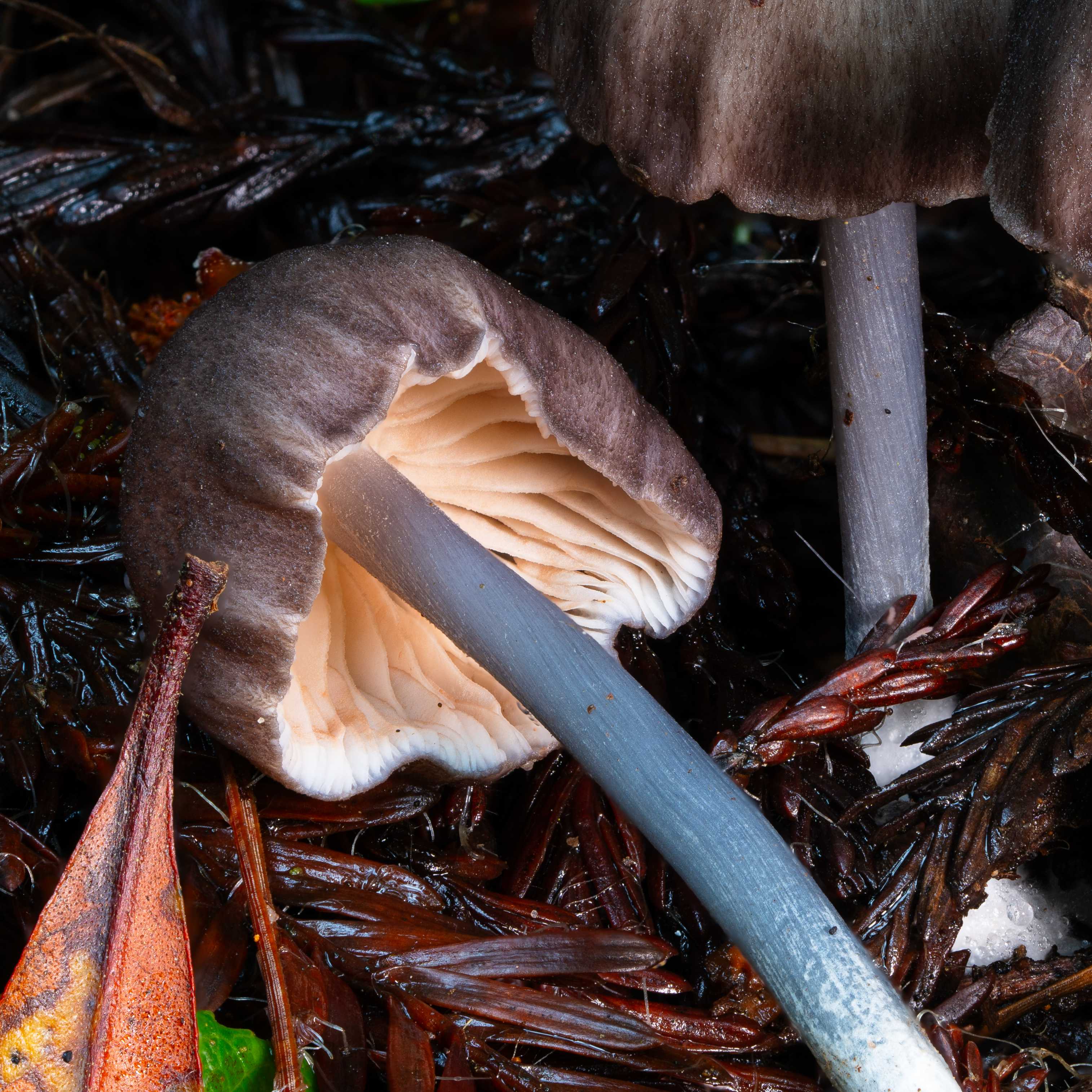
Either dip, or scratch the fertile surface of the mushroom with the toothpick. The objective here is to get some tissue stuck to the rough, wood surface of the toothpick, but to avoid getting a chunk of tissue. You should see some schmutz on the tip, but not an actual chunk of material. This is important! Too much tissue can inhibit PCR. See the link in the previous step for suggestions on how to sample tissue.
As long as the tissue is covered with buffer, these samples are essentially shelf-stable. I have stored samples like this for at least 8 weeks at room temperature without any noticeable reduction in PCR activity. It is recommended that these be stored at -20 °C until ready to proceed to the next step.
Once all of the tubes are filled, spin down in a microcentrifuge for 00:00:10 then place in a PCR thermal cycler and incubate at 95 °C for 00:10:00
followed by a ramp-down to 12 °C .
10m 10s
Spin tubes down in a microcentrifuge for 00:00:10 to bring all of the liquid and sample to the bottom of the tube.
10s
Using a brand new reagent reservoir and a 50-300 uL 8-channel micropipette (or p200 single-channel) add 80 µL of Low TE (Recommended) or molecular-grade water to each tube. Be especially careful to open the tubes without splashing any liquid. Hover the pipette tips over the open tubes and use one hand to brace the pipette in a proper position. Using a smooth and precise motion, expel the buffer into the open PCR tubes. The goal is to have the buffer come out of the pipette tips without splashing or dribbling too much. If some buffer doesn't make it into the PCR tube, it is fine. This dilution step is optional, but recommended.