Nov 28, 2023
Protocol for Synthesis and Preparation of Metal-Organic Framework (MOF) Nanoparticles (10ml Total Volume)
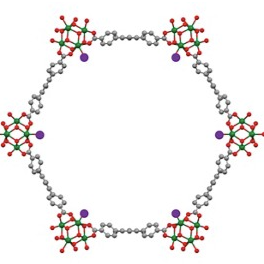
- 1ZZU



Protocol Citation: [email protected] 2023. Protocol for Synthesis and Preparation of Metal-Organic Framework (MOF) Nanoparticles (10ml Total Volume). protocols.io https://dx.doi.org/10.17504/protocols.io.14egn3jkyl5d/v1
License: This is an open access protocol distributed under the terms of the Creative Commons Attribution License, which permits unrestricted use, distribution, and reproduction in any medium, provided the original author and source are credited
Protocol status: Working
We use this protocol and it's working
Created: November 28, 2023
Last Modified: December 02, 2023
Protocol Integer ID: 91503
Keywords: functional mof nanoparticles for use, generating functional mof nanoparticle, preparing cellular component, mof, nanoparticle, cell membrane preparation, preparation of metal, volume adjustment of the mof, preparing metal, cell harvesting, sting agonist, cellular component, preparation, readiness for biological application, dimethylformamide, various in vivo
Abstract
This protocol delineates a comprehensive method for synthesizing and preparing Metal-Organic Framework (MOF) nanoparticles, incorporating a STING agonist (2'3'-cGAMP). The process begins with the dissolution of Zirconium(IV) Chloride Octahydrate and Benzoic Acid in Dimethylformamide (DMF), followed by the addition of Meso-Tetraphenylporphine. The mixture undergoes ultrasonic dispersion and heating to form MOFs. Subsequent centrifugation and washing steps purify the MOFs, which are then combined with the STING agonist. The protocol also details cell harvesting and lysis procedures for preparing cellular components. The final steps include the filtration and volume adjustment of the MOF, MOF+STING, and cell membrane preparations, ensuring their readiness for biological applications. This methodical approach is essential for generating functional MOF nanoparticles for use in various in vivo and in vitro studies, particularly in molecular and cellular research.
Reagents
- Dimethylformamide (DMF)
- Benzoic Acid
- Zirconium(IV) Chloride Octahydrate (ZrCl4·8H2O)
- Meso-Tetraphenylporphine (TPP, C44H30N4O8)
- Dimethyl Silicone Oil
- Nitrogen Dioxide (NO2)
- STING Agonist (2'3'-cGAMP, Cyclic GMP-AMP Sodium Salt)
- Phosphate-Buffered Saline (PBS)
Step 1: MOF Synthesis
- Dissolve 0.03 g of Zirconium(IV) Chloride Octahydrate and 0.22 g of Benzoic Acid in 10 mL of DMF to create a precursor solution.
- Employ ultrasonic dispersion to ensure complete dissolution and mixing of the solution.
- Introduce 0.01 g of Meso-Tetraphenylporphine (TPP) to the mixture. Again use ultrasonic dispersion for thorough integration.
- Transfer the mixture to a round-bottom flask equipped with a magnetic stirrer.
- Introduce Nitrogen Dioxide (NO2) via a dual needle system for gas dispersion.
- Heat the solution at 90 °C for 05:00:00 with continuous stirring at 300 rpm on a magnetic stirrer. Utilize dimethyl silicone oil as a heating medium.
5h
Step 2: Washing and STING Integration
- After synthesis, distribute the MOF suspension evenly into 10 centrifuge tubes (Eppendorf tubes).
- Centrifuge at 12.000 rpm, Room temperature, 00:30:00 to pellet MOF particles.
- Decant the supernatant and resuspend the pellet in fresh DMF. Repeat this washing step two more times, ensuring the supernatant is clear after the final wash.
- Resuspend the washed MOF in 1 mL of DMF per tube, using ultrasonic dispersion for complete solubilization.
- Add STING agonist to the MOF suspension at a 1:10 ratio (v/v), e.g., 300 µL of STING to 3 mL of MOF suspension. Stir the mixture overnight on a magnetic stirrer.
- Store the unused MOF suspension at 4 °C for the next time.
30m
Step 3: Cell Harvesting and Lysis
- Remove media from cultured cells and wash them with PBS.
- Scrape cells from the culture plate using a cell scraper, simultaneously adding 1 mL of PBS to collect the cells in centrifuge tubes.
- Centrifuge the cell suspension at 400g (approximately 2000 rpm, 4°C ) for 00:05:00 min
- Decant the supernatant. Resuspend the cell pellet in 500 µL of Cell Extraction Reagent (CER) and 50 µL of Protease Inhibitor (e.g., PMSF).
- Incubate the cell suspension on ice for 00:05:00 min
- Transfer the cells to a homogenization vessel and physically disrupt the cells (homogenize).
- Transfer the homogenate back into centrifuge tubes and centrifuge at 800g (approximately 3.000 rpm, 4°C ) for 00:05:00 min .
- Transfer the supernatant to new tubes. Add cellular fractionation reagents (e.g., P1201 MER) at a 1:10 ratio (v/v), and incubate on ice for 00:05:00 min
20m
Step 4: Final MOF Preparation
- Centrifuge MOF, MOF+STING, and cell membrane preparations at 12000 rpm for 00:30:00 min .
- Decant the supernatant and resuspend the pellet in 200 µL of PBS.
30m
Step 5: Filtration and Volume Adjustment
- Calibrate hand extruders and initially filter the cell membrane suspension through a 0.4µm filter (diameter 19mm).
- Combine the filtrate with MOF and MOF+STING suspensions in separate tubes. Use ultrasonic dispersion for thorough mixing.
- Filter the combined suspension through a finer 0.2µm filter (diameter 19mm).
- Adjust final volumes with PBS as necessary.
Now, the nanoparticles are now ready for in vivo or in vitro experimentation.