Nov 16, 2025
Priority Specimen Prep Protocol
This protocol is a draft, published without a DOI.
- 1Mycota Lab;
- 2Biodiverse
- Mycota Lab



Protocol Citation: Stephen Russell 2025. Priority Specimen Prep Protocol. protocols.io https://dx.doi.org/
License: This is an open access protocol distributed under the terms of the Creative Commons Attribution License, which permits unrestricted use, distribution, and reproduction in any medium, provided the original author and source are credited
Protocol status: In development
We are still developing and optimizing this protocol
Created: November 16, 2025
Last Modified: November 16, 2025
Protocol Integer ID: 232571
Keywords: priority specimen prep protocol, priority specimen prep protocol this protocol, specimen, total number of specimen, turnaround time at the lab, sample, samples from many month, inaturalist observation, lab, tube barcode, dna, processing time, picture of the tube barcode, species
Abstract
This protocol is designed to allow for fast and efficient processing of your samples once they arrive at the lab. For those who follow this protocol, it should take the processing time from your samples from many months, down to a few weeks (or even on the order of days in some cases).
Specimens can be done this way fresh or dried. They can also be sampled in the field - just take a picture of the tube barcode to include with your iNaturalist observation, and scan them in directly from the picture during iNat upload.
The overall goal of this protocol is to significantly expedite the turnaround time at the lab, and to allow power users the opportunity to reduce the total number of specimens they need to collect, dry, organize, and mail. Specimens would no longer need to be universally collected, particularly for species they know they have collected and barcoded in the past, but where DNA can still help to confirm the species concept. Specimens would just be saved for the 10-20% of really interesting things, eliminating 80-90% of the specimen drying, organization, and shipping.
For Preparing Dried Specimens
Prepare your materials:
Toothpicks
Shotglass with water
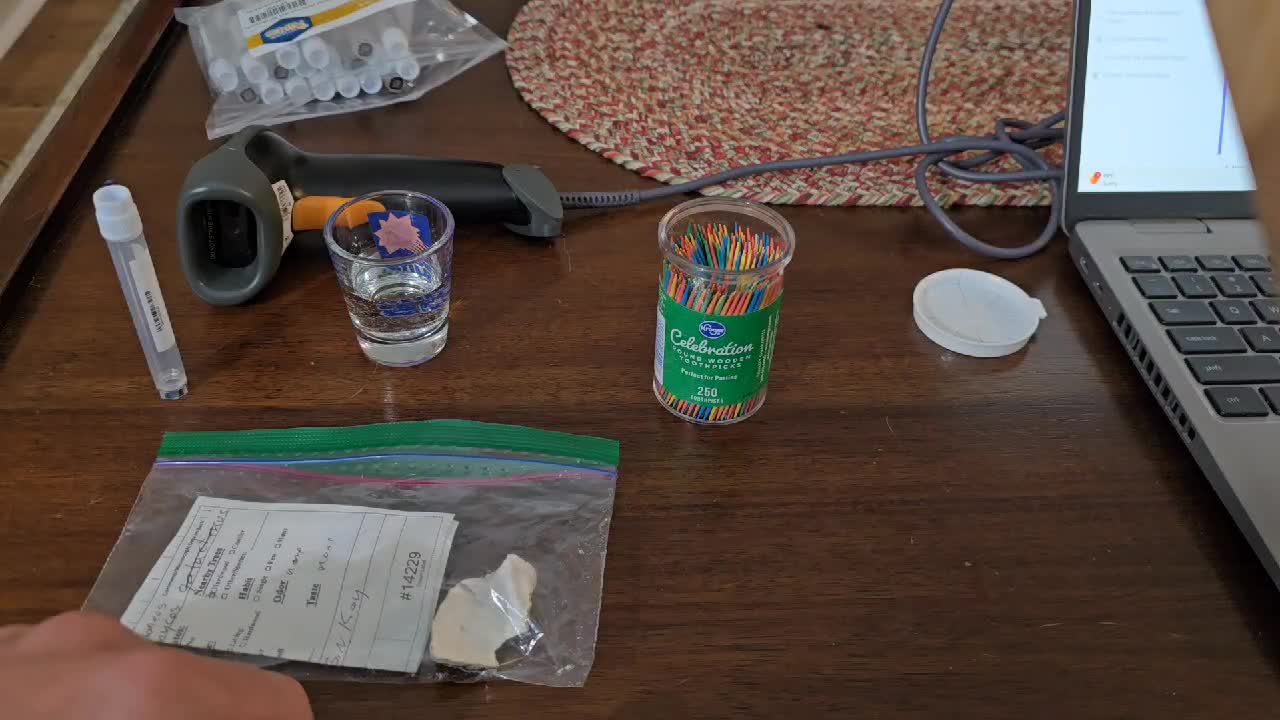
Open the tube, dip the toothpick in the water in the shot glass, and poke, roll, and/or scrape the toothpick on the specimen.
For most specimens, such as agarics, boletes, polypores, and others, jab the end of the toothpick into the specimen four or five times:
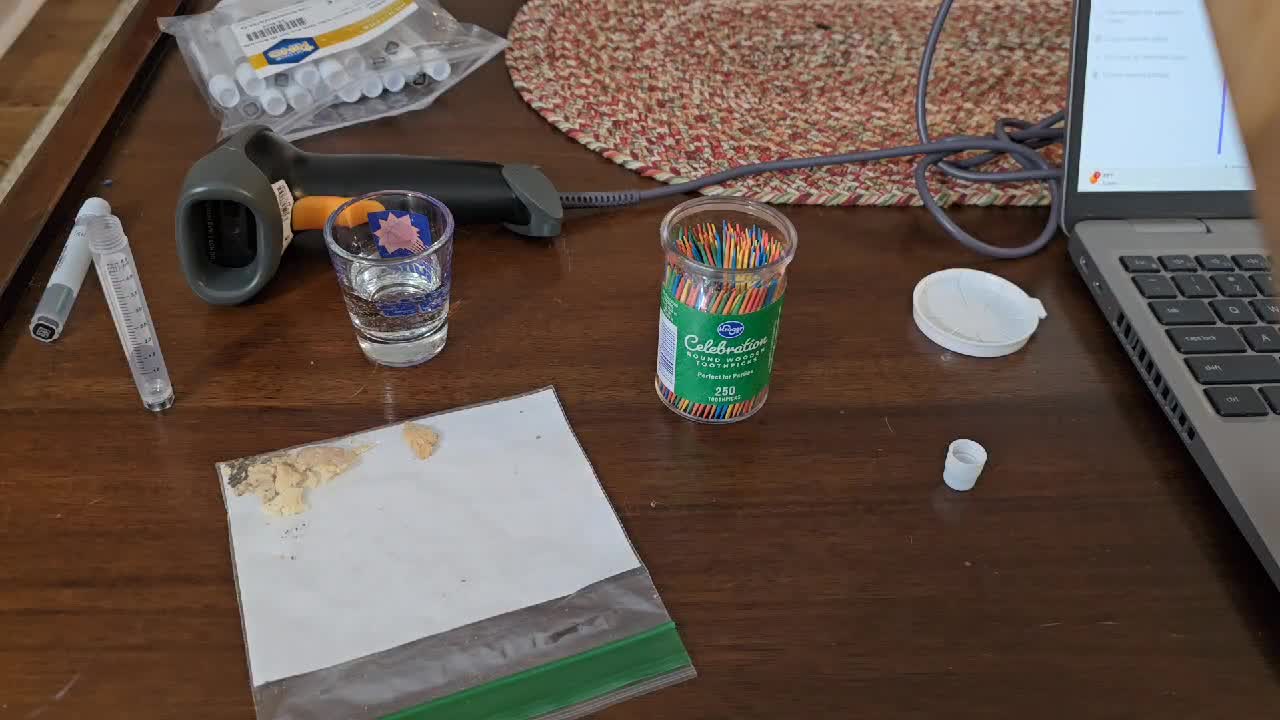
For powdery specimens like a puffball, just rolling the toothpick on the surface will deposit cells around the exterior of the toothpick:
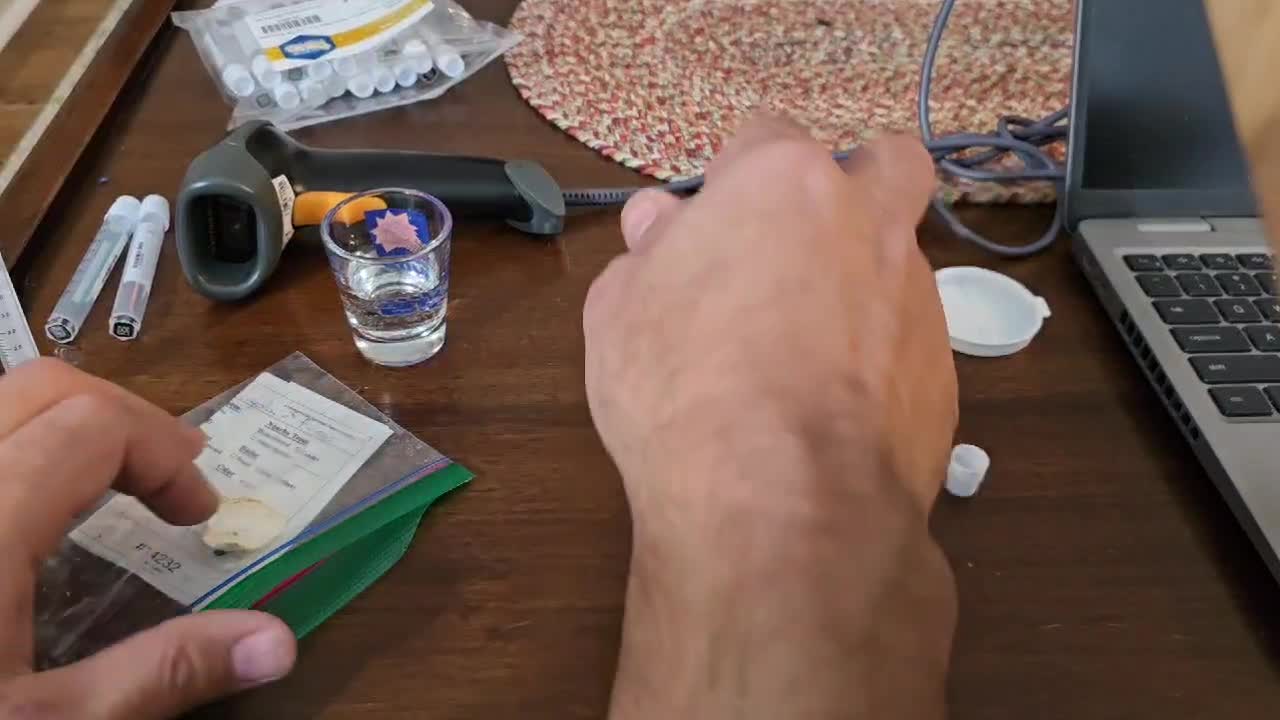
For resupinate specimens or in other various cases, simply scraping the surface of the specimen a few times will get enough cells onto the toothpick:
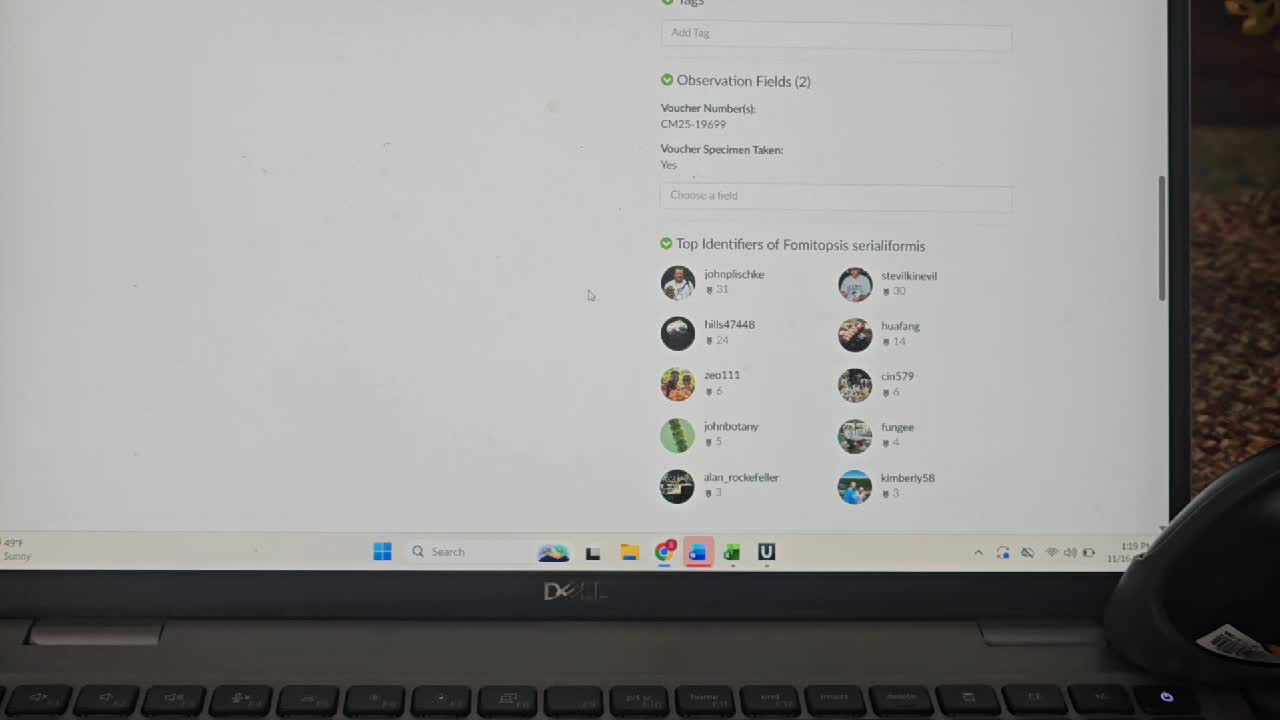
Scan the barcode directly into the iNaturalist/Mushroom Observer observation. "Tube Number" field on iNaturalist.
Mail in the tubes along with the specimens. They can be placed back in the original bags, in any order, all facing the same way.