Mar 20, 2023
Plate Count Agar
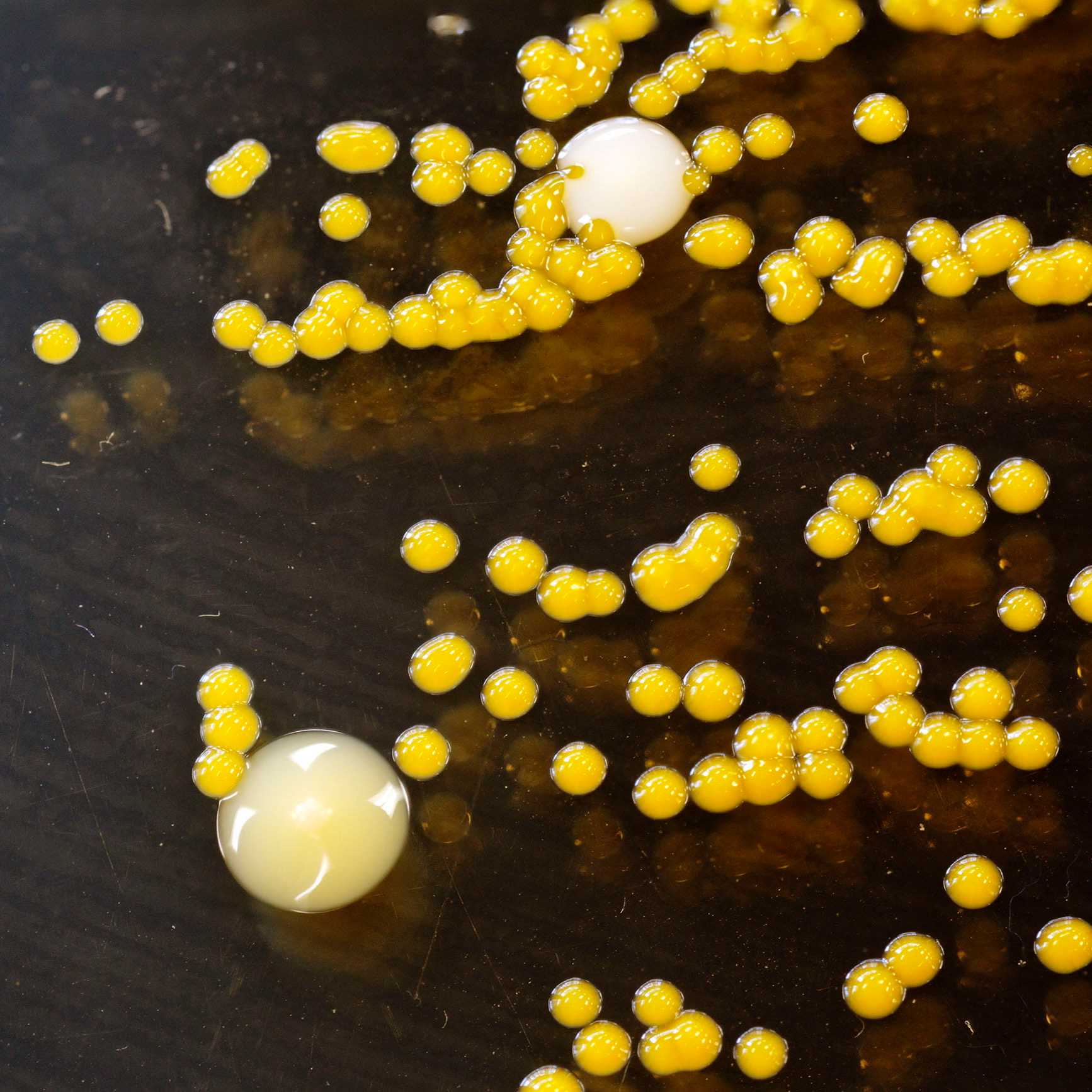
- 1University of Oslo



Protocol Citation: Andreas Sagen 2023. Plate Count Agar. protocols.io https://dx.doi.org/10.17504/protocols.io.eq2ly74delx9/v1
License: This is an open access protocol distributed under the terms of the Creative Commons Attribution License, which permits unrestricted use, distribution, and reproduction in any medium, provided the original author and source are credited
Protocol status: Working
We use this protocol and it's working
Created: March 09, 2023
Last Modified: March 20, 2023
Protocol Integer ID: 78371
Keywords: Plate count agar, agar, plate counting, counting, CFU, plate count agar plate count agar, microbiological growth medium, pca, bacteria, substrate for bacteria, using pca, aerobic bacteria, living aerobic bacteria, viable bacterial growth, growth of the organism, units per gram, solid sample, liquid sample, fermentable carbohydrate, yeast extract, organism, sample, glucose, gram, substrate, source for vitamin, plate, nitrogen
Abstract
Plate Count Agar (PCA), is a microbiological growth medium to assess viable bacterial growth of a sample.
The total number of living aerobic bacteria can be determined using PCA which is a substrate for bacteria to grow on. The medium contains casein which provides nitrogen, carbon, amino acids, vitamins and minerals to aid in the growth of the organism. Yeast extract is the source for vitamins and glucose is the fermentable carbohydrate. Agar is the solidifying agent. This is a non-selective medium and the bacteria is counted as colony forming units per gram (CFU/g) in solid samples and (CFU/ml) in liquid samples.
Guidelines
Prepare enough for the necessary number of experiments to perform in order to prevent batch-to-batch variation between experiments. Input chemicals should be of a certain quality in order to prevent contaminants that can impact microbial growth and selection.
Materials
Magnetic stirrer, autoclave, scale, tubes, flask
Protocol materials
TryptoneMerck Millipore (EMD Millipore)Catalog #T9410
Yeast ExtractMerck MilliporeSigma (Sigma-Aldrich)Catalog #Y0875
GlucoseMerck MilliporeSigma (Sigma-Aldrich)Catalog #G7021
AgarMerck MilliporeSigma (Sigma-Aldrich)Catalog #A1296
Safety warnings
Be sure to wear appropriate PPE when working with antibiotics and chemicals. Take care when working with hot flasks and tubes.
500 mL Plate Count Agar
2h
In a bottle, add approx. 400 mL deionized water
5m
Measure and add:
5 g Tryptone
2.5 g Yeast extract
1 g Glucose
15 g Agar
Materials:
TryptoneMerck Millipore (EMD Millipore)Catalog #T9410
Yeast ExtractMerck MilliporeSigma (Sigma-Aldrich)Catalog #Y0875
GlucoseMerck MilliporeSigma (Sigma-Aldrich)Catalog #G7021
AgarMerck MilliporeSigma (Sigma-Aldrich)Catalog #A1296
15m
Adjust pH to 7.0 using sodium hydroxide
5m
Fill bottle to 500 mL total with deionized water
5m
Autoclave liquid at 121 °C for 00:45:00
45m
Aliquot liquid in 15 mL and 50 mL units and store refrigerated at 4 °C
15m