Sep 04, 2025
Plasmid DNA concentration for electroporation into Aiptasia zygotes via Amicon® Ultra Centrifugal Filters
- 1Stanford University - Genetics
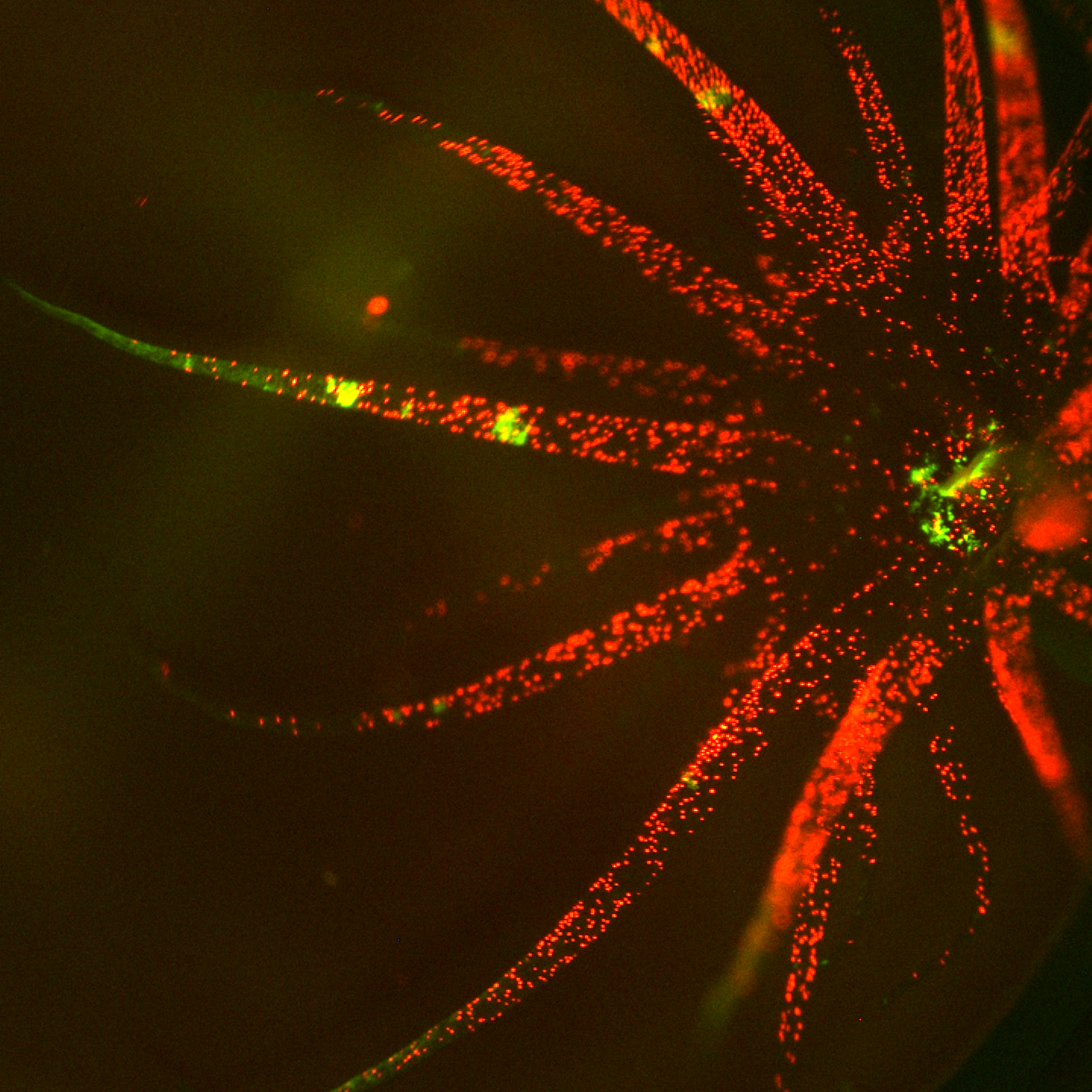


Protocol Citation: Christian CR Renicke 2025. Plasmid DNA concentration for electroporation into Aiptasia zygotes via Amicon® Ultra Centrifugal Filters. protocols.io https://dx.doi.org/10.17504/protocols.io.n92ld6b77g5b/v1
Manuscript citation:
Renicke et al., 2015
License: This is an open access protocol distributed under the terms of the Creative Commons Attribution License, which permits unrestricted use, distribution, and reproduction in any medium, provided the original author and source are credited
Protocol status: Working
We use this protocol and it's working
Created: July 02, 2025
Last Modified: September 04, 2025
Protocol Integer ID: 221459
Keywords: DNA concentration, Aiptasia electroporation, plasmid dna concentration for electroporation, plasmid dna concentration, plasmid dna, using amicon ultra, centrifugal filter, electroporation, dna, aiptasia zygote
Disclaimer
DISCLAIMER – FOR INFORMATIONAL PURPOSES ONLY; USE AT YOUR OWN RISK
The protocol content here is for informational purposes only and does not constitute legal, medical, clinical, or safety advice, or otherwise; content added to protocols.io is not peer reviewed and may not have undergone a formal approval of any kind. Information presented in this protocol should not substitute for independent professional judgment, advice, diagnosis, or treatment. Any action you take or refrain from taking using or relying upon the information presented here is strictly at your own risk. You agree that neither the Company nor any of the authors, contributors, administrators, or anyone else associated with protocols.io, can be held responsible for your use of the information contained in or linked to this protocol or any of our Sites/Apps and Services.
Abstract
This protocol describes how to concentrate 500 µL or more of dilute plasmid DNA using Amicon Ultra 0.5 50 kDa MWCO centrifugal filters to a final volume of ≥15 µL.
Guidelines
This is the only method which was compatible with electroporation of plasmids into Aiptasia zygotes (in contrast to ethanol precipitation or vacuum concentration via SpeedVac) and could be used to obtain DNA with a sufficient concentration (>1.5 µg/µL) when a Maxi- or Gigaprep did not produce sufficient yields to be directly used.
Plasmids are usually above 1,000 kDa, but supercoiled plasmids might behave like much smaller molecules, so the Amicon Ultra 0.5 filter unit with a 50 kDa molecular-weight cut-off (MWCO) was chosen to be on the safe side. Lower cut-offs should work as well but the minimally retained liquid volume will be higher, the 100 kDa MWCO filter should also work and allow even lower volumes and/or shorter spin times.
We have concentrated up to 2 mL of ~40-100 ng/µL plasmid solutions and did not observe any problems with overloading. Our recovery was usually around 70-80%, which is far lower than the advertised <90%, so there might be some room for optimization.
The screw cap tube for storage is to ensure proper sealing and prevent any loss of material during storage.
Materials
Devices:
- Microcentrifuge at RT set to 16 000 ×g
- Thermo Scientific™ NanoDrop™ (or comparable microvolume UV-Vis spectrophotometer), alternatively fluorescence-based DNA-quantification kit and detection device such as a Qubit™ fluorometer or fluorescence microplate reader (not part of this protocol)
Consumables:
- Sterile, DNase-free 1.5-mL microcentrifuge tubes
- Sterile, DNase-free 1.5-mL tubes with attached screwcaps and O-rings for long-term storage, e.g., Fisherbrand - 02-707-353
- Amicon® Ultra 0.5 Centrifugal Filter, 50 kDa MWCO, EMD Millipore - UFC5050
- 10 mM Tris-Cl, pH 8.5, e.g., QIAGEN Elution Buffer EB - 19086
This can also be self-made in ultra-pure water (e.g., MilliQ or HPLC-grade ddH2O) and autoclaved to denature any potential DNases.
Safety warnings
Do not spin the tube with the inverted filter unit higher than the 2,000 ×g, the unit and/or the centrifuge might get damaged.
Always use proper balances for centrifugation. Always attach the rotor cover when using the filter units.
Before start
- Thaw plasmid prep to concentrate, adjust volume to 500 µL with 10 mM Tris-Cl, pH 8.5 if it is less than 500 µL.
- Place filter unit in one of the supplied 2-mL tubes.
Plasmid DNA concentration
51m
Add 500 µL of the plasmid DNA in 10 mM Tris-Cl, pH 8.5.
If a larger volume of very dilute DNA needs to be concentrated, repeat the loading and following spin step until the whole volume has passed through the filter.
1m
Close lid and spin at 14,000 ×g for 10 min at RT. Discard flow-through.
12m
Add 500 µL 10 mM Tris-Cl, pH 8.5 to the filter unit.
This washing step is to remove any soluble impurities and traces of glycerol from the membrane.
1m
Close lid and spin at 14,000 ×g for 20 min at RT..
The longer centrifugation time is to reduce the volume down to ~15 µL.
22m
Place the filter unit inverted into the second supplied 2-mL tube.
1m
Spin at 2,000 ×g for 2 min at RT.
3m
Transfer the recovered, concentrated plasmid DNA into a 1.5-mL screw cap microcentrifuge tube.
1m
Quantify an appropriate dilution via NanoDrop or a fluorimetric method (e.g., Qubit).
The NanoDrop doesn't have problems with measuring high DNA concentrations directly (even far over 10 µg/µL), the much more sensitive Qubit kits require very high dilutions to measure.
5m
Dilute to the required concentration with 10 mM Tris-Cl, pH 8.5 and store at −20°C.
The highly concentrated DNA in pH 8.5 should be stable through freeze-thaw cycles but if worried about degradation prepare small-volume aliquots.
5m
Protocol references
This protocol mostly follows the recommendations from EMD Millipore which can be found here: https://www.sigmaaldrich.com/deepweb/assets/sigmaaldrich/product/documents/105/563/pr05485w-ug-ms.pdf