May 13, 2026
Placental Matrisome Proteomic Analysis by LC-MS/MS
- Amanpreet K. Bains1,
- James M. Considine1,
- Alexandra Naba1
- 1Department of Physiology and Biophysics, University of Illinois Chicago
- Human BioMolecular Atlas Program (HuBMAP) Method Development CommunityTech. support email: [email protected]



Protocol Citation: Amanpreet K. Bains, James M. Considine, Alexandra Naba 2026. Placental Matrisome Proteomic Analysis by LC-MS/MS. protocols.io https://dx.doi.org/10.17504/protocols.io.6qpvrbjzolmk/v1
License: This is an open access protocol distributed under the terms of the Creative Commons Attribution License, which permits unrestricted use, distribution, and reproduction in any medium, provided the original author and source are credited
Protocol status: Working
We use this protocol and it's working
Created: May 09, 2026
Last Modified: May 18, 2026
Protocol Integer ID: 316658
Keywords: placenta, extracellular matrix, matrisome, proteomics, LC-MS/MS, ECM enrichment, placental matrisome proteomic analysis by lc, placental matrisome proteomic analysis, proteomic analysis of human placenta tissue, human placenta tissue, placental tissue, mass spectrometry core, extracellular matrix, sequential extraction of intracellular protein, ecm protein solubilization, matrisome characterization, intracellular protein, ms data, ms data acquisition, peptide desalting, ms analysis, matrisome
Funders Acknowledgements:
National Institutes of Health - Thinking outside the cell: Leveraging HuBMAP data to build the human ECM atlas
Grant ID: U01 HG012680
National Institutes Of Health - Female Reproductive Tissue Mapping Center
Grant ID: U54 HD104393
National Institutes Of Health - Pregnant Female Reproductive Tissue Mapping Center
Grant ID: U54 HD110347
Abstract
This protocol describes extracellular matrix (ECM)-enriched proteomic analysis of human placenta tissue for matrisome characterization. Placental tissues are decellularized by sequential extraction of intracellular proteins, followed by ECM protein solubilization, enzymatic digestion, peptide desalting, and LC-MS/MS analysis. LC-MS/MS data acquisition is performed at the University of Illinois Chicago Research Resources Center – Mass Spectrometry Core.
Materials
Reagents
- Subcellular Protein Fractionation Kit for Tissues (Thermo Scientific, #87790)
- Dithiothreitol (DTT) (Thermo Scientific, #A39255)
- Iodoacetamide (IAA) (Thermo Scientific, #A39271)
- PNGase F (New England Biolabs, #P0704L)
- Lys-C protease (Thermo Scientific, #90307)
- Trypsin (Thermo Scientific, #90058)
- Trifluoroacetic acid (TFA)
- Pierce Peptide Desalting Spin Columns
- Pierce Quantitative Colorimetric Peptide Assay Kit (#23275)
- HPLC-grade water
- Acetonitrile (ACN)
- Formic acid (FA)
- Ammonium bicarbonate (NH4HCO3)
- Urea
Equipment
- OMNI Bead Ruptor homogenizer
- Q Exactive HF mass spectrometer
- UltiMate 3000 RSLC nanosystem
- Nanospray Flex Ion Source
Placenta Tissue Processing and ECM Enrichment
Tissue Homogenization
Weigh 45–120 mg of placenta tissue for each sample.
Transfer tissue into bead homogenization tubes containing:
- Four 2.8 mm ceramic beads (OMNI International #19628)
- Four 2.4 mm metal beads (OMNI International #19-610)
Homogenize tissue using an OMNI Bead Ruptor at 8 m/s using:
- Three 10-second homogenization cycles
- 60-second pauses between cycles
ECM Enrichment by Sequential Extraction
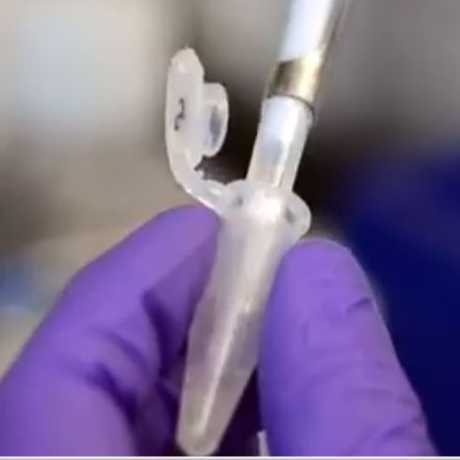
A summary of the steps used for ECM enrichment by sequential extraction is provided below. For more detailed instructions, refer to the following protocol:
Protocol
CREATED BY
Alexandra Naba
Sequentially remove intracellular proteins in order of decreasing solubility to enrich extracellular matrix proteins.
Perform sequential extraction of intracellular proteins using the Subcellular Protein Fractionation Kit for Tissues (Thermo Scientific #87790) according to the manufacturer’s instructions.
Verification of ECM Enrichment
Assess enrichment efficiency and intracellular protein depletion by western blot analysis.
Probe samples using the following primary antibodies:
- Anti-actin (kindly gifted by Dr. Richard O. Hynes; use at 1:5000 dilution)
- Anti-integrin beta-1 (kindly gifted by Dr. Richard O. Hynes; use at 1:1000 dilution)
- Anti-collagen III (Abcam #ab7778; use at 2 µg/mL)
- Anti-GAPDH (Sigma #MAB374; use at 2 µg/mL)
- Anti-histone H4 (Sigma #05-858; use at 1:30000 dilution)
- Anti-transglutaminase 2/TGM2 (Abcam #ab421; use at 2.5 µg /mL)
Detect primary antibodies using HRP-conjugated secondary antibodies:
- Goat anti-rabbit HRP (Invitrogen #31460; use at 8 µg /mL)
- Goat anti-mouse HRP (Invitrogen #31430; use at 1.6 µg/mL)
Protein Solubilization and Enzymatic Digestion
Protein Solubilization
A summary of the steps used for solubilization and in-solution digestion of ECM-enriched proteins is provided below. For more detailed instructions, refer to the following protocol:
Protocol
CREATED BY
Alexandra Naba
Solubilize ECM-enriched protein pellets in 8 M urea prepared in 100 mM ammonium bicarbonate.
Reduction and Alkylation
Reduce disulfide bonds using 10 mM DTT.
Alkylate reduced cysteines using 25 mM iodoacetamide for 30 minutes at room temperature in the dark.
Deglycosylation and Proteolytic Digestion
Dilute samples to a final urea concentration of 2 M.
Deglycosylate proteins using PNGase F for 2 hours at 37°C under mild agitation.
Digest proteins with Lys-C for 2 hours at 37°C under mild agitation.
Add trypsin and incubate samples overnight at 37°C under mild agitation.
Add a fresh aliquot of trypsin the following day and incubate samples for an additional 2 hours at 37°C.
Acidify peptide samples using 50% TFA.
Peptide Cleanup and Quantification
Peptide Cleanup and Quantification
A summary of the steps used for peptide desalting and quantification is provided below. For more detailed instructions, refer to the following protocol:
Desalt peptides using Pierce Peptide Desalting Spin Columns according to the manufacturer’s instructions.
Lyophilize desalted peptides.
Reconstitute peptides in:
- 95% HPLC-grade water
- 5% acetonitrile
- 0.1% formic acid
Quantify peptide concentration using the Pierce Quantitative Colorimetric Peptide Assay Kit (#23275).
LC-MS/MS Data Acquisition
Instrumentation
We perform LC-MS/MS analysis at the University of Illinois Chicago Research Resources Center – Mass Spectrometry Core using the following instrumentation:
- Q Exactive HF mass spectrometer
- UltiMate 3000 RSLC nanosystem
- Nanospray Flex Ion Source
Liquid Chromatography
Inject 1 µg peptide per sample for LC-MS/MS analysis.
Load samples onto a Waters nanoEase M/Z C18 trap column:
- 100 Å
- 5 µm
- 180 µm × 20 mm
Separate peptides using a Waters BEH C18 analytical column:
- 130 Å
- 1.7 µm
- 75 µm × 150 mm
Perform chromatography at a flow rate of 300 nL/min.
Prepare mobile phases as follows:
- Solvent A: 0.1% formic acid in water
- Solvent B: 0.1% formic acid in 80% acetonitrile
Run the following LC gradient:
- 5% B from 0–3 min
- 8% B at 6 min
- 8–40% B from 6–85 min
- 40–95% B from 85–90 min
- Hold at 95% B until 94.8 min
- Re-equilibrate at 5% B until 105 min
Mass Spectrometry Acquisition Parameters
Acquire full MS survey scans over a mass range of 350–1400 m/z at a resolution of 120,000.
Set the AGC target for full MS scans to 3.0 × 10^6.
Select the 20 most intense precursor ions with charge states 2–5 for fragmentation.
Fragment precursor ions using higher-energy collisional dissociation (HCD) with a normalized collision energy of 28%.
Apply dynamic exclusion for 30 seconds using a 1.2 m/z exclusion window.
Acquire tandem MS/MS spectra at a resolution of 30,000.
Set the AGC target for MS/MS scans to 1.0 × 10^5.
Use an ion selection threshold of 2.0 × 10^4 counts.
Set maximum ion injection times to:
- 50 ms for full MS scans
- 120 ms for MS/MS scans
Protocol references
Naba A, Clauser KR, Hoersch S, Liu H, Carr SA, Hynes RO. 2012. The Matrisome: In Silico Definition and in Vivo Characterization by Proteomics of Normal and Tumor Extracellular Matrices. Molecular & Cellular Proteomics 11(4): M111.014647. DOI: 10.1074/mcp.M111.014647
Naba A, Clauser KR, Hynes RO. 2015. Enrichment of Extracellular Matrix Proteins from Tissues and Digestion into Peptides for Mass Spectrometry Analysis. Journal of Visualized Experiments (101): e53057. DOI: 10.3791/53057
Acknowledgements
The authors would like to thank Dr. Hui Chen and Lasanthi Jayathilaka from the Mass Spectrometry Core facility at UIC.