Jun 06, 2026
Version 1
Measurement of trimethylamine compounds - choline, L-carnitine, TMA and TMAO by LC-MS/MS in plasma and urine V.1
- 1Mass Spectrometry Core, Edinburgh Clinical Research Facility, University of Edinburgh;
- 2University of Edinburgh;
- 3Mass Spectrometry Core, Edinburgh Clinical Research Facility, School of Neurological and Cardiovascular Sciences, University of Edinburgh
- Clinical Mass Spectrometry



Protocol Citation: Chike Azike, Scott Denham, Natalie Z M Homer 2026. Measurement of trimethylamine compounds - choline, L-carnitine, TMA and TMAO by LC-MS/MS in plasma and urine. protocols.io https://dx.doi.org/10.17504/protocols.io.5qpvok7kdl4o/v1
License: This is an open access protocol distributed under the terms of the Creative Commons Attribution License, which permits unrestricted use, distribution, and reproduction in any medium, provided the original author and source are credited
Protocol status: Working
We use this protocol and it's working
Created: July 23, 2024
Last Modified: June 06, 2026
Protocol Integer ID: 103864
Keywords: LC-MS/MS, tandem mass spectrometry, steroid mass spectrometry, TMA, TMAO, choline, L-carnitine, tBBA derivatisation, equine plasma, equine urine, metabolic pathway in equine grass sickness, μl of equine urine, equine urine, metabolite trimethylamine, measurement of trimethylamine compound, liquid chromatography tandem mass spectrometry, equine grass sickness, equine plasma sample, μl of equine plasma sample, involvement of the trimethylamine, quantification of tma, chromatographic method, measurement in equine plasma, carnitine, trimethylamine compound, thiamine, trimethylamine, urine from eg, biological sample, equine plasma, mass spectrometer, urine in order, detection of the compound
Funders Acknowledgements:
NHS Research Scotland
Grant ID: EDCRF
Chief Scientist Office
Grant ID: SCAF/17/02
The Moredun Foundation Equine Grass Sickness Fund
Grant ID: Moredun
Abstract
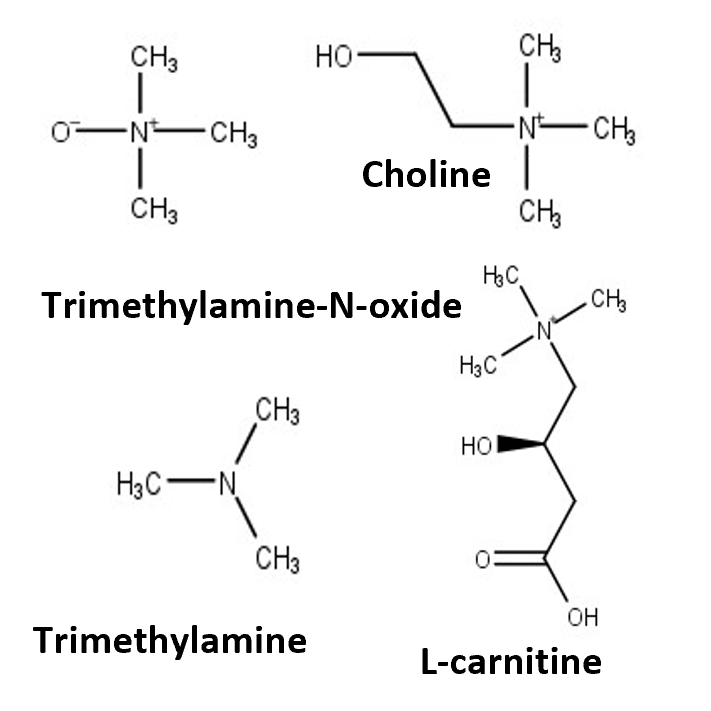
In order to evaluate the involvement of the trimethylamine (TMA) metabolic pathway in equine grass sickness we developed a method that would allow quantification of TMA, two of its precursors (choline and L-carnitine) and its metabolite trimethylamine-N-oxide (TMAO) in plasma and urine from EGS and control horses.
The liquid chromatography tandem mass spectrometry (LC-MS/MS) method was adapted from a method developed by Maksymiuk et al, (1) and has been adapted and validated for measurement in equine plasma and urine on an Acquity I-Class UPLC and QTrap 6500+ mass spectrometer, following derivatisation with tert-butyl bromoacetate. This method can be applied to other species. Limits of quantitation were 5 ng/mL for TMA and 0.25 ng/mL for TMAO, Choline and L-carnitine.
Only 20 μL of equine plasma sample was required for detection of the compounds. Extraction of 20 μL of equine urine required 1:1000 dilution of the extract to ensure results fell in the linear range of the method.
Biological samples (20 μL) and a 15-point calibration standard curve (0.1 – 500 ng range) of the 4 trimethylamine compounds were subject to derivatisation with a solution of tert-butyl bromoacetate (tBBA, Sigma-Aldrich, UK, 124230) (50 μL of 20 μg/mL in acetonitrile) and 2.5% ammonia solution (v/v, 10 μL) for 30 minutes at room temperature. The derivatisation reaction was quenched with 0.5% formic acid (100 μL) in acetonitrile. Only TMA derivatises. The samples were enriched with 13C3-thiamine (40 ng) and transferred to a 96-well filter plate (Isolute Filter+, Biotage, Sweden), positive pressure applied for 5 mins and the eluent collected into a 96-well autosampler plate (Waters, UK). The derivatised compounds were injected (2 μL) and analysed on an Acquity I-Class UPLC (Waters, UK) connected to a QTrap 6500+ (Sciex, UK). The Acquity I-Class was fitted with an Acquity Premier BEH Amide 1.7 µm, Van Guard FIT, 2.1 mm x 100 mm UPLC HILIC column. The mobile phase consisted of mobile phase A – 15 mM ammonium formate in water and mobile phase B – acetonitrile. The chromatographic method started with 10%A, rising to 30%A up to 1.3 mins, held up to 3.8 mins, returning to 10%A by 5 minutes and re-equilibrated for 1 minute, with a total run-time per injection of 6 minutes at a flow rate of 0.5 mL/in and 60oC. The mass spectrometer was operated in positive ion electrospray ionisation mode with a temperature of 5500C, ionspray voltage of 5.5 kV and gas 1 and gas 2 at 40 and 60 units. Two multiple reaction monitoring transitions were monitored per compound, quantitative and qualitative and the ratio of the quantitative to qualitative ion had to be 20% or lower in samples to be accepted. Two multiple reaction monitoring (MRM) transitions were monitored per compound, quantitative and qualitative and the ratio of the quantitative to qualitative ion had to be 20% or lower in samples to be accepted. MRM settings for each compound were Choline m/z 104.8 --> 61.2, 60.1 (declustering potential (DP) of 46 V for both, collision energy (CE) of 23 V for both and collision exit potential (CXP) of 8 V for both), Carnitine m/z 162.9--> 103.1, 85.9 (DP of 71 V for both, CE of 23 and 27 V and CXP of 12 V for both), TMA-tBBA m/z 174.0 à 118.1, 58.0 (DP of 51 V for both, CE of 15 and 51 V and CXP of 14 and 26 V) TMAO m/z 75.6 --> 58.2, 59.0 (DP of 36 V, CE of 23 and 15 V and CXP of 8 and 8 V, respectively), 13C3-Thiamine-tBBA m/z 268.8 --> 123.0, 122.1 (DP of 46 V for both, CE of 17 V for both and CXP of 16 and 12 V). Retention times for each compound were 1.1 mins, 1.6 mins, 2.0 mins, 2.1 mins and 2.2 mins for TMA-tBBA, Choline, 13C3-Thiamine, L-Carnitine, TMAO, respectively. Peak areas were integrated using MultiQuant‱ software (v3.0.3, Sciex, UK), a calibration curves were generated for each analyte using the peak area ratio of the analyte to the internal standard 13C3-Thiamine, using least squares regression. The amount of each of the analytes was calculated and normalised to the volume of sample extracted.
Attachments

Guidelines
Ensure all training is up-to-date for operating the necessary laboratory instrumentation and equipment.
Materials
Consumables Table
| A | B | C | D | |
| Item | Supplier | Part no. | Quantity | |
| 1.75 mL glass vials with lids | Scientific Laboratory Supplies Ltd | TUB1200 | 10 | |
| 1.75 mL glass vials with lids | Scientific Laboratory Supplies Ltd | TUB1200 | 6 | |
| 3.5 mL glass vials with lids | Scientific Laboratory Supplies Ltd | TUB1202 | 96 | |
| Isolute Filter+ 96 well plate | Biotage | 820-0400-P01 | 1 | |
| 96-well plate sealing film | VWR | 391-1250 | 1 | |
| Adhesive Plate Seal | Waters | 186006336 | 1 | |
| Acquity Premier BEH Amide 1.7 µm, Van Guard FIT, 2.1 mm x 100 mm | Waters | 186009508 | 1 | |
| Deep well 96 well collection plate | Biotage | 121-5203 | 1 | |
| Deep well (2 mL) 96 well collection plate | Waters | 186002482 | 1 |
Consumables for derivatisation and extraction by Filter+ 96-well plate of trimethylamine compounds
Chemicals and Analytical Standards Table
| A | B | C | |
| Item | Supplier | Article no. | |
| Water (HPLC grade) | Fisher Scientific | C-10449380-X | |
| Acetonitrile (LC-MS grade) | VWR | 83640.320 | |
| Water (LC-MS grade) | VWR | 83645.320 | |
| Ammonium formate | Sigma-Aldrich | 516961 | |
| Ammonium hydroxide, 35% | Fisher Scientific UK | 10305170 | |
| Formic Acid (Optima LC-MS grade) | Fisher Chemical | A117 | |
| tert-Butylbromoacetate | Sigma-Aldrich | 124320 | |
| Isopropanol (HPLC grade) | VWR | 20880.320 | |
| Trimethylamine (TMA) solution | Sigma-Aldrich | 92262 | |
| Trimethylamine-N-oxide | Sigma-Aldrich | 317594 | |
| Choline chlride | Sigma-Aldrich | PHR1251 | |
| L-carnitine hydrochloride | Sigma-Aldrich | C0283 | |
| Formic acid (LC-MS grade) | Fisher Scientific | 10596814 |
Chemicals and analytical standards for trimethylamine analysis
Solutions Required
- 2.5% ammonia solution: Transfer 4.642 mL of water to a 7 mL glass vial with a pipette. Add 0.358 mL of 35% Ammonium hydroxide with a pipette to give a 2.5% Ammonia solution. Mix thoroughly.
- 20 mg/mL tert-Butylbromoacetate: Weigh 156 µL tert-Butylbromoacatate into a 28 mL glass vial which gives about 200 mg. Add appropriate amount of acetonitrile to give 20 mg/mL tert-Butylbromoacatate solution. For example, if you weighed 202.8 mg of tert-Butylbromoacetate, you will need to add 10.14 mL of acetonitrile to make a 20 mg/mL tert-Butylbromoacetate solution
- 0.5% Formic acid in acetonitrile: Using a measuring cylinder transfer 100 mL of acetonitrile into a 100 mL glass bottle. Using a pipette remove 500 µL of acetonitrile. Add 500 µL of Formic acid to the glass bottle to give 0.5% Formic acid in acetonitrile solution. Mix thoroughly.
• 100 mM Ammonium formate in water solution. Weigh out 6.306 g Ammonium formate and make up to 1 L with water (LC-MS grade), mix thoroughly.
• Mobile phase A (15 mM Ammonium formate in water solution)
o In a measuring cylinder, measure 850 mL of water (LC-MS grade) and add to a 1 L bottle. Add 150 mL of the above 100mM ammonium formate in water solution to the water in the bottle and mix thoroughly to give a 15 mM Ammonium formate in water solution. c
- Water (HPLC grade): for preparation of calibration standards.
- 70:30 Water:Methanol (100 mL) - Add 30 mL methanol (LC-MS grade) to 70 mL water (LC-MS grade). Mix thoroughly.
Equipment Table
| A | B | C | |
| Item | Model | Supplier | |
| Acquity I-Class UPLC | I-Class | Waters, UK | |
| QTrap 6500+ mass spectrometer | 5038125-J | AB Sciex, UK | |
| Gilson Repetman | Gilson Repetman | Gilson | |
| Deepwell plate thermoshaker | TS-DW | Grant Scientific | |
| Positive Pressure Unit | Biotage, Sweden |
Equipment required for extraction and trimethylamine analysis by LC-MS/MS
Troubleshooting
Problem
No peaks in LC-MS/MS trace
Solution
Check that the tubing is connecting between LC and MS/MS
Check that there is No leak from The column
Safety warnings
Ensure risk assessments are up to date and that all local laboratory guidelines are followed for handling chemicals and biological samples
Ethics statement
Ensure all samples have been collected under appropriate ethical guidelines.
Before start
Ensure all consumables are in stock and all compounds and reagents are freshly prepared
Preparation of calibration standard stock solutions
Prepare 1 mg/mL stock solution of Trimethylamine (TMA) from solution. Prepare 1 mg/mL stock solutions each of Trimethylamine N-Oxide (TMAO), Choline Chloride, and L-Carnitine hydrochloride in water.
Prepare a 50 µg/mL mixed stock of TMA, TMAO, Choline Chloride and L-Carnitine hydrochloride by using 50 µL of 1 mg/mL stock solutions. Do this by adding 50 µL x 1 mg/mL TMA, 50 µL x 1 mg/mL TMAO, 50 µL x 1 mg/mL Choline Chloride, and 50 µL x 1 mg/mL L-Carnitine hydrochloride to 800 µL of water give a 50 µg/mL stock.
Dilute the 50 µg/mL stock Mixed STOCK by 1:10 dilution (100 µL x 50 µg/mL + 900 µL water) to give 5 µg/mL stock
Dilute the 5 µg/mL mixed STOCK by 1:10 dilution (100 µL x 5 µg/mL + 900 µL water) to give 500 ng/mL stock
Dilute the 500 ng/mL mixed STOCK by 1:10 dilution (100 µL x 500 ng/mL + 900 µL water) to give 50 ng/mL stock
Dilute the 50 ng/mL Mixed STOCK by 1:10 dilution (100 µL x 50 ng/mL + 900 µL water) to give 5 ng/mL stock
Prepare individual Standard Stock Solutions as shown below in Table S1
Table S1 - Individual Standard Stock Solutions
Preparation of internal standard solution
Prepare 2 µg/mL solution of isotopically labelled internal standard (13C3-Thiamine) in water by adding 40 µL of 100 µg/mL 13C3-Thiamine to 1960 µL of water.
Designing calibration standards and sample extraction platemap
10m
Label a Biotage Biotage 2 mL deep well 96-well ISOLUTE filter plate with batch details. Label a Waters 2 mL deep well 96-well collect.
Design and prepare batch of standards and samples in Microsoft Excel template (see Files), following a column-wise plate map design as shown showbelow (Table S2). Complete (Generate) a 96-well format plate map for the for standards + samples (MAKE SURE TO PLACE THEM COLUMN-WISE!) using the design as sho
Complete (Generate) a 96-well format plate map for the for standards + samples (MAKE SURE TO PLACE THEM COLUMN-WISE!) using the design as shown in Table S2 below.
Table S2 - Plate Map for trimethylamine samples - Column-wise plate layout
Preparation of Calibration Standards
Prepare calibration standards using Table S3 below.
Table S3 - Preparation of Calibration Standards
Derivatisation and extraction of calibration standards and samples through Filter+ extraction plate
10m
Remove biological samples (e.g., urine, plasma) from the freezer. Defrost biological samples at room temperature.
Vortex biological samples thoroughly then centrifuge at 14,000 rpm for 10 minutes.
Prepare up to 96 glass vials (1.75 mL) and label them as in the 96- well plate (i.e., standards, samples, etc.) and arrange them on a 8 x 12 vial rack in the same orientation as the plate map dictates.
Add 20 µL of sample (urine or plasma) or 20 µL water for standards to the labelled 1.75 mL glass vials using Gilson Repetman pipette.
Add the appropriate volume and concentration of the above standard solutions (according to Preparation of Calibration Standards Table) to the 20 µL water for standards using 20 µL and 200 µL pipettes (see page 12).
Add 10 µL of 2.5% Ammonia solution to all vials.
Add 50 µL of 20 mg/mL tert-Butyl Bromoacetate (tBBA) in acetonitrile using Gilson Repetman Pipette to all vials.
CAP THE VIALS and mix thoroughly by vortex.
Incubate mixture for 30 minutes at room temperature to create trimethylamine derivative (TMA-tBBA).
Add 100 µL of 0.5% formic acid in acetonitrile using Gilson Repetman pipette to quench the derivatization reaction.
Add 20 µL of 2 ug/mL 13C3 Thiamine internal standard to the standards and samples (but not to double blanks) using Gilson Repetman pipette, CAP THE VIALS and mix thoroughly by vortex.
Using the Integra Voyager 300 uL adjustable tip spacing pipette, transfer the standards and samples directly into a Biotage 2 mL deep well 96-well ISOLUTE filter+ plate, placed on top of a Waters 2 mL deep well 96-well collection plate.
Use positive pressure to elute and filter the standards and samples from the Biotage 2 mL deep well 96-well ISOLUTE filter+ plate into the Waters 2 mL deep well 96-well collection plate.
Seal the Waters 2 mL deep well 96-well collection plate using Waters Adhesive plate seal (sealing film) prior to analysis.
Transfer the sealed plate into the autosampler (sample Manager) of the Waters Acquity UPLC I-Class connected to Sciex QTRAP 6500+ Mass Spec instrument for LC-MS/MS analysis, or store at-20 °C until ready for analysis.
Analysis of standards and samples by LC-MS/MS
16m
Set up an acquisition batch in Analyst software using the electronic excel file of the calibration standards and sample list. Set to inject 2 µL per sample and use a method of chromatographic separation as described in step 16 and 17 and mass spectrometer settings as outlined in steps 18 and 19.
Set up the Waters Acquity liquid chromatography system and fit with an Acquity Premier BEH Amide 1.7 µm, Van Guard FIT, 2.1 mm x 100 mm liquid chromatography column, using mobile phase A - water with 15 mM ammonium formate and mobile phase B - acetonitrile at 0.5 mL/min and 60 °C . the waste valve diverting to the mass spectrometer at 0.2 mins and back to waste at 5.8 mins.
Set up chromatographic gradient as below (Table S4) with a run time of00:06:00 per sample
| A | B | C | D | |
| Time (min) | Flow (mL/min) | A (%) | B (%) | |
| Initial | 0.5 | 10 | 90 | |
| 1.3 | 0.5 | 30 | 70 | |
| 3.8 | 0.5 | 30 | 70 | |
| 5.0 | 0.5 | 10 | 90 | |
| 6.0 | 0.5 | 10 | 90 |
Table S4 - Chromatographic gradient details. A - 15 mM Ammonium formate in water; B - Acetonitrile. 60oC. Acquity Premier BEH Amide Van Guard FIT, (2.1 mm x 100 mm; 1.7 µm).
6m
Set up the mass spectrometer for Multiple Reaction Monitoring (MRM) method in positive mode, with electrospray ionisation as below (Table S5), with divert of LC flow into the mass spectrometer set at 0.2 minute and 5.5 minutes.
| A | B | |
| Instrument | Sciex QTrap 6500+ | |
| Source, Ionisation Mode | IonDrive Turbo V Source, ESI | |
| Scan Mode, Polarity | MRM, Positive | |
| Resolution (Q1/Q3) | unit/unit | |
| Mass range | Low mass | |
| Pause Time | 5.007 ms | |
| Acquisition time | 6.0 min | |
| Delay time | 0 sec | |
| Curtain Gas (CUR) (N2) | 30 units | |
| Collision Gas (CAD) (N2) | Medium | |
| IonSpray Voltage (IS) (Positive) | 5500 V | |
| Temperature (TEM) | 600 °C | |
| Ion Source Gas 1 (GS1) (Air) | 40 units | |
| Ion Source Gas 2 (GS2) (Air) | 60 units | |
| Entrance Potential (EP) (Positive) | 10 V | |
| Probe position (x – axis) | 5 | |
| Probe position (y – axis) | 2 |
Table S5 - Mass Spectrometry source settings for positive ion electrospray ionsiation on QTrap 6500+ mass spectrometer
Set up the mass spectrometer to monitor for the following multiple reaction monitoring (MRM) transitions for each analyte and isotopically labelled internal standard (Table S6).
| A | B | C | D | E | F | G | |
| Q1 Mass (Da) | Q3 Mass (Da) | Scan time (msec) | Analyte ID | DP (volts) | CE (volts) | CXP (volts) | |
| 174.0 | 118.1 | 150 | TMA-TBBA 1 | 51 | 15 | 14 | |
| 174.0 | 58.0 | 150 | TMA-TBBA 2 | 51 | 51 | 26 | |
| 75.9 | 58.2 | 150 | TMAO 1 | 36 | 23 | 8 | |
| 75.9 | 59.0 | 150 | TMAO 2 | 36 | 15 | 8 | |
| 104.8 | 61.2 | 150 | Choline 1 | 46 | 23 | 8 | |
| 104.8 | 60.2 | 150 | Choline 2 | 46 | 23 | 8 | |
| 162.9 | 103.1 | 150 | L-Carnitine 1 | 71 | 23 | 12 | |
| 162.9 | 85.9 | 150 | L-Carnitine 2 | 71 | 27 | 12 | |
| 268.8 | 123.0 | 150 | 13C3-Thiamine 1 | 46 | 17 | 16 | |
| 268.8 | 122.1 | 150 | 13C3-Thiamine 2 | 46 | 17 | 12 |
Table S6 - Multiple reaction monitoring (MRM) settings for each steroid, including quantitative (1) and qualitative (2) ions for each steroid. DP - declustering potential, CE - collision energy, CXP - collision exit potential
Check the retention times of the analytes are as expected, as shown in the chromatogram in Figures S1 and S2:
Expected result
Retention times; Trimethylamine derivative (TMA-TBBA) at 1.1 mins, Trimethylamine N-Oxide (TMAO) at 2.2 mins, Choline at 1.6 mins, L-Carnitine at 2.1 mins and 13C3-Thiamine at 2.00 mins.
Figure S1 - Overlaid Ion Chromatogram of MRM transitions for Trimethylamine derivative (TMA-tBBA), Trimethylamine N-Oxide (TMAO), Choline, L-Carnitine, 13C3-Thiamine, separated by gradient on an Acquity Premier BEH Amide 1.7 µm, Van Guard FIT, 2.1 mm x 100 mm column at 0.5 mL/min with mobile phase A - 15 mM Ammonium formate in water; mobile phase B - Acetonitrile.
Figure S2 - Individual MRM transitions for Trimethylamine derivative (TMA-tBBA), Trimethylamine N-Oxide (TMAO), Choline, L-Carnitine, 13C3-Thiamine, separated by gradient on an Acquity Premier BEH Amide Van Guard FIT (2.1 mm x 100 mm column; 1.7 µm) at 0.5 mL/min with mobile phase A - 15 mM Ammonium formate in water; mobile phase B - Acetonitrile.
Inject a mid-level standard. Check the chromatography and each analyte retention time is consistent with expected times and peak area response is as expected. Once satisfied then set the batch of samples to analyse, injecting 2 µL per sample.
Method specific data evaluation of LC-MS/MS data
Use the data analysis parameters to assess the peak area of the chromatograms for the analytes and the internal standard (Table S7)
| A | B | |
| Analyte | Retention time (mins) | |
| TMA-TBBA | 1.12 | |
| Choline | 1.63 | |
| 13C3-Thiamine | 2.00 | |
| L-Carnitine | 2.15 | |
| TMAO | 2.18 |
Table S7 - Chromatographic retention time of analytes and internal standard
Use MultiQuant software, or a non-proprietary software tool to evaluate the LC-MS/MS data, by defining calibration standard levels, ensuring accuracy of the calibration standards and linear regression > 0.99. Use the Table above, to calculate the concentration of steroids in each sample, as detailed in the protocol below. Remember to account for the volume of sample extracted and express as ng/mL. Use Microsoft Excel to present the final results table.
Protocol

CREATED BY
Natalie Z M Homer
Protocol references
1 - Maksymiuk, K.M., Szudzik, M., Gawryś-Kopczyńska, M. et al. Trimethylamine, a gut bacteria metabolite and air pollutant, increases blood pressure and markers of kidney damage including proteinuria and KIM-1 in rats. J Transl Med 20, 470 (2022). https://doi.org/10.1186/s12967-022-03687-y