Oct 20, 2025
LUMINAS/LUMIAS_DSouza_2025
This protocol is a draft, published without a DOI.
- Shane Peter D'Souza1
- 1Cincinnati Children's Hospital Medical Center


Protocol Citation: Shane Peter D'Souza 2025. LUMINAS/LUMIAS_DSouza_2025. protocols.io https://protocols.io/view/luminas-lumias-dsouza-2025-hcvjb2w4p
License: This is an open access protocol distributed under the terms of the Creative Commons Attribution License, which permits unrestricted use, distribution, and reproduction in any medium, provided the original author and source are credited
Protocol status: Working
We use this protocol and it's working
Created: October 17, 2025
Last Modified: October 20, 2025
Protocol Integer ID: 230027
Keywords: Multiplex Immunofluorescence, Confocal Imaging, In situ proteomics, using indirect immunofluorescence, immunofluorescence, indirect immunofluorescence, lumias-dsouza-2025 lumina, antibody elution principle, lumina, studying protein, proteins in situ, lumia, marker, highlight iterative approach
Disclaimer
LUMINAS buffer should be stored at 4°C and is stable for up to 3 months.
Abstract
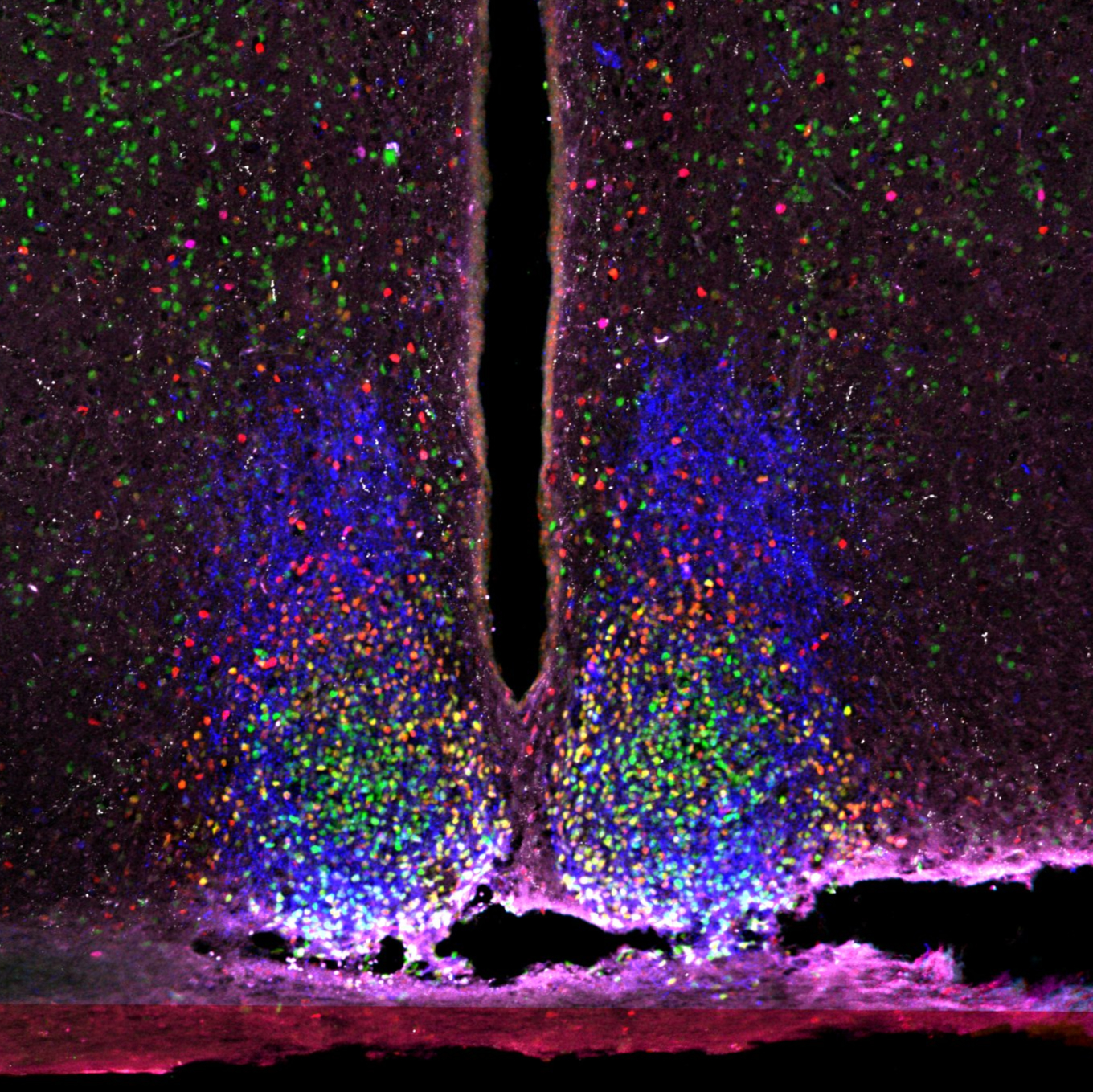
LUMINAS or LUMIAS is a generalizable approach to iteratively multiplexing up to 60+ markers using indirect immunofluorescence and antibody elution principles. First developed by Gut, Herrmann, and Pelkmans (2018; Science), we have expanded its utility into thick tissue sections and have developed this protocol to aid researchers in utilizing this highlight iterative approach to studying proteins in situ.
Guidelines
This protocol has been extensively tested in multiple fixed frozen tissue sections and whole mounts in rodents and humans.
Materials
Staining Materials
1. Slide warmer
2. 1 x PAP Hydrophobic Barrier Pen (H-4000; ImmEdge by VectorLabs)
3. 1x PBS (Phosphate Buffered Saline)
4. 0.5% PBST (0.5% Triton X-1000 in PBS)
5. 10% blocking buffer in 0.5% PBST (typically blocking buffer is made with serum of secondary antibody host; if secondaries are Donkey, make 10% blocking buffer with Normal Donkey Serum).
6. Adjustable-speed rocking shaker
7. LUMINAS Buffer for antibody elution (See Next Section)
8. Humidified chamber
9. Primary antibodies
10. Secondary antibodies
11. (optional) Antigen retrieval solution of choice: Sodium Citrate, H2O2, or Acetone.
LUMINAS Buffer
| Reagent | Vendor & Catalogue | Amount | Final Concentration | |
| Glycine (MW: 75.07 g/mol) | Fisher – #G48-500 | 4.85 g | 0.64 M | |
| Urea – Ultra Pure (MW: 65.056 g/mol) | RPI - #U20200-500 | 18.02 g | 3 M | |
| Guanidine Hydrochloride (MW: 95.53 g/mol) – also called Guanidinium chloride | Fisher - #BP178-1 | 28.66 g | 3 M | |
| TCEP (MW: 286.65 g/mol) | GoldBio – #TCEP10 | 2 g | 70 mM | |
| 3 – 10 N HCl | NA | to pH 3.0 | ||
| ddH2O / MilliQ water | Complete volume to 100 mL | |||
| 100 mL |
Troubleshooting
Problem
Prior round of antibodies persist into next imaging session
Solution
Rework antibody concentrations - make sure that neuropeptides are last, transcription factors are first.
Add time to LUMINAS/LUMIAS buffer washes - increase from 10 minutes per wash, to 20 minutes for the last wash
Before start
Be sure that all antibodies are tested for their minimal effective concentrations. Plan experiments with more difficult antigens at the start, typically stained with high primary concentrations, followed by extremely potent primaries at the end:
Example: Ebf1 (CST) requires a 1:100 dilution to label cells in the developing thalamus, while anti-Tyrosine hydroxylase works well at 1:10,000 concentrations. We would perform the first round of staining with anti-Ebf1 antibodies, and the last round would be with anti-TH antibodies.
Plan experiments such that you are also rotating secondary antibody fluorophores - if round 1 is DAPI, Donkey anti-chicken 488, Donkey anti-rabbit 594, and Donkey anti-mouse 647, the second round might look like DAPI, mouse 488, chicken 594, rabbit 647. This is a failsafe in case the elution fails to remove all bound primaries.
LUMINAS buffer ingredients and preparation
40m
LUMINAS Buffer ingredients and preparation
| Reagent | Vendor / Catalogue # | Amount (g) | Final Concentration | |
| Glycine (MW: 75.07 g/mol) | Fisher – #G48-500 | 4.85 g | 0.64 M | |
| Urea – Ultra Pure (MW: 65.056 g/mol) | RPI - #U20200-500 | 18.02 g | 3 M | |
| Guanidine Hydrochloride (MW: 95.53 g/mol) – also called Guanidinium chloride | Fisher - #BP178-1 | 28.66 g | 3 M | |
| TCEP (MW: 286.65 g/mol) | GoldBio – #TCEP10 | 2 g | 70 mM | |
| 3 – 10 N HCl | NA | to pH 3.0 | ||
| ddH2O / MilliQ water | Complete volume to 100 mL | |||
| 100 mL |
Table 1. LUMINAS/LUMIAS buffer ingredients
Dissolve glycine, urea, and guanidine hydrochloride in ddH2O to a total volume of ~80mL using magnetic stirring. It is endothermic, so completely dissolving it will take approximately 15-30 minutes. (See Materials section for reagent amount)
30m
Remove TCEP stock from -20C and weigh 2g. Add TCEP to solution, reduce stirring to a light stir, and cap container to prevent air from entering while TCEP dissolves.
5m
Once dissolved, adjust pH to 3.0 using HCl, making sure to bring volume up to 100 mL with ddH2O.
*Solution can be stored at 4C for up to 3 months*
5m
Frozen Tissue Multiplex Staining Protocol - Day 1, Primary Staining
1h 25m 30s
Thaw slides by transferring them from -20°/-80°C to slide warmer for >5 minutes.
5m
Transfer slides to working bench, draw border using hydrophobic PAP pen to limit reagent waste. Allow this to dry for <1 minute.
30s
Add 600uL of 0.5% PBST to each slide. Incubate for 40 minutes.
40m
*Optional step* Add antigen retrieval solutions to slides, incubate, wash 5 times with PBS.
Decant, add 300 uL of 10% blocking buffer to each slide for 40 min to 1 hour.
40m
In the last 10 minutes of blocking, prepare primary antibodies to desired concentration in 10% blocking buffer.
Decant blocking buffer, add 200 uL of diluted antibody solution to each slide.
Incubate slides overnight at room temperature* until the next morning.
*Most commercially available antibodies, at reported concentrations, stain with specificity and sensitivity at room temperature. If background is a concern, lower the concentration of antibody 10-fold and reassess the staining. If this doesn’t work and background/off-target staining remains an issue, please perform primary staining step (#8) at 4°C. See list of our publications that use overnight primary at room temperature at the end of the document.
Day 2 - Secondary Antibody Staining
2h 12m
Retrieve the same tube used to make working stocks of primary for the experiment. Make sure it is well-labeled for future usage.
1m
Carefully decant the primary antibody solution from each slide into the tube: this solution can be used up to 2 additional times depending on the antibody. Additionally, it can be stored for up to 3 years at -20°C and still works just as well.
1m
Wash slides with 1xPBS (450uL per slide), repeat for a total of 4 washes.
2m
Add 300uL of 0.5% PBST to each slide. Incubate for 20 minutes.
20m
10 minutes into step #4, begin preparing secondary antibody solutions.
Spin down stocks for 6 minutes at 10,000 rpms.
6m
Make working dilutions at 1:1000 in 10% blocking buffer.
1m
Spin down working dilution for 6 minutes and 10,000 rpms.
6m
Decant slides, add 200 uL of secondary antibodies. Incubate for 1 hour at room temperature.
1h
Decant slides, wash 4-5 times with PBS.
5m
Coverslip slides and store under a fan in a dark room. Image after 30 minutes. Be sure that slides are imaged within 4-6 hours of coverslipping.
30m
Day 2 - Imaging [Nikon AXR Confocal]
First round of imaging - Place slide on AXR Confocal, navigate to region of interest
Identify appropriate Z-position, using the ND Acquisition window create an XY Multipoint Experiment with Z-stack (Use relative mode with mid-point setting). Add point with XYZ position.
Figure 1 | ND Acquisition Window - XY Tab. Experiment with XY multipoint +
Large Image + Z-stack scanning. Make sure the "Include Z" is checked in the bottom left.
Figure 2 | Example ND Acquisition window - Z Tab. Make sure the middle button (top left corner) is selected - this is Relative Mode with Symmetric Scanning. Choose appropriate step size and range for experiment. For brain sections at 40um, we typically set the scan to have a total range of ~35um.
Proceed to the next tissue section on the slide, add XYZ multipoint as in Step #25
After adding all points, run the ND Acquisition Experiment and split the multipoints after.
Save the ND Acquisition experiment as a .XML file for subsequent rounds (Fig 1).
*You can use the Load function in the ND Acquisition window for subsequent round realignment*
If performing Round 2+, load in the first image from the previous round. Load the .XML experiment and approximately align the field of view (FOV) with the first round of imaging.
In the XY multipoint window, navigate to the first multipoint and press the "Offset all XYZ". This will adjust all subsequent points based on the new position of image #1. Cycle through all FOVs to make sure that they are aligned with the previous round's imaging.
Day 2 - Post Imaging
8m
Place slides in glass Coplin jar with PBS to cover the slide just passed the coverslip.
Place Coplin jar on orbital rocker at room temperature, the coverslip will come off between 5 min to 1 hour depending on how long the coverslip was on.
5m
Check that coverslips are off by testing a slide, gently pull slide out of the jar and check to see that the coverslip has completely detached.
Using a paper towel or kimwipe, remove excess PBS that is beyond the hydrophobic barrier. This will prevent any solutions from spilling when the slides are rocking in the next steps.
1m
Place slides on the adjustable-speed rocker and set speed to 50.
1m
Add 250uL of PBS to slides.
1m
Day 2 - LUMINAS/LUMIAS Antibody Elution
34m
Retrieve necessary volume of LUMINAS buffer from 4°C stocks. You will need 250uL per wash per slide (250uL x 3 washes = 750uL per slide, I aliquot ~1mL for error).
2m
Decant PBS, add 250uL of LUMINAS buffer. Incubate on rocker for 10 minutes exposed to air, do not cover slides.
10m
Decant spent solution into a glass waste container. Repeat elution step (#38) x 2 additional times.
20m
After 3 washes with LUMINAS buffer, wash with PBS 3 times. Washes may last 30 seconds in this step. Proceed to Day 1 / Primary antibody staining (Day 1 step #7 in this protocol).
2m
Protocol references
Gabriele Gut et al., Multiplexed protein maps link subcellular organization to cellular states. Science 361,eaar7042(2018).DOI:10.1126/science.aar7042
Watson, S.S., Duc, B., Kang, Z. et al. Microenvironmental reorganization in brain tumors following radiotherapy and recurrence revealed by hyperplexed immunofluorescence imaging. Nat Commun 15, 3226 (2024). https://doi.org/10.1038/s41467-024-47185-9
Acknowledgements
We thank Mutahar Andrabi for performing PRV tracing experiments in mice.