Feb 23, 2026
Low-Cost Handling and Distribution Devices for Experimental Work with Chironomids
- Nina Röder1,
- Sara Kolbenschlag1,
- Sebastian Pietz1
- 1RPTU



Protocol Citation: Nina Röder, Sara Kolbenschlag, Sebastian Pietz 2026. Low-Cost Handling and Distribution Devices for Experimental Work with Chironomids. protocols.io https://dx.doi.org/10.17504/protocols.io.3byl49qorgo5/v1
Manuscript citation:
Röder N, Kolbenschlag S, Pietz S, Brennan RS, Bundschuh M, Pfenninger M, Schwenk K (2026) “Pollution-Driven Selection in a Non-Biting Midge: Genome-Wide Responses to Bacillus thuringiensis israelensis and Copper.” Molecular Ecology 35, no. 3: e70263. https://doi.org/10.1111/mec.70263.
License: This is an open access protocol distributed under the terms of the Creative Commons Attribution License, which permits unrestricted use, distribution, and reproduction in any medium, provided the original author and source are credited
Protocol status: Working
We use this protocol and it's working
Created: May 29, 2024
Last Modified: February 23, 2026
Protocol Integer ID: 100741
Keywords: chironomid handling, larval distribution, insect collection methods, aquatic insect rearing, custom laboratory devices, low-cost laboratory tools, replicated experimental populations, handling chironomid larvae, chironomid larvae, adult chironomid, manual counting of larvae, suction aspirator device for the safe collection, chironomid, chironomids this protocol, uniform distribution of larvae, distribution devices for experimental work, suction aspirator device, larvae, multiple test tube, pipette system for gentle aspiration, dispensing device, experimental setup, distribution device, reproducibility during experimental setup, laboratory condition, adults under laboratory condition, custom collection chamber
Funders Acknowledgements:
DFG (German Research Foundation)
Grant ID: Research Training Group SystemLink 326210499/GRK2360
Abstract
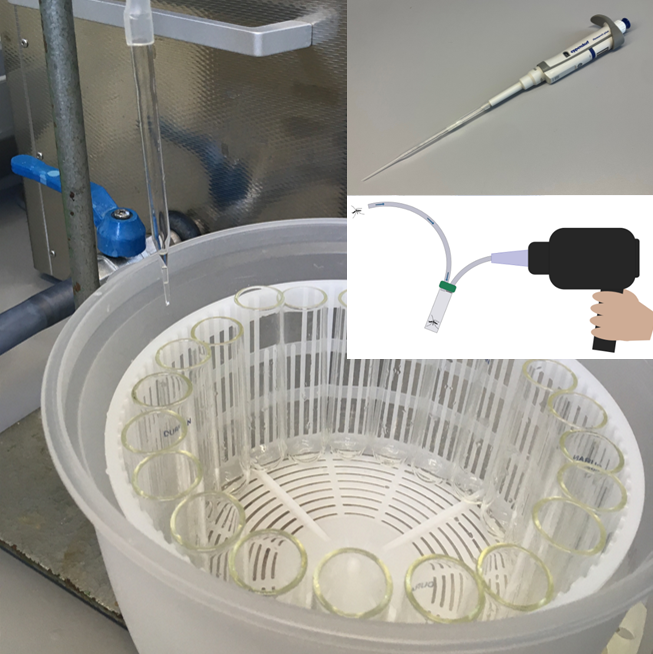
This protocol describes the construction and use of custom-built tools for handling chironomid larvae and adults under laboratory conditions. The approaches include (1) a rotary dispensing device designed to achieve uniform distribution of larvae into multiple test tubes, (2) a modified pipette system for gentle aspiration and manual counting of larvae, and (3) a low-suction aspirator device for the safe collection of adult chironomids using a USB-powered vacuum and a custom collection chamber. These tools were developed to ensure precise counting, minimize handling stress, and improve reproducibility during experimental setup. Detailed material lists and step-by-step assembly instructions are provided to facilitate replication.


Guidelines
Chironomid larval distribution
- Maintain a steady rotation speed to avoid uneven allocation.
- Pour slowly to prevent overflow or splashing.
- Ensure tube positions remain evenly spaced throughout rotation.
- The number of tubes can be adjusted depending on experimental design.
Chironomid larval counting
- Avoid aspirating too many larvae at once to prevent overcrowding or stress.
- Maintain gentle pipetting to minimize larval injury.
- Make sure glass tip is intact, larvae can stick to and be injured by sharp edges.
Chironomid adult sampling
- Ensure all connections are airtight to maintain consistent suction.
- Use low suction to prevent injury to specimens.
- Regularly check the mesh barrier to prevent clogging.
Materials
Chironomid larval counting
Salad spinner (manual, kitchen type)
Glass test tubes (uniform size)
Glass Pasteur pipette tip
Small laboratory funnel (compatible with Pasteur pipette tip)
Laboratory stand with clamp (to hold pipette vertically)
Chironomid larval counting
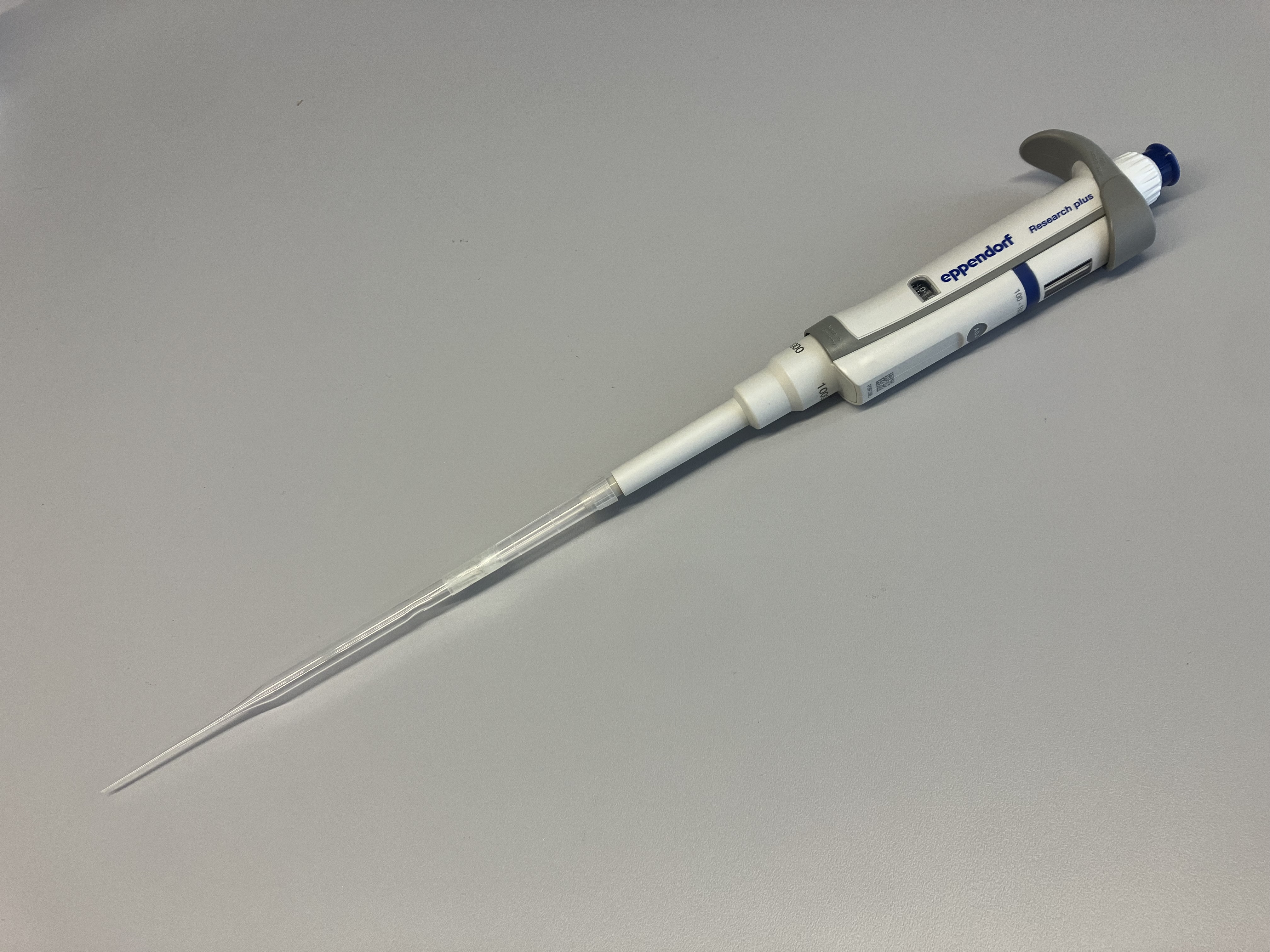
Standard 1000 µl piston pipette with plastic tip
Glass Pasteur pipette tip
Tape (to attach glass to plastic tip)
Stereomicroscope
Collection vessel(s)
Chironomid adult sampling
USB-rechargeable computer keyboard vacuum (low suction)
50 ml Falcon tube with lid
Two pieces of flexible transparent PVC tubing (appr. 1 cm diameter)
10 ml plastic pipette tip (tip shortened if needed for fitting)
Small piece of fine mesh (e.g., insect mesh or gauze)
Hot glue
Tape
Scissors or scalpel (for cutting holes in lid)
Chironomid larval distribution
Prepare the rotary basket
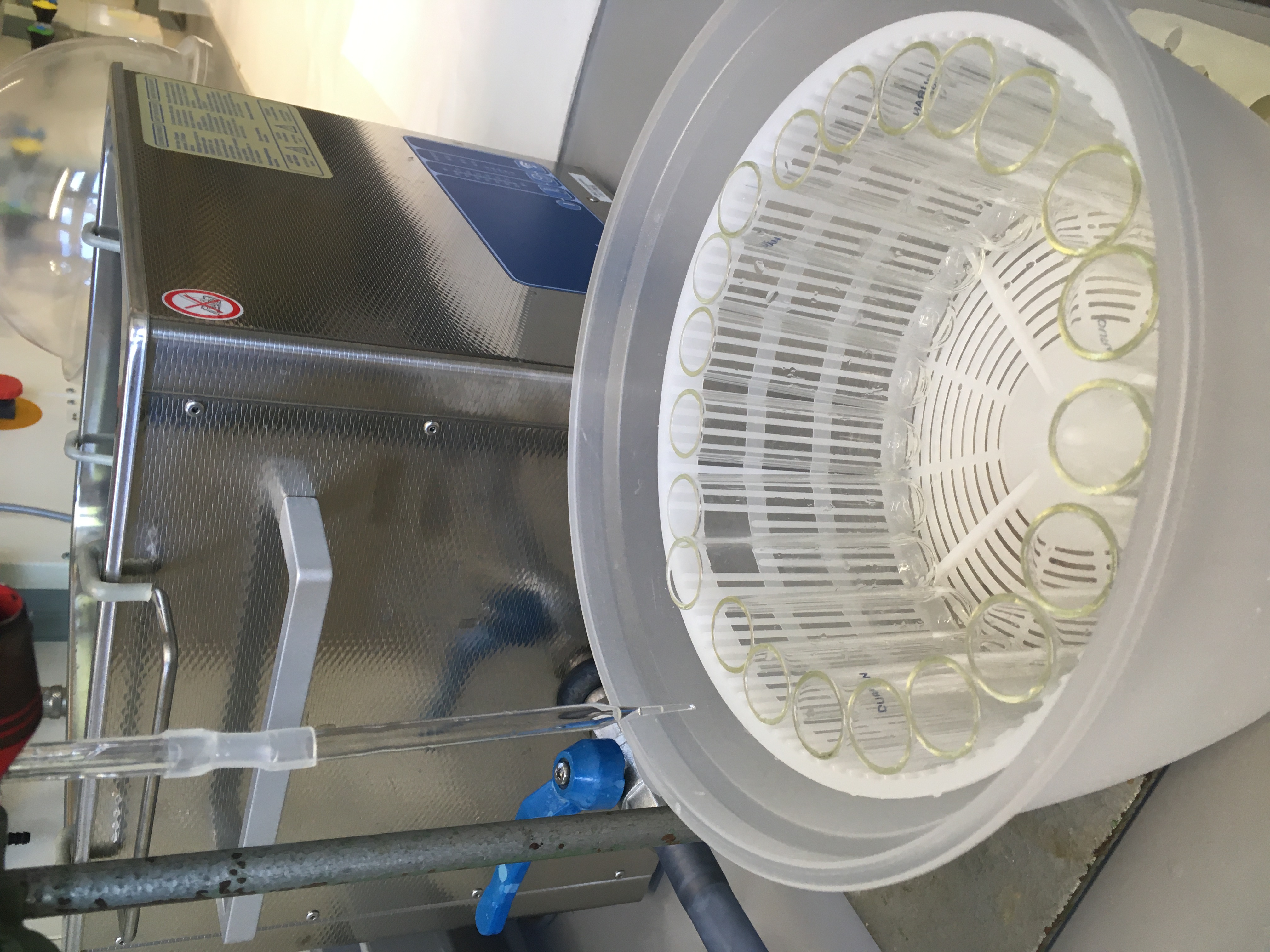
- Evenly distribute glass test tubes along the outer edge inside the salad spinner basket.
- Ensure all tubes are upright and stable during rotation.
Set up the dispensing system
- Mount a glass Pasteur pipette tip vertically in a laboratory stand.
- Attach a small funnel to the top of the pipette to facilitate controlled pouring.
- Position the pipette above the rotating basket so that the outflow is aligned with the tube openings.
Dispense larvae
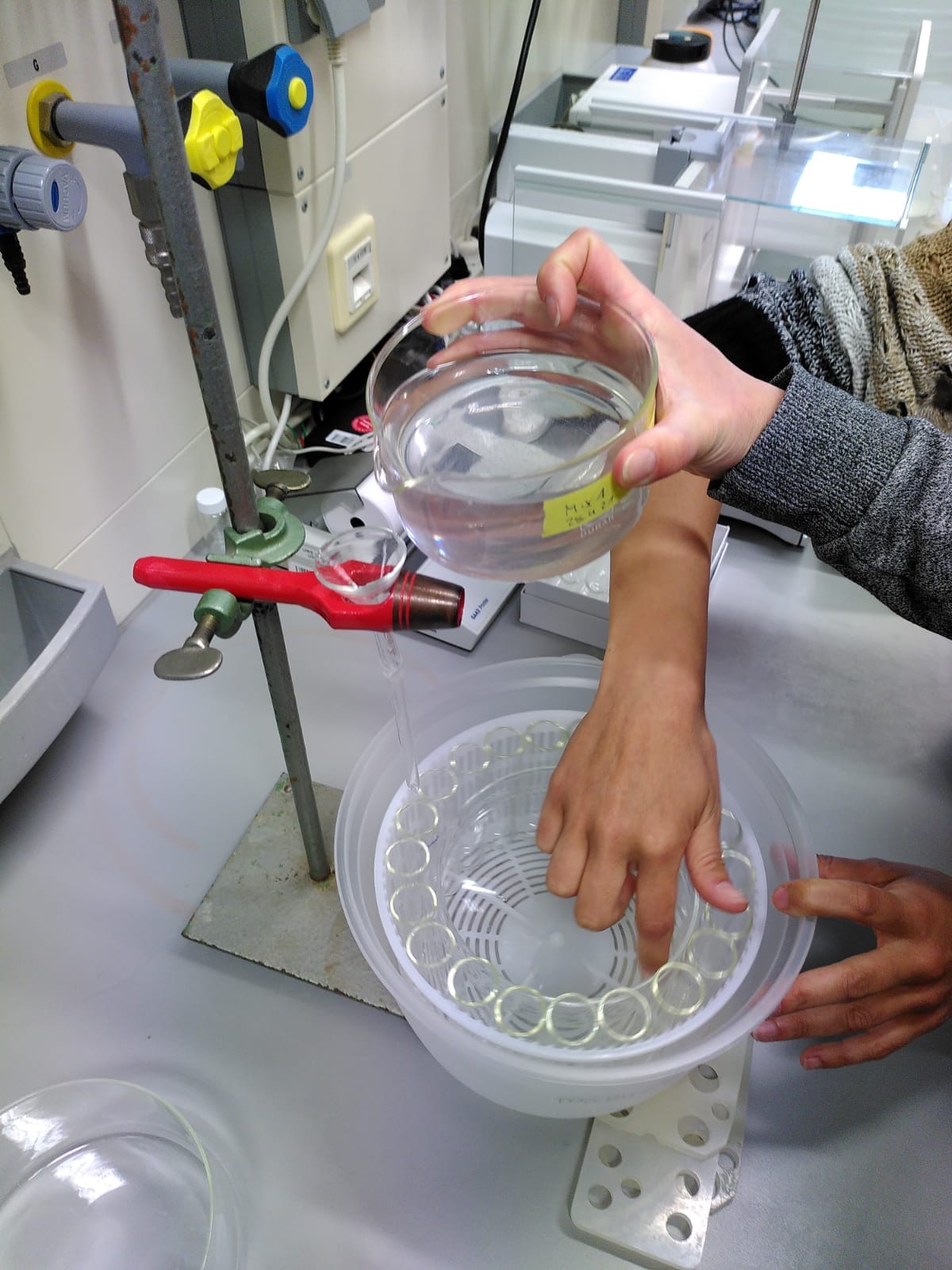
- Gently swirl or agitate the larval medium to ensure larvae are evenly suspended.
- Begin rotating the salad spinner at a steady, moderate speed.
- Pour the larval medium into the funnel in a thin, continuous stream.
- Maintain constant rotation to ensure even distribution across all tubes.
Verify distribution
- After dispensing, stop rotation.
- Inspect tubes visually to confirm uniform larval distribution.
Chironomid larval counting
Prepare the modified pipette
- Attach a small glass pipette to the plastic tip of a standard piston pipette using tape.
- Ensure the glass tip is securely fastened and sterile if necessary.
Count larvae
- Under a stereomicroscope, slowly aspirate larvae into the pipette while gently releasing the piston, counting each larva as it enters.
Transfer larvae
- Carefully dispense the counted larvae into the designated vessel.
- Record the number transferred.
- Repeat the process until the desired number of larvae is collected.
Chironomid adult sampling
Prepare the collection chamber
- Cut two holes into the lid of a 50 ml Falcon tube, sized to tightly fit the flexible tubing.
- Insert one piece of tubing into each hole.
- Seal both insertion points with hot glue to ensure an airtight fit.
Install the protective mesh barrier
- Inside the Falcon tube, cover the inner opening of the tubing that will connect to the suction device with a piece of fine mesh.
- Secure the mesh with tape to prevent insects from being drawn into the suction device.
Connect the suction system
- Attach the external end of one tube to the keyboard vacuum.
- If necessary, use a shortened 10 ml plastic pipette tip as an adapter to ensure a tight fit between tubing and suction device.
Collect adult chironomids
- Switch on the suction device.
- Use the free tube end to gently aspirate adult chironomids.
- Insects will be drawn into and retained inside the Falcon tube.
Retrieve collected specimens
- Turn off the suction device before opening the tube.
- Carefully remove the lid and transfer collected insects as required.
Protocol references
Figure "SuctionDevice" reproduced from: Sara Kolbenschlag, Eric Bollinger, Verena Gerstle, Carsten A. Brühl, Martin H. Entling, Ralf Schulz, Mirco Bundschuh. Impact across ecosystem boundaries – Does Bti application change quality and composition of the diet of riparian spiders? Science of the Total Environment. Vol 873. 2023. Licensed under CC BY 4.0. DOI: 10.1016/j.scitotenv.2023.162351