Jun 01, 2026
KASP Genotyping of Wheat Stripe Rust Resistance Loci
- Shanshan Yan1,2,3
- 1National Key Laboratory of Crop Genetic Improvement;
- 2Hubei Hongshan Laboratory;
- 3Huazhong Agricultural University
- YANSHAN



Protocol Citation: Shanshan Yan 2026. KASP Genotyping of Wheat Stripe Rust Resistance Loci. protocols.io https://dx.doi.org/10.17504/protocols.io.6qpvr1xrzgmk/v1
Manuscript citation:
Yan, S., Teng, L., Xi, M., Yuan, C., Wang, L., Li, S., Huerta-Espino, J., Bhavani, S., Singh, R. P., & Lan, C. (2026). Genetic analysis and mapping of adult plant stripe rust resistance loci in CIMMYT wheat ‘Kijil’ under Mexican and Chinese field environments. *In revision at PLOS Genetics*.
License: This is an open access protocol distributed under the terms of the Creative Commons Attribution License, which permits unrestricted use, distribution, and reproduction in any medium, provided the original author and source are credited
Protocol status: Working
We use this protocol and it's working
Created: May 31, 2026
Last Modified: June 01, 2026
Protocol Integer ID: 318258
Keywords: kasp genotyping of wheat stripe rust resistance loci, wheat stripe rust resistance loci, kasp genotyping, following conventional pcr amplification protocol, conventional pcr amplification protocol, specific pcr, including kasp-2b, kasp
Funders Acknowledgements:
National Key Research and Development Program of China
Grant ID: W2412009, 32372173, 32501991
Biological Breeding-National Science and Technology Major Project
Grant ID: 2023ZD04025
National Natural Science Foundation of China
Grant ID: W2412009, 32372173, 32501991
Natural Science Foundation of Hubei Province
Grant ID: 2024AFB154
Hubei Hongshan Laboratory
Grant ID: 2022hspy001, 2021hskf008, 2022hspy010
Natural Science Foundation of Hubei Province
Grant ID: 2024AFB154
Hubei Hongshan Laboratory
Grant ID: 2022hspy001, 2021hskf008, 2022hspy010
Australian Grains Research and Development Corporation (GRDC)
Grant ID: Via ACRCP (part of AGG project INV-003439)
Bill and Melinda Gates Foundation (BMGF)
Grant ID: INV-003439 (via AGG project)
Foreign, Commonwealth and Development Office (FCDO)
Grant ID: INV-003439 (via AGG project)
Disclaimer
The authors declare that the protocol is provided "as-is", without warranty of any kind, express or implied. The authors are not liable for any damages arising from the use of this protocol. Users should optimize the described procedures according to their specific laboratory conditions, reagents, and equipment.
Abstract
This protocol describes the Kompetitive Allele-Specific PCR (KASP) assay used to genotype the wheat stripe rust resistance locus QYr.hzau-2BS. The assay was applied to a population of 153 F₅ recombinant inbred lines (RILs) derived from a cross between the susceptible parent 'Apav#1' (CIMMYT GID 1854090) and the resistant parent 'Kijil' (CIMMYT GID 6342979). Polymorphic markers, including KASP_2BS, were used to genotype the entire RIL population following conventional PCR amplification protocols.
Attachments

Image Attribution
Original images by the authors.
Guidelines
Adhere to standard molecular biology safety protocols.
Materials
1. Reagents & Kits :
KASP Master Mix
Target-specific primers (Forward/Reverse) - See attached primer list
DNA Template (extracted from wheat leaves)
Nuclease-free water
TE Buffer (pH 8.0) or ddH2O (for DNA storage)
2. Consumables :
96-well PCR plates (preferably low-profile)
Optical adhesive film or MicroAmp 96-well PCR plate seals
Filter pipette tips (10 µL, 100 µL, 1000 µL)
1.5 mL sterile microcentrifuge tubes
3. Instruments & Software (仪器与软件):
Real-time PCR system
Centrifuge
Pipettes (adjustable volumes)
Computer with appropriate software for data analysis
Troubleshooting
Problem
Low or no fluorescence signal / High Ct values
Solution
Ensure the DNA concentration is within the optimal range (typically 50-100 ng/µL). If the signal is weak, increase the volume of DNA template added to the reaction. Also, check the expiration date of the KASP Master Mix and ensure proper mixing to avoid reagent precipitation
Problem
High non-specific amplification or presence of negative control signal
Solution
Include an appropriate restriction enzyme digestion step if the target sequence contains a restriction site. Ensure primers are stored at -20°C and avoid multiple freeze-thaw cycles. Additionally, include a no-template control (NTC) in every run to monitor for contamination.
Problem
Poor cluster separation or ambiguous genotype calls
Solution
Adjust the annealing temperature in the thermal cycling program. KASP typically works well at an annealing temperature around 55-60°C. If clusters are still not separating, consider redesigning the primers to reduce the likelihood of primer-dimer formation. Ensure the plate is properly sealed to prevent evaporation during PCR.
Safety warnings
Caution: KASP assays are highly sensitive to contamination. Use filter tips and maintain a clean work area. Avoid cross-contamination between samples, especially when handling small volumes (< 5 µL).
Ethics statement
Not applicable. This study involves the use of plant genetic materials (wheat) for routine breeding and genotyping, which does not require ethical approval.
Before start
Ensure all reagents (KASP Master Mix, primers, DNA) are completely thawed and mixed well. Equilibrate all reagents to room temperature before starting. Prepare the PCR plate and centrifuge briefly before dispensing samples.
Reagents
| Reagent | Final Concentration / Volume per Reaction | |
| Genomic DNA | 1 μL (100 ng/μL) | |
| 2× KASP Master Mix | 2.5 μL | |
| FAM-labelled primer | 0.1 μL | |
| HEX-labelled primer | 0.1 μL | |
| Common primer | 0.2 μL | |
| Nuclease-free water | 1.1 μL | |
| Total Volume | 5.0 μL |
Equipment
Thermal cycler capable of real-time PCR (e.g., CFX96 Touch Real-Time PCR Detection System, Bio-Rad)
Centrifuge for plate spinning
Adjustable-volume pipettes and filtered tips
Procedure
PCR Master Mix Preparation Prepare the reaction mix on ice according to the table above. Ensure thorough mixing by gentle pipetting or brief centrifugation.
Thermal Cycling Conditions Perform PCR amplification using the following program: Pre-denaturation: 95°C for 5 minutes Amplification (35 cycles): 95°C for 1 minute 58°C for 20 seconds 72°C for 45 seconds Final Extension: 72°C for 10 minutes Hold: 4°C
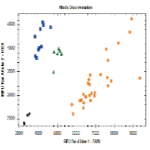
Genotype Calling Analyze the PCR products using real-time PCR (RT-PCR) to determine the allelic status based on fluorescence signals (FAM/HEX channels).
Acknowledgements
This study was supported by grants from the National Key Research and Development Program of China (2024YFD1201105, 2022YFD1201300, 2022YFD1201500), the Biological Breeding-National Science and Technology Major Project (2023ZD04025), the National Natural Science Foundation of China (W2412009, 32372173, 32501991), the Natural Science Foundation of Hubei Province (2024AFB154), and the Hubei Hongshan Laboratory (2022hspy001, 2021hskf008, 2022hspy010) awarded to S.Y., L.T., M.X., C.Y., L.W., S.L., and C.L.
Field work and germplasm development in Mexico were supported by the Australian Grains Research and Development Corporation (GRDC) through the Australian Cereal Rust Control Program (ACRCP), and by the Bill and Melinda Gates Foundation (BMGF) together with the UK’s Foreign, Commonwealth and Development Office (FCDO) via the Accelerating Genetic Gains in Maize and Wheat (AGG) project (INV-003439) awarded to J.H.-E., S.B., and R.P.S.
S.Y., L.T., M.X., C.Y., L.W., S.L., and C.L. receive salary support from the aforementioned Chinese funding agencies. J.H.-E., S.B., and R.P.S. are salaried staff of the International Maize and Wheat Improvement Center (CIMMYT), which administered the GRDC, BMGF, and FCDO grants supporting this research.
The funders had no role in study design, data collection and analysis, decision to publish, or preparation of the manuscript.