Nov 14, 2024
Version 2
Ilumina library preparation and dual hybridization protocol of ERC GLOBAL V.2
- 1DIADE, Univ Montpellier, CIRAD, IRD, Montpellier, France



Protocol Citation: Vincent R C Soulé, Theo Delaigue, Cedric Mariac, Couvreur Thomas 2024. Ilumina library preparation and dual hybridization protocol of ERC GLOBAL. protocols.io https://dx.doi.org/10.17504/protocols.io.n92ldp787l5b/v2Version created by Couvreur LP Thomas
License: This is an open access protocol distributed under the terms of the Creative Commons Attribution License, which permits unrestricted use, distribution, and reproduction in any medium, provided the original author and source are credited
Protocol status: Working
We use this protocol and it's working
Created: October 09, 2024
Last Modified: November 14, 2024
Protocol Integer ID: 109421
Keywords: library preperation, herbarium specimens, Annonaceae, hybridization, Angiosperm353, Small fragment DNA, illumina, novaseq, annonaceae dna extraction protocol, annonaceae dna extraction protocol from silicagel, annonaceae species within the erc global project, daicel arbor biosciences mybaits angiosperm353 kit, dna extraction of plant, annonaceae species, daicel arbor biosciences mybait, silicagel specimens of annonacea, ilumina library preparation, dna extraction, custom annonacea, particular from herbarium, hybridization capture, dual hybridization protocol of erc global step, diade research unit ird montpellier france, hybridisation protocol, silicagel specimen, dual hybridization protocol, annonacea, steps for the dual hybridization, herbarium, hybridization capture for targeted ngs user manual version, step protocol for library preparation, extraction, purification, plant, dual hybridization, baiting kit, silicagel, purification phase
Funders Acknowledgements:
ERC Consolidator
Grant ID: 865787
Disclaimer
This project has received funding from the European Research Council (ERC) under the European Union’s Horizon 2020 research and innovation program (grant agreement No. 865787).
Bill Baker and Donovan Bailey are thanked for drawing our attention to this option and sharing preliminary data and results.
Abstract
Step by step protocol for library preparation of Annonaceae species within the ERC GLOBAL project. This protocol was followed for all libraries prepared within the project. Each step involves a purification phase (AMPure XP protocol), and is detailed at the start of this protocol. The protocol is done per series of 48 samples at a time with indexing.
The protocol also describes the steps for the dual hybridization of Daicel Arbor Biosciences Mybaits Angiosperm353 kit + Custom Annonacea baiting kit. The protocol is based on hybridisation protocols used at DIADE research unit IRD Montpellier France and on the Hybridization Capture for Targeted NGS User Manual version 5 protocol "standard" of Daicel Arbor Biosciences Mybaits.
To proceed DNA extraction of plant and in particular from herbarium and silicagel specimens of annonacea read the Annonaceae DNA extraction protocol from silicagel dried and herbarium preserved leaves
- Vincent Soulé1,
- Théo Delaigue1,
- 1DIADE, Univ Montpellier, CIRAD, IRD, Montpellier, France
Attachments

Image Attribution
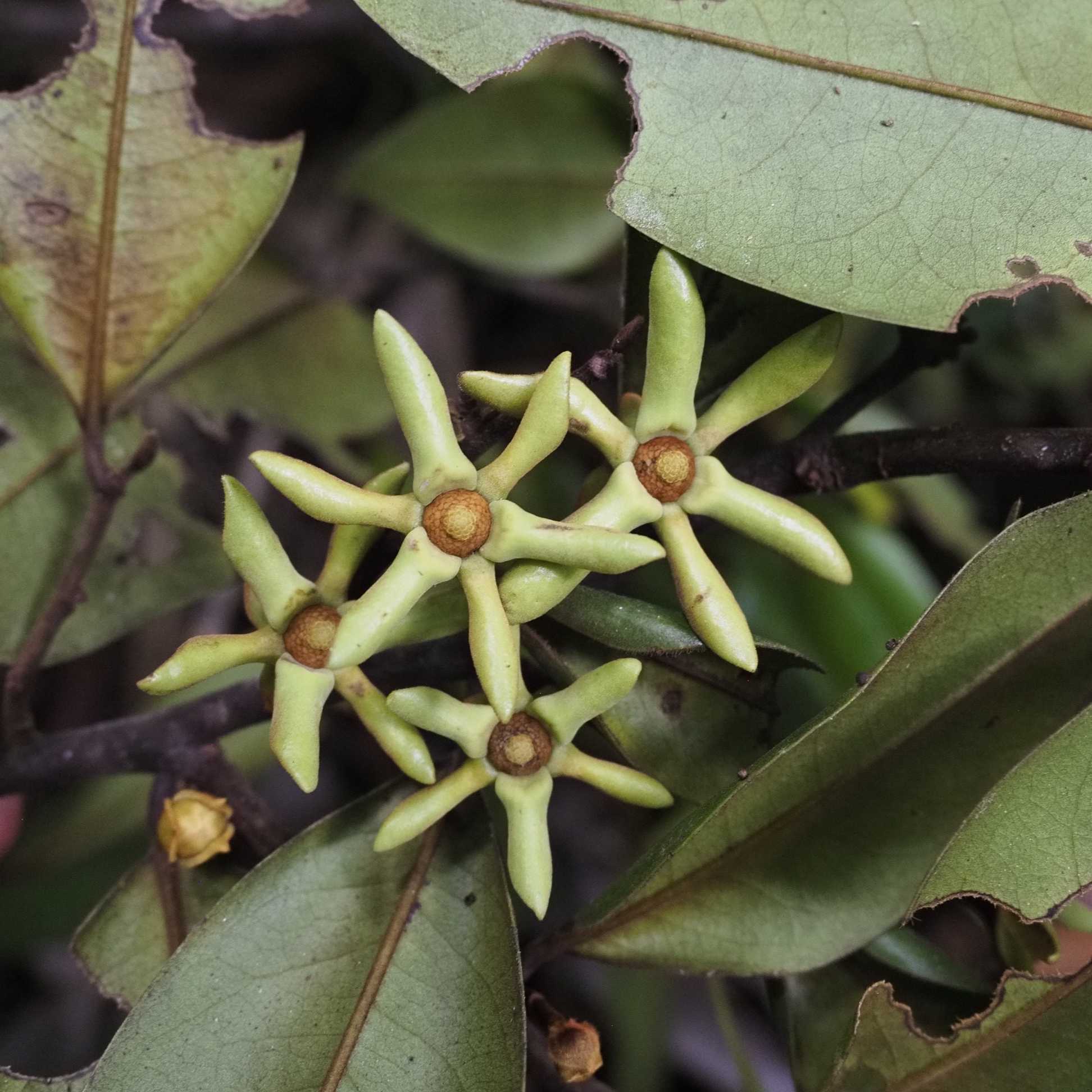
Photo by Thomas L.P. Couvreur
Guidelines
This librayry preparaion & dual hybridisation protocol follows and is inspired by Henriks et al (2021) using both the Annonaceae specific baits and the Angiosperms353 baits (see references). In the end we sequence both the Annonaceae specific baits and the Angiosperms353 universal ones.
Both the Annonaceae (Couvreur et al. 2019) and Angiosperms353 (Johnson et al., 2019) bait kits are available as Arbor Biosciences “myBaits” kits (Daicel Arbor Biosciences, Ann Arbor, Michigan, USA; https://arborbiosci.com/genomics/targeted-sequencing/mybaits/).
Materials
- Pipettes and cones with "low bind" filters (1000-200-20-10μL)
- Eppendorf tubes 1.5mL-2mL-0.2mL, aluminum films, refrigerated holder, magnetic holder, centrifuge and vortex
- PLATES RT-PCR 96 (Roche)
- VWR‱, Centrifugeuse de microplaques, PCR Plate Spinner
- Lightcycler 480 (Roche)
- QIAxcel "Advanced system" analyze + QIAxcel DNA screening kit (2400) or other bioanalyser
- Personal protective equipment (PPE): gown, gloves, goggles
- DNA Dilution Buffer
- Agencourt AMPure XP solution
- 70% ethanol (fresh)
- DNase/RNase Free Water
- Thermo Scientific‱ ADN ligase T4 (5 U/µl) EL0013 Code produit.10548730
- Bst DNA Polymerase, Large Fragment
(NEB#: M0275)
- DNTP Mix , REF U151B 10mM U1515 or 1511 (200 or 1000µL)
- KAPA HiFi HS Real-Time Master Mix (2X) + Real-Time Standards 1 to 4
- Kit MYbaits ® "In-Solution Sequence Capture fir Targeted High-Throughput Sequencing".
Protocol materials
Agencourt AMPure XPBeckman CoulterCatalog #A63880
70% EtOH
PCR Grade WaterCatalog #AM9935
Safety warnings
Wear protections
Before start
Clean bench and pipettes with water and then ethanol. Follow the instructions for use of the Arbor Biosciences V5 kit.
check if you have all the material needed for all the step or equivalent tools
Introduction and AMPure XP protocol
30m
Library preparation protocol is carried out after the DNA extraction detailed in :
Protocol

CREATED BY
Couvreur LP Thomas
To start we need purified DNA dilluted in water or TE buffer 50µL or more at 2 to 900ng/µL
below 60ng/µL samples are considered low quantity if only diluted in 50µL
samples with size less than 200pb is considered low quality/small fragments dna (use 1.8X ampure)
AMPURE XP DNA Purification protocol
On each steps of the protocol a purification step is need to change solution, concentrate or purify dna.
Each purification step is done with Agencourt AMPure XPBeckman CoulterCatalog #A63880
The only changes between the different purification steps is the start volumes as such: volume ratio 1X to 1.8X AMPure. For example for 1.8X: for 100 µl to be purified added 180 µl Ampure
Below we provide a protocol for 1X Agencourt AMPure XPBeckman CoulterCatalog #A63880
for start volume of 50 µL of DNA
resuspension (elution) volume = 20 µL .
The protocol is described for 96 well pcr plates, but can also be done in 1.5/ 2mL tubes.
Use Agencourt AMPure XPBeckman CoulterCatalog #A63880 at Room temperature , take out 30 minutes in advance.
Prepare a 70% ethanol solution.
Add 50 µL AMPure XP in each well.
Mix by pipetting or shake and wait 00:10:00 min. quickly spin down 10sec using pcr plate spinner if pcr plate or mini centrifuge for tubes
DNA will bind to the beads
10m
Place the plate on the magnetic stand and wait 00:05:00 min.
Remove liquid phase by pipetting , avoid pipetting the beads.
5m
Keep on magnetic stand add 150 µL 70% EtOH .
Remove liquid phase by pipetting, avoid pipetting the beads.
1m
Repeat wash step on magnetic stand and add 150 µL 70% EtOH
Remove liquid phase by pipetting, avoid pipetting the beads.
Allow to dry for 5 minutes at Room temperature
10m
Take PCR plate out of the magnetic stand and add the needed "elution volume"; here 20 µL of ultra pure water PCR Grade WaterCatalog #AM9935
Mix by pipetting.
Wait 00:10:00 minutes at Room temperature for beads to resuspend in water.
10m
The AMPure purification step is over.
Make sure to place the plate on the magnetic stand to avoid pipetting beads for next usage or quantification.
Mind that purification step reduces DNA quantity by 20 to 50% and removes small DNA fragments.
To keep small fragments use 1.8X AMPure ratio instead of 1X.
Part 1: library preparation , DNA preparation and shearing
2h
Depending on concentration of each sample, dilute the DNA in 0.2 mL microtubes Diagenode suitable for shearing with ultrasound. Target amount of DNA should, if possible, be 3-4 µg in 50 µL (to be supplemented with water). The number of shearing cycles and their duration can be modified depending on the initial degradation state of the DNA and/or the desired fragment size.
Shearing is done with the below equipment:
Equipment
Bioruptor Pico sonication device
NAME
Sonicator
TYPE
Diagenode
BRAND
B01060010
SKU
Turn ON the Bioruptor Pico 00:30:00 before use to cool down water at 4 °C
30m
Pulse centrifuge the tubes.
1m
Deposit 50 µL of DNA and water if needed to dilute to match concentration to the tubes in the Pico Bioruptor (Diagenode).
Start N cycles 00:00:15 ON / 00:00:30 OFF at 4 °C .
Depending on the DNA extraction control gel 0 < N < 10.
Expected result
For low quality small fragments herbarium speciment 0-3 cycles
For high quality herbarium specimen 3-8 cycles
For Silicagel specimens 5-10 cycles
45s
Check size using 3 µL DNA + 10 µL DNA dillution buffer AL420 protocol with QIAXCEL, if necessary undertake additional cycles.
Pattern must be between 150 and 600 bp, but depending on the initial degradation, it may be centred on 100 bp.
QIAxcel QIAGEN (DNA Screening Kit)
Restart N+B cycles 00:00:15 ON / 00:00:30 OFF at 4 °C .
45s
Mesure DNA size again using QIAGEN QIAXCEL Bioanalyser
3 µL DNA + 10 µL DNA dillution buffer AL420 protocol analysis.
or other bioanalyser , you can also make a DNA gel
Expected result
We aim for 4µg DNA post shearing and optimal DNA size of 400pb ranging between 100-600pb.
volume after shearing step 40-50µL (40 needed for next step)
Fast End Repair & phosphorylation
1h
Prepare a buffer and enzyme mix according to the number of samples to be processed
| A | B | |
| For 1 sample: | Volume | |
| Sheared DNA | 40 μL | |
| End Repair Reaction Buffer 10X | 5 μL | |
| End Repair Enzyme Mix | 5 μL | |
| Final volume | 50 μL |
Buffer mix needed per sample
NEBNext End Repair Module E6050L or E6050S
Distribute 10 µL of enzyme and buffer mix in each well.
5m
Add 40 µL of DNA from previous step, vortex and Spin down the sample (using pcr plate spinner).
5m
Leave 00:30:00 at 20 °C on the thermocycler.
30m
Stop the reaction using a purification step AMPure XP 1X (50µL) or 1.8X (90µL) if you want to retain small DNA fragments. See introduction for details of the purification step using Agencourt AMPure XPBeckman CoulterCatalog #A63880
Elute the samples in 30 µL water and quantify using Nanoquant.
Expected result
optional if low quantity DNA elute on 16µl (2µL for nanoquant and 14 for next step)
Ligation
3h
Depending on the previous dosage, calculate the volume to be taken per sample to ideally obtain 200 ng of DNA in 13.8 µL .
If necessary, dilute samples that are too concentrated .
Careful not to vortex the ligase. Mix by flicking the tube.
Take the samples, place them on a 96-well plate on a refrigerated stand, and adjust all the volumes to 13 µL with water.
Then add to each sample 2 µL of TAG-P5 adapt (4 µM).
Prepare a volume of Mix according to the number of samples:
| A | B | |
| 1 sample (DNA = 200 ng) | ||
| DNA + water | 13.8 µL | |
| adaptateur P5 with tag 4μM | 2 μL | |
| adaptateur P7 40μM | 0.2 μL | |
| T4 DNA ligase 5U/μL | 2 μL | |
| Buffer T4 10X | 2 μL | |
| Final Volume | 20 μL |
Mix volume for 1 sample
Update the thawing/freezing number of P7 P5 adapters on their storage box.
NB; Tag referes as P5 6pb barcoded adapter used as index but not read by ilumina ; demultipexed after sequencing.
adapter p7 & p5 sequences on atached file
Thermo Scientific‱ ADN ligase T4 (5 U/µl) EL0013
Deposit 4.2 µL of Mix by well, vortex briefly and pulse centrifuge.
Place the plate on the thermocycler and launch the "LIG" program:
| A | B | C | |
| Step | Temperature | Duration | |
| 1 | +22°C | 2H30 | |
| 2 | +65°C | 10 min | |
| 3 optional | +4°C | 20 min |
LIG program on thermocycler
Purify 20µL post ligation using Agencourt AMPure XPBeckman CoulterCatalog #A63880 with XP1.8X ratio
(36 µL of ampure );
Then elute in 25 µL ultra pure water.
Expected result
25µL of post ligation purified DNA solution 23.5 is needed for next step
optional you can conserve for 24h sample after purification step at -20°C
Nick Fill-in (Bst DNA Polymerase)
45m
Position the 96-well plate on a refrigerated stand.
Prepare a volume of Mix according to the number of samples:
| A | B | |
| For 1 sample: | ||
| DNA | 23.5 μL | |
| DNTPs 5mM | 1.5 μL | |
| Bst DNA POLYMERASE 8U/μL | 2 μL | |
| Thermo Pol Buffer 10X | 3 μL | |
| Final Volume | 30 μL |
Mix for 1 sample
Bst DNA Polymerase, Large Fragment
(NEB#: M0275)
DNTP Mix , REF U151B 10mM U1515 or 1511 (200 or 1000µL)
5m
Deposit 6.5 µL of Mix per well in a AB1400 pcr plate and pulse centrifuge.
1m
Deposit 23.5 µL of DNA per well, mix with the pipette and pulse centrifuge.
Place the plate on the thermocycler and launch the "BST" program:
| A | B | C | |
| Step | Temperature | Duration | |
| 1 | +37°C | 15 min | |
| 2 | +10°C | 20 min |
BST program on thermocycler
35m
Purify using Agencourt AMPure XPBeckman CoulterCatalog #A63880 XP 1X (30 µL ); see section 1.
Elute in 15 µL ultra pure water.
Expected result
15µL of post BST purified solution, 12µL is needed for PCR step
optional you can use the remaining 3µL for quantify or check DNA/library size and quality pre PCR
optional you can conserve for 24h sample after purification step at -20°C and done PCR step the next day
PCR1 amplification + Purification AMPure
1h
There is the DNA construction we want to obtain at the end of this PCR step :
In a LightCycler plate® 480 Multiwell plate 96 white arranged on refrigerated stand: deposit 30 µL of each fluorescent standards ref KK2701 (1 to 4) in duplicates in 8 separate wells. Keep the plate away from light.
Prepare a volume of Mix according to the number of samples:
| A | B | |
| For 1 sample | volume | |
| DNA | 12μL | |
| adapter PE 34 solution 10μM | 1.5μL | |
| INDEX 10μM | 1.5μL | |
| KAPA HiFi Master Mix 2X | 15μL | |
| Final Volume = | 30μL |
Mix for 1 sample
Roche KAPA Hifi PCR KIT 250rx
Index and adapter sequence on aftached file
Index used: AD001; AD002; AD003; AD004; AD005; AD006; AD007; AD008; AD009; AD0010; AD0011; AD0012.
Deposit 18 µL of Mix per well and pulse centrifuge.
Deposit 12 µL of DNA per well, mix with the pipette and pulse centrifuge.
Place the plate in the lightcycler and launch the following the "RTLib1" program.
| A | B | C | D | E | F | |
| Step | temperature | acquisition | Duration | spleen | Cycles | |
| Pre-incubation | 98°C | None | 45sec | 4.4°C/sec | 1 cycle | |
| Amplification | 98°C | None | 15sec | 4.4°C/sec | 20 cycles | |
| 62°C | None | 30sec | 2.2°C/sec | |||
| 72°C | Single | 30sec | 4.4°C/sec |
RTLib1 program on lightcycler
PCR should be stopped when signal is between standards 1 and 3 (optimal library amplification range), generally between cycles 10-14. more for low quality or low quantity DNA
Important : Do not over amplify, it will reduce you sequencing quality, stop before reachin plateau phase of amplification
Asset URL:
stop before plateau phase
Stop the run just after the last acquisition (green dot on the graph) when the double-stranded DNA is full length. If necessary, transfer the "passed" samples to another AB 1400 plate by piercing the film with a scalpel blade at each well concerned.
Repeat if necessary for samples requiring more subsequent cycles, using the same program but without pre-incubation.
Purify using Agencourt AMPure XPBeckman CoulterCatalog #A63880 XP 1X (30 µL ); see section 2.
Eluate the samples in 30 µL of ultra pure water.
Perform an analysis on Qiaxcel (3 µL ) and dose on Nanoquant (2 µL ).
Expected result
after 10-16 cycles of amplification + purification
Mass concentration from 2 to 110ng/µL adn target 30ng/µL
DNA size from 250 to 550pb target 400pb peak
optional you can conserve for 24h sample after purification step at -20°C and continue the next day
Preparation of Bulk
1h 30m
Prepare an equimolar mix of all 48 sample by adding 1 µL to 25 µL of each purified sample from PCR1 step. Volume will depend of concentration and size of DNA.
Match 0.5 pmol per samples ex : 133 ng for 400pb DNA.
Each volume is added in a 1.5 mL DNA low bind tube, total volume between 100 µL to 1000 µL
Transfer of 48 samples from PCR plate to one 1.5 mL tube with different volumes
1h
Purify using Agencourt AMPure XPBeckman CoulterCatalog #A63880 XP 1.8X; see section 2. Volumes depends on the total volume of the bulk.
Eluate the samples in 30 µL of ultra pure water.
Bulk tubes before elution step.
30m
Expected result
30µL of 50-200ng/µL DNA bulk, size 400pb peak
1-7µL is needed for Hybridization step
you can conserve DNA bulks for weeks at -20°C
you can repeat library preparations protocols for multible bulk and when you have enough N bulks of 48/specimens so you can proceed multi hybridation step in same time and make N*48 specimens per sequencing.
Part 2: Hybridization step for targeted DNA sequencing
1d
This part of the protocol describes dual hybridization process for targeted DNA sequencing using Daicel Arbor Biosciences Mybait KIT V5 Angiosperm353 and custom Annonacea kit.
In this protocol we use a bulk of 48 samples for each reaction (Arbor recommend max 8 sample per reactions). This protocol describes the quantity for one reaction or 8 reactions (48 or 384 samples)
A total of5.5 µL of baits is required per reaction. We used a ratio of a 3/4 Angiosperms353 baits and 1/4 Annonaceae baits per reaction following Henriks et al. (2021):
4.125 µL of Angiosperms353 baits
1.375 µL of Annonaceae baits
Bait mix preparation
15m
Program the Thermo Mixer so that it reaches 60 °C and a second Thermo mixer to 95 °C . Place the Arbor Biosciences Baits on ice.
Heat the Hyb N and Hyb S bait reactives at 60 °C and vortex to dissolve the aggregates.
Prepare a volume of Mix "HYB" according to the number of reactions planned, vortex and centrifuge:
| A | B | C | |
| Component | µL for 1 reaction | µL for 8 reactions | |
| Hyb N (+4°C) | 9.25 | 74 | |
| Hyb S (+4°C) | 0.5 | 4 | |
| Hyb D (-20°C) | 3.5 | 28 | |
| Hyb R (-20°C) | 1.25 | 10 | |
| Baits (-80°C) | 4.125 Angio353 + 1.375 Annonaceae | 33 Angio353 + 11 Annonaceae | |
| TOTAL | 20 µL | 160 µL |
Mix "HYB" preperation
(-20°C)
Incubate the HYB mix 00:10:00 at 60 °C and vortex to recover the condensate
For each capture reaction, alicot 18.5 µL in 1.5 µL of DNA in a low bind tube.
We refer to these reaction aliquots of hybridization Mix as "HYBs"
Let stand 00:05:00 at Room temperature
Prepare a volume of Mix "Block" according to the number of reactions of capture, vortex and centrifuge:
| A | B | C | |
| BLOCK | per capture | for 8 captures | |
| Block O (-20°C) | 5 µl | 40 µl | |
| Block X (-20°C) | 0.5 µl | 4 µl | |
| Total volume | 5.5 µl | 44 µl |
Mix "Block" preparation
For each capture reaction, aliquot 5.0 µL of "Block" in a 0.5mL tube.
15m
Hybridization
1d
Add 7 µL of BULK DNA library 50-100 ng/µL to each 5 µL aliquot of "Block" and homogenize by pipetting. We then obtain a Mix of 12 µL
These libraries with Blocker Mix aliquots are now called "LIB" (block + libraries)
Place the "LIB" on the second Thermo Mixer at 95 °C for 00:05:00 .
Transfer the "LIB" and the "HYBs" mix into the Thermo Mixer at 65 °C 00:05:00 800 rpm
10m
Transfer 18.5 µL of each "HYBs" to each corresponding "LIB" and homogenize by pipetting 5 times.
Incubate at hybridization temperature of 65 °C Overnight (16h-24h).800 rpm
eppendorf Thermomixer with Thermotop , 65°C 800RPM
5m
Capture and washing
1h
Bring Hyb S (the reactive, not the mix) and wash buffer to Room temperature in order to prepare the washing solutions about 1h30 before stopping the hybridization reaction.
Prepare the Wash Buffer X in a falcon tube of 15 mL
| A | B | |
| HYB S (+4°C) | 40 μL | |
| Water | 3.96 mL | |
| Wash Buffer | 1 mL | |
| Final volume | 5 mL |
Wash Buffer X preparation for 3 reactions
Wash Buffer X can be stored at 4 °C for up to 1 month
Vortex and place the Wash Buffer X at hybridization temperature (+65 °C in a water bath) at least 00:45:00 before use.
Vortex to homogenise capture beads (kit , box at 4°C).
For each capture reaction, aliquot 30 µL of beads (Box at 4 °C )
TIP: Beads can be prepared in 8 (or fewer) reaction batches (240 µL ) in a 1.5 µL tube. Multiply all volumes by the number of reactions in the batch; i.e., for 8 reactions-worth, wash with 1.6 mL and resuspend in 560 µL μL Binding Buffer, then aliquot 70 μL suspension to individual tubes.
45m
Arrange tubes on a magnetic stand for 00:01:00 to 00:02:00 until the aggregate is formed and remove the supernatant.
Repeat 3 consecutive times:
Add 200 µL of Binding Buffer in each tube, vortex 00:00:03 , centrifuge briefly and finally eliminate the supernatant on magnetic stand.
Resuspend beads in 70 µL of Binding Buffer.
3m 3s
Place the beads at hybridization temperature on Thermo Mixer at least 00:02:00 before transfer.
Quickly transfer each capture reaction (30 µL ) into a tube containing the beads and homogenize by pipetting.
Incubate the library and beads mixture at hybridization temperature of 65 °C on Thermo Mixer for 00:05:00 at 1200 rpm.
Eliminate the supernatant on magnetic stand.
7m
Repeat 3 consecutive times:
Add 375 µL of Wash Buffer X (heated) in each tube, vortex, centrifuge briefly, incubate at hybridization temperature on Thermo Mixer for 00:05:00 minutes at 1200 rpm and finally eliminate the supernatant on magnetic stand.
5m
Elution
15m
Add 25 µL of Buffer E box -20° (bring back to Room temperature before hand)
Incubate at 98 °C for00:05:00 on ThermoMixer or Heating Block (use lid).
Place the tubes on a magnetic stand and quickly recover the supernatant containing the enriched libraries and transfer it into a new PCR tube / plate.
5m
RT-PCR 2 (final)
30m
In a LightCycler plate® 480 Multiwell plate with 96 arranged on refrigerated plate.
Deposit 50 µL of each fluorescent marker 1 to 4 repeated twice in 8 separate wells on the plate. Keep the plate away from the light.
Prepare a Mix for each INDEX used. There are 12 Illunima INDEX that can be used.
| A | B | |
| By well: | ||
| Bulk DNA | 20μL | |
| adapter PE 34 solution 10μM | 2.5μL | |
| INDEX 10μM | 2.5μL | |
| KAPA HiFi Master Mix 2X | 25μL | |
| Final volume | 50μL |
Mix for each INDEX per well
index and adapter sequence on atached file
Index used: AD001; AD002; AD003; AD004 AD005 AD006 AD007 AD008 AD009 AD0010 AD0011 AD0012
Deposit 30 µL of Mix (index+PE34+kapa pcr mix) per well and pulse centrifuge.
Deposit 20 µL of DNA per well, mix with the pipette and pulse centrifuge.
Place the plate at the lightcycler and launch the following program:
| A | B | C | D | E | F | |
| Step | Temperature | acquisition | Duration | spleen | Cycles | |
| Pre-incubation | 98°C | None | 45sec | 4.4°C/sec | 1 cycle | |
| Amplification | 98°C | None | 15sec | 4.4°C/sec | 55 cycles | |
| 62°C | None | 30sec | 2.2°C/sec | |||
| 72°C | Single | 30sec | 4.4°C/sec |
Lightcycler program
Stop the run before the plateau phase. Generally 10 to 16 cycles. If necessary, add some extra cycles for some samples. Important : Do not over amplify, it will reduce you sequencing quality.
Carry out a purification step using Agencourt AMPure XPBeckman CoulterCatalog #A63880 XP 1X on half the volume 25μL , keep the leftover volume (approx. 25 µL ) at -20 °C as backup.
Proceed with the purification with 1.5 mL DNA low bind tube as follows:
- Prepare the sample: Mix the 25µL DNA sample with 25µL AMPure.
- Bind: Incubate the mixture for 10 minutes at room temperature to allow the DNA to bind to the beads and put on magnetic stand;
- Wash: after 5 minutes on magnetic stand remove supernatant;
- Wash the beads twice with 70% ethanol to remove impurities;
- Let dry for 5 minutes to remove residual ethanol and dry the purified DNA;
- Remove from magnetic stand and resuspend the dried DNA by adding 20 µL water.
Let DNA elute at least 00:05:00 min.
Perform a quantification with Nanodrop and quality analysis on Qiaxcel.
5m
Preparation of bulk for illumina sequencing
30m
Prepare an equimolar mix of all samples.
We end up with a single tube with all indexes mixed, and ready to sequence.
Refer to your sequencing platform for final volume and concentration.
In our case we needed a minimum of 50 µL and DNA fragments should be at 400pb.
All samples were sequenced with Novogen using a NovaSeq PE150.
30m
Protocol references
Couvreur TLP; Helmstetter AJ, et al. (2019) Phylogenomics of the Major Tropical Plant Family Annonaceae Using Targeted Enrichment of Nuclear Genes. Frontiers in Plant Science 9. https://doi.org/10.3389/fpls.2018.01941
Hendriks KP et al. The best of both worlds: Combining lineage-specific and universal bait sets in target-enrichment hybridization reactions (2021). Applications in Plant Sciences 9. Https://doi.org/10.1002/aps3.11438.
Annonaceae DNA extraction protocol from silicagel dried and herbarium preserved leaves
- Théo Delaigue1,
- Vincent Soulé1,
- 1DIADE, Univ Montpellier, CIRAD, IRD, Montpellier, France