Aug 09, 2023
High molecular weight DNA extraction for marine macroalgal tissue
- 1Scripps Institution of Oceanography


Protocol Citation: Malia Moore, Taylor Steele 2023. High molecular weight DNA extraction for marine macroalgal tissue. protocols.io https://dx.doi.org/10.17504/protocols.io.14egn2dnpg5d/v1
License: This is an open access protocol distributed under the terms of the Creative Commons Attribution License, which permits unrestricted use, distribution, and reproduction in any medium, provided the original author and source are credited
Protocol status: Working
We use this protocol and it's working
Created: May 08, 2023
Last Modified: August 09, 2023
Protocol Integer ID: 81551
Keywords: Lyophilizing algal tissue, DNA extraction, Lysis and first precipitation, Final precipitation, Column cleanup, oxford nanopore hmw dna extraction from arabidopsis leaf, marine macroalgal tissue, oxford nanopore hmw dna extraction, high molecular weight dna extraction, cell culture dna midi kit for column cleanup, dna extraction, marine macroalgae, cell culture dna midi kit, sulfated polysaccharide, dna product, polysaccharide, arabidopsis leaf, polyphenolic contamination, dna, polyphenolic
Abstract
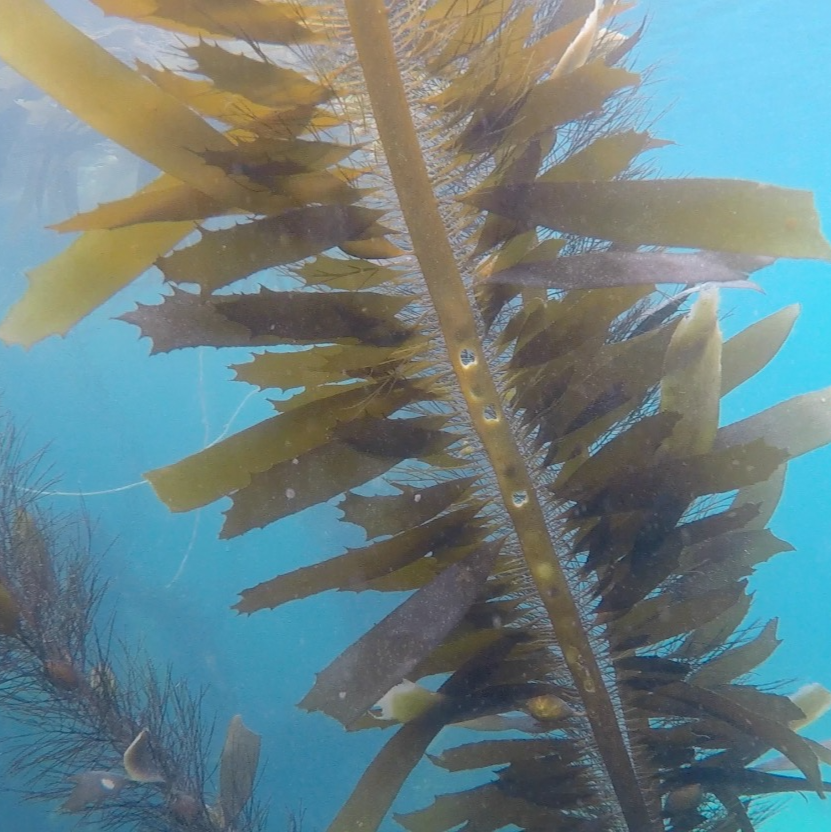
This protocol details high molecular weight DNA extraction for marine macroalgal tissue. Marine macroalgae contain a variety of unique cell wall components including sulfated polysaccharides and polyphenolics. These components often co-elute with high molecular weight (HMW) DNA and lead to reduced library prep and sequencing outcomes. This protocol incorporates polyvinylpolypyrrolidone (PVPP) and β-mercaptoethanol (BME) to reduce polyphenolic contamination, and an early salting out step with potassium acetate (KOAc) to address polysaccharides. This protocol is largely adapted from an Oxford Nanopore HMW DNA extraction from Arabidopsis leaves, which incorporates the QIAGEN Blood and Cell Culture DNA Midi Kit for column cleanup. The DNA product often requires additional cleanup after elution, and we suggest the BluePippin 15kb size selection for all HMW applications.
Attachments

711-1533.pdf
55KB
Guidelines
Marine macroalgae contain a variety of unique cell wall components including sulfated polysaccharides and polyphenolics. These components often co-elute with high molecular weight (HMW) DNA and lead to reduced library prep and sequencing outcomes. This protocol incorporates polyvinylpolypyrrolidone (PVPP) and β-mercaptoethanol (BME) to reduce polyphenolic contamination, and an early salting out step with potassium acetate (KOAc) to address polysaccharides.1 This protocol is largely adapted from an Oxford Nanopore HMW DNA extraction from Arabidopsis leaves, which incorporates the QIAGEN Blood and Cell Culture DNA Midi Kit for column cleanup.2 The DNA product often requires additional cleanup after elution, and we suggest the BluePippin 15kb size selection for all HMW applications.
Additional tips:
- In the field or in lab, it is vital to scrape off all surface epiphytes and wash the sample in clean water before flash freezing to reduce contaminants common in the marine environment that confound genome assembly.
- Marine macroalgae are incredibly diverse in biochemical content, so individual seaweeds may require troubleshooting. Suggested alterations include varying input tissue type or quantity, increasing CTAB or BME percent, or adding a second chloroform separation.
- It may be necessary to carry out extractions of the same tissue in parallel to yield sufficient DNA, especially when large losses from BluePippin are expected. It is not suggested to combine multiple extractions onto the same column, as this may lead to overloading and a dirty sample. This protocol as written, paired with BluePippin, has produced sequencing-quality DNA for Nanopore from a red alga Porteria hornemanii and a brown alga Macrocystis pyrifera. For P. hornemanii, a single 20 mL extraction produced sufficient DNA for sequencing, but for M. pyrifera, three parallel extractions of 20 mL were necessary.
Materials
Equipment:
- Lyophilizer
- Stir plate
- Heat block or water bath
- Vortex
- Mortar and pestle
- Refrigerated centrifuge for spins up to 3,500 xg with 50 mL
- Suggested: Sage Science BluePippin
Consumables:
- Stock solution: 1 Mass Percent Tris-HCl, 9.5
- Stock solution: 5 Mass Percent sodium chloride (NaCl)
- Stock solution: 500 millimolar (mM) ethylenediaminetetraacetic acid (EDTA)
- Stock solution: 5 Mass Percent potassium acetate (KOAc)
- Cetyltrimethylammonium bromide (CTAB)
- Polyethylene glycol (PEG) 8000
- β-mercaptoethanol (BME)
- Polyvinylpolypyrrolidone (PVPP)
- RNase A, 100 mg/mL (eg. QIAGEN Mat. #1007885)
- 100% isopropanol
- 95-100% ethanol
- Nuclease-free water
- Blood & Cell Culture DNA Mini Kit (25)QiagenCatalog #13323
- Tris-EDTA (TE) buffer
- 50 mL Falcon Tubes
- DNA LoBind Tube 1.5ml EppendorfCatalog #022431021
- Suggested: Sage Science High Pass Plus Cassette (BPLUS10 or BPLUS03) for BluePippin
Lyophilizing algal tissue
Flash-freeze algal tissue in liquid nitrogen (target ≥5 g wet tissue).
Quickly transfer sample to lyophilization container and freeze dry for 36-48 hours.
Macerate the tissue with a clean spatula to increase surface area and put on the lyophilizer for another 24:00:00 .
1d
Remove and refrigerate with desiccant for immediate use, or store at -80 °C for longer periods.
Setting up the DNA extraction
Prepare desired volume of Carlson lysis buffer (100 millimolar (mM) Tris-HCl, 9.5 , 2% CTAB, 1.4 Mass Percent NaCl, 1% PEG 8000, 20 millimolar (mM) EDTA) and mix Overnight on a magnetic stirrer. The stock solutions suggested under consumables will yield a homogenous buffer with no precipitate.
1d
Pre-heat a heat block or water bath to 65 °C and place in a fume hood.
For each extraction, transfer 20 mL of Carlson lysis buffer to a 50-ml Falcon tube.
In a fume hood, add 400 µL BME (originally 50 µL ) and mix by vortexing. Pre-warm the solution to 65 °C for 00:30:00 before starting the extraction.
30m
Scoop 0.5 teaspoons lyophilized plant tissue into a clean mortar and add 50-100 mg powdered PVPP. Grind with pestle for ~00:00:30 , until tissue is powdered and combined, but not long enough to introduce significant moisture. Move immediately into DNA extraction.
30s
Lysis and first precipitation
Pour tissue into the warm buffer. Invert 5 times.
Add 40 µL of RNase A and vortex for 00:00:05 .
5s
Optional: If using a heat block with mixing, set the block (still at 65 °C ) to mixing at 300 rpm, 00:05:00 .
Incubate for 01:00:00 at 65 °C .
1h
Invert 10 times every 15 minutes.
At 30 minutes, add another 40 µL of RNase A, inverting 10 times to combine.
Allow the tubes to cool down to Room temperature for 00:10:00 .
10m
Add 20 mL chloroform and vortex for two pulses of 00:00:05 each.
5s
Centrifuge the tubes at 3500 x g, 4°C, 00:15:00 .
15m
In a fume hood, transfer the top layer of lysate from each tube to a new 50-ml Falcon tube, without disturbing the interphase.
Note
Tip: The lysate layer should be 14-18 mL of solution, but it is recommended to use widebore tips, transferring 1 mL at a time. Tips can also be widened by cutting standard P1000 tips.
Mix supernatant with 0.4X 5 Mass Percent potassium acetate (KOAc) at Room temperature , inverting at least 10 times to combine, then incubate On ice for 00:20:00 .
20m
Centrifuge the tubes at 3500 x g, 4°C, 00:45:00 .
45m
Remove and retain the supernatant.
Note
Tip: This may best be done by pouring slowly and observing the polysaccharide-salt pellet, which may be mobile. Leave some liquid behind in favor of avoiding the pellet.
Add 0.7X volumes of isopropanol. Invert 10 times. Incubate at -80 °C for 00:15:00 .
Note
Do not extend this incubation.
15m
Centrifuge the sample at 3500 x g, 4°C, 00:45:00 .
Note
Tip: If available, a fixed-angle centrifuge will create a pellet on the wall of the tube that has greater surface area for dissolution in step 24 (as compared to a conical pellet at the base of a falcon tube from a swinging bucket).
45m
Discard the supernatant without disturbing the pellet. Use sterile wipes to absorb the liquid on the tube walls, being careful not to disturb the pellet.
To each pellet, add 10 mL G2 buffer, from the QIAGEN kit. Incubate at 50 °C for 30-60 minutes, or until the pellet is dissolved. Swirl the pellet to mix but do not try to pipette or vortex.
Column cleanup
Equilibrate a QIAGEN Genomic-tip 100/G column with 4 mL of Buffer QBT.
Pour the DNA in G2 buffer through the equilibrated column and allow it to flow through with just gravity.
Once all the lysate has passed through, wash the column with 8 mL of Buffer QC.
Repeat the wash with another 8 mL of Buffer QC.
Place the column over a clean 50-mL Falcon tube, and elute the genomic DNA with 5 mL of Buffer QF, pre-warmed to 55 °C .
Allow the eluate to cool down to Room temperature .
Add 3.5 mL of isopropanol to the eluted DNA and mix by inverting the tube 10 times.
Incubate the tube at -20 °C for at least 3 hours, or Overnight .
15m
Final precipitation
1h 10m
Centrifuge the tube at 3500 x g, 4°C, 00:45:00 .
45m
Discard the supernatant without disturbing the pellet.
Add 4 mL of ice-cold 70% ethanol to the pelleted DNA and invert the tube 10 times.
Centrifuge at 3500 x g, 4°C, 00:10:00 .
Note
Tip: If using a swinging bucket centrifuge the DNA will pellet at the base of the tube and be easy to locate and resuspend. If using a fixed angle, mark the side of the tube that faces outwards in order to locate the pellet for washes and elution.
10m
Discard the supernatant without disturbing the pellet. Use sterile wipes to dry the tube walls, being careful not to disturb the pellet.
Resuspend the DNA in 100 µL of TE buffer and incubate at Room temperature , typically Overnight .
15m
Transfer the DNA into a nuclease-free 1.5-mL tube (DNA LoBind tube preferred) using a wide-bore tip, and store at 4 °C .
Note
Tip: Often, waiting a further 48:00:00 before quantifying on Nanodrop and Qubit will allow the DNA to further relax and yield the most accurate results
Carry samples forward to BluePippin size selection, if available. This gel separation will retain DNA fragments greater than 15 kb and discard any residual contamination still evident on a Nanodrop trace. For these benefits, expect 50-70% loss of DNA.
Protocol references
Citations
1. Chekan, J. R. et al. Scalable Biosynthesis of the Seaweed Neurochemical, Kainic Acid. Angew Chem Int Ed Engl 58, 8454–8457 (2019).
2. Nanopore, Arabadopsis Leaf gDNA. https://community.nanoporetech.com/extraction_method_groups/plant-leaf-gDNA