May 14, 2026
Guidelines for Genetic Sample Collection of Small Mustelids
- Andrin C. Dürst1
- 1University of Bern, Institute of Ecology and Evolution, Division of Conservation Biology, Bern, Switzerland
- Andrin C. Dürst: ORCID: https://orcid.org/0009-0004-8878-8994



Protocol Citation: Andrin C. Dürst 2026. Guidelines for Genetic Sample Collection of Small Mustelids. protocols.io https://dx.doi.org/10.17504/protocols.io.eq2ly4wmplx9/v1
Manuscript citation:
Otte, P.J., Carter, S.P., Dürst, A.C., Granata, M., Mos, J., Salvador, S., Valdez, V., Zub, K., Hofmeester, T.R. 2026. Too small to matter? A call to action for european small mustelid research. Mamm Res 71, 39 (2026). https://doi.org/10.1007/s13364-026-00860-2
Andrin C. Dürst 2026. Protocol for Small Mustelid Carcass Collection, Handling, and Storage. protocols.io
https://dx.doi.org/10.17504/protocols.io.3byl469pogo5/v1
License: This is an open access protocol distributed under the terms of the Creative Commons Attribution License, which permits unrestricted use, distribution, and reproduction in any medium, provided the original author and source are credited
Protocol status: Working
We use this protocol and it's working
Created: August 29, 2025
Last Modified: May 14, 2026
Protocol Integer ID: 225771
Keywords: mustelids, genetics, sampling, carnivores, scat, tissue, hair, stoat, weasel, marten, carnivor, faecal, genetic, conservation, guidelines for genetic sample collection, documentation of genetic sample, genetic sample collection, genetic sample, interoperable research on small mustelid, conservation status, comparable genetic datasets across institution, small mustelid, comparable genetic dataset, small mustelids these guideline, weasel, collaborative analyses of population structure, hair sample, conservation practitioner, mustela erminea
Disclaimer
Disclaimer: This document is a working guideline and is provided for informational purposes only. The author does not guarantee the accuracy, completeness, or appropriateness of the methods described for any specific context. Use of this guideline is at the user's own risk. The author accepts no responsibility or liability for any outcomes, errors, or consequences resulting from the use or misuse of this document. Users are solely responsible for ensuring compliance with applicable laws, institutional guidelines, and safety or ethical standards.
Abstract
These guidelines provide standardized recommendations for the design of collection, preservation, and documentation of genetic samples from small mustelids, including stoats (Mustela erminea), weasels (M. nivalis), and polecats (M. putorius). They cover tissues, scat, and hair samples, with practical instructions for handling, storage, labelling, and metadata recording, while emphasizing legal and ethical considerations.
By applying these guidelines, researchers and conservation practitioners can generate high-quality and comparable genetic datasets across institutions and regions, enabling collaborative analyses of population structure, connectivity, and conservation status. This first published version establishes a common framework designed to support reproducible and interoperable research on small mustelids.
Image Attribution
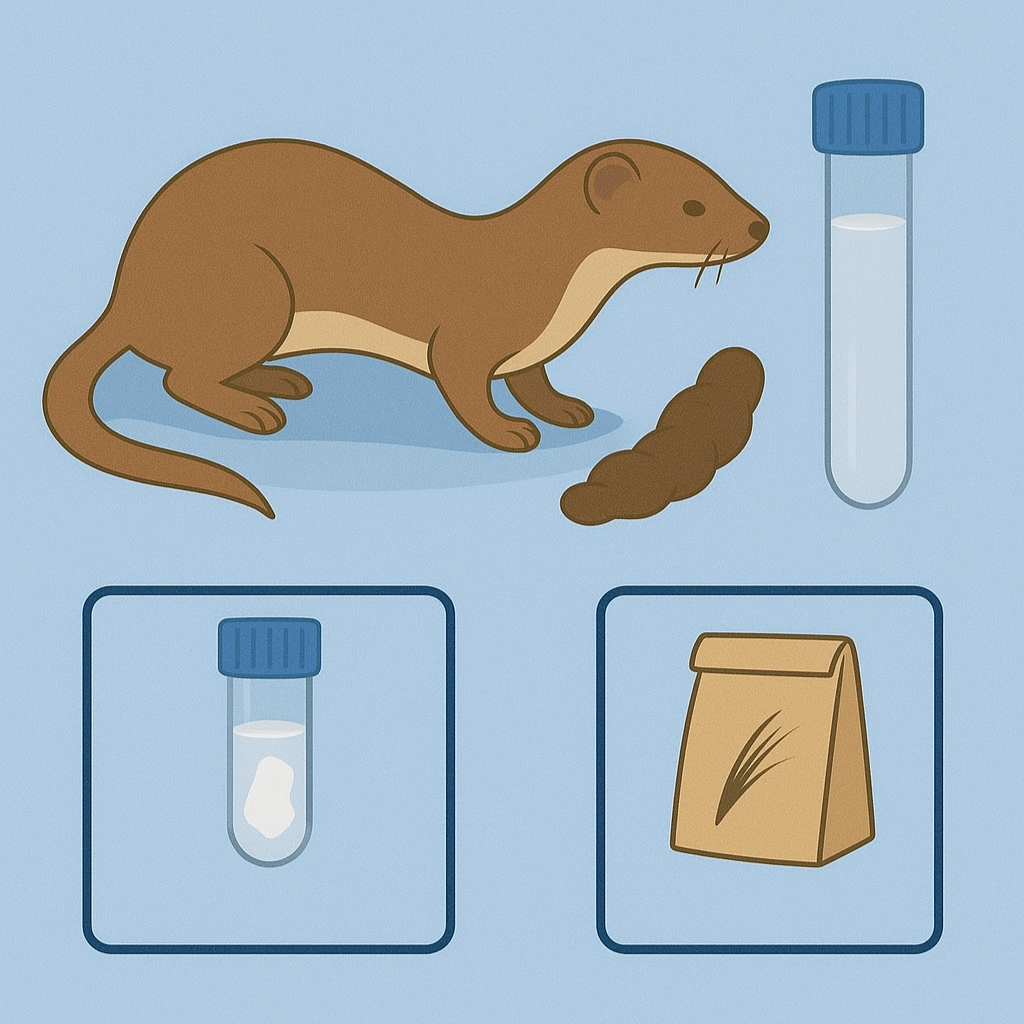
Figure 1: Example of tissue samples preserved in ethanol for genetic analysis.; Figure 2: Example of hair samples stored in a paper bag.; Figure 3: Example of a scat sample stored in a tube and preserved by freezing.; Figure 4: Examples of screw-cap tubes with a label outside (left) and inside (right).
Guidelines
Appendix A
| Entry | Implemented in DwC (or GGBN) | Definition (DwC if applicable) | Term URL (DwC or GGBN) | |
| materialSampleID | x | A unique identifier for a MaterialSample entity. | https://dwc.tdwg.org/terms/#materialSampleID | |
| sampleNumber | A unique numeric identifier assigned to each individual genetic sample within the study. Used to differentiate samples collected from the same individual or multiple individuals. Must be consistent across all records. | |||
| subsampleID | An optional identifier appended to the primary sampleNumber to denote subsamples or multiple sample types collected from the same individual. Represented by a lowercase letter suffix (e.g., a, b, c) in alphabetic order. | |||
| eventDate | x | The date-time or interval during which an Event occurred. | https://dwc.tdwg.org/terms/#eventDate | |
| country | x | The name of the country or major administrative unit in which the Location occurs. | https://dwc.tdwg.org/terms/#country | |
| decimalLatitude | x | Geographic latitude in decimal degrees, using the spatial reference system given in geodeticDatum. [WGS84 format preferred] | https://dwc.tdwg.org/terms/#decimalLatitude | |
| decimalLongitude | x | Geographic longitude in decimal degrees, using the spatial reference system given in geodeticDatum. [WGS84 format preferred] | https://dwc.tdwg.org/terms/#decimalLongitude | |
| coordinateUncertaintyInMeters | x | The horizontal distance (in meters) from the given decimalLatitude and decimalLongitude describing the smallest circle containing the whole of the Location. | https://dwc.tdwg.org/terms/#coordinateUncertaintyInMeters | |
| geodeticDatum | x | The ellipsoid, geodetic datum, or spatial reference system (SRS) upon which the geographic coordinates are based. | https://dwc.tdwg.org/terms/#geodeticDatum | |
| locationID | x | An identifier for the set of location information (data associated with dcterms:Location). | https://dwc.tdwg.org/terms/#locationID | |
| scientificName | x | The full scientific name, with authorship and date information if known. | https://dwc.tdwg.org/terms/#scientificName | |
| taxonCode | A standardized, unique alphanumeric code representing a species or taxonomic unit. The code is derived from the Latin scientific name by combining the first two letters of the genus name and the first two letters of the species name, with the first letter of each part capitalized (e.g., Mustela erminea → MuEr). | |||
| identificationCertainty | A qualitative or quantitative assessment of confidence in the taxonomic identification of the specimen or sample. Indicates whether the identification is confirmed, probable, tentative, or uncertain. (see list) | |||
| causeOfDeath | A description or coded term indicating the suspected or confirmed cause of death of the sampled individual (e.g., natural predation, roadkill, disease). | |||
| causeOfDeathCertainty | A statement or rating indicating the degree of certainty associated with the recorded cause of death, distinguishing between confirmed and assumed causes. (see list) | |||
| institutionCode | x | The name (or acronym) in use by the institution having custody of the object(s) or information referred to in the record. | https://dwc.tdwg.org/terms/#institutionCode | |
| recordedBy | x | A list of names of people, groups, or organizations responsible for recording the original Occurrence. | https://dwc.tdwg.org/terms/#recordedBy | |
| recordedByContact | Contact information (e.g., email, phone) for the person or team responsible for recording or collecting the sample, enabling follow-up communication if needed. | |||
| coordinator | The name or identifier of the project coordinator responsible for overseeing sample collection, metadata consistency, and data management across participating institutions. | |||
| coordinatorContact | Contact details (e.g., email address) of the project coordinator for coordination, troubleshooting, and communication purposes. | |||
| habitat | x | A category or description of the habitat in which the Event occurred. | https://dwc.tdwg.org/terms/#habitat | |
| locationRemarks | x | Comments or notes about the Location. | https://dwc.tdwg.org/terms/#locationRemarks | |
| materialSampleType | x | The nature of the material sample; preferably from a controlled vocabulary. | https://dwc.tdwg.org/terms/#materialSampleType | |
| preservationMethod | x | GGBN: Method used to preserve the material sample (e.g., ethanol 95%, frozen -80°C), from GGBN preservation vocabulary. | https://wiki.ggbn.org/ggbn/Ggbn:preservationType | |
| sampleCondition | A qualitative description of the physical condition of the sample at the time of collection or processing, including notes on degradation, contamination, or any abnormalities affecting sample quality. | |||
| measurementType_bodyLength | x | The linear distance from the tip of the snout to the base of the tail (excluding the tail). | https://dwc.tdwg.org/terms/#measurementType | |
| measurementValue_bodyLength | x | Value of bodyLength (im mm) | https://dwc.tdwg.org/terms/#measurementValue | |
| measurementUnit_bodyLength | x | Millimeters (mm) | https://dwc.tdwg.org/terms/#measurementUnit | |
| measurementType_tailLength | x | The linear distance from the base of the tail to its tip (not including the hair at the tip). | https://dwc.tdwg.org/terms/#measurementType | |
| measurementValue_tailLength | x | Value of tailLength (im mm) | https://dwc.tdwg.org/terms/#measurementValue | |
| measurementUnit_tailLength | x | Millimeters (mm) | https://dwc.tdwg.org/terms/#measurementUnit | |
| measurementType_bodyMass | x | The total mass (weight) of the animal measured using a precision scale. | https://dwc.tdwg.org/terms/#measurementType | |
| measurementValue_bodyMass | x | Value of bodyMass (in g) | https://dwc.tdwg.org/terms/#measurementValue | |
| measurementUnit_bodyMass | x | Grams (g) | https://dwc.tdwg.org/terms/#measurementUnit | |
| sex | x | The sex of the biological individual(s) represented in the Occurrence. | https://dwc.tdwg.org/terms/#sex | |
| furColour | Descriptive information about the coloration or pattern of the fur observed on the sampled individual, useful for phenotypic variation and identification. (see list) | |||
| comments | Additional comments and remarks. | https://dwc.tdwg.org/terms/#dynamicProperties | ||
| associatedMedia | x | A list of identifiers (publication, global unique identifier, URI) of media associated with the Occurrence. | https://dwc.tdwg.org/terms/#associatedMedia |
Table A.1: Metadata Fields, Definitions, and Standards
If possible, entries should be recorded according to Darwin Core (DwC) or Global Genome Biodiversity Network
(GGBN) standard.
Materials
Disposable gloves; clean, sterilized tools for each animal or sample (to avoid cross-contamination). Sterile scissors, scalpel, forceps; tweezers; screw-cap vials or cryovials for tissue storage; 95–100% ethanol (for preservation); silica gel (desiccant) for drying hair samples; acid-free and breathable bags or envelopes (e.g., paper or filter bags) for hair and scat storage; sterile wadding (e.g., polyester) for scat samples; airtight containers (for holding silica gel outside paper envelopes); leak-proof screw-cap tubes (for scat and tissue storage); labels and waterproof marker (ethanol-proof ink or pencil recommended); sample bags/containers; cold storage facilities (freezer for long-term storage); personal protective equipment (PPE); sample transport materials (coolers/dry ice if needed); cooling box for fieldwork; silica gel with colour-indicator (recommended); preprinted labels with ethanol-proof ink; paper bags for hair samples; clean forceps for hair removal; filter bags; screw-cap microcentrifuge tubes; sterile swab collection tubes (for air-dried swabs); sterile tubes for swab storage; specialized buffers for blood storage (e.g., EDTA); materials for photographic records (camera or smartphone, scale/measurement tools); paper or digital field datasheets and mobile data collection tools (e.g., QField, Epicollect5).
Safety warnings
Biosecurity and handler safety: safe and hygienic practices must be followed during sample collection and processing. This includes wearing disposable gloves and using clean, sterilized tools for each animal or sample to avoid cross-contamination. Storing biological samples and waste in accordance with local health and safety regulations. Avoid excessive tissue mass in a single container, which can slow down preservation. Important: Cut or shed hairs typically lack roots and therefore yield insufficient or no DNA. Additional cautions from these pages: Not suitable for repeated freezing and thawing (avoid repeated freeze-thaw cycles). If multiple scats are present, do not pool them — they may originate from different individuals. Avoid direct contact with scat for health and contamination reasons; do not rely on smell for species identification due to potential volatile pathogens. When using silica gel drying, ensure silica gel is placed outside the paper envelope inside an airtight container to avoid direct contact with desiccant. Most host DNA is found on the outer surface of the scat; if unable to collect entire scat, collect as much of the outer surface as possible. Mislabelling or duplicate IDs are major sources of error in multi-site projects; the coordinator should double-check all codes during and after fieldwork. Labels must be water- and ethanol-resistant and legible; use permanent (ethanol-resistant) ink, pencil, or printed (preferably thermally printed) labels. Printed labels are preferred over handwritten tags. Ensure that the sample ID in the label matches exactly with the ID in the metadata file. Place labels both inside and outside the sample container when possible. Additional caution from new pages: Blood collection should only be performed under appropriate permits and with veterinary oversight; storage options for blood include ethanol, specialized buffers (e.g., EDTA), and freezing.
Ethics statement
Contributors must fully comply with applicable legal requirements and ethical standards in the country of origin of each sample. Appropriate ethical approvals from institutional or governmental animal care committees are required for all invasive or non-invasive live animal procedures. Valid collection permits and, where applicable, export/import documentation (e.g., for CITES-listed populations or cross-border collaborations) must be obtained prior to sampling. The designated coordinator is responsible for verifying the taxonomic identity of each specimen, ideally to species level; when uncertainty exists it must be explicitly recorded (e.g. Mustela sp. or M. erminea?). Note: blood collection and other invasive procedures require appropriate permits and veterinary oversight as stated in Section 11.2.
Before start
This protocol serves as a structured framework to guide the design and implementation of projects involving the collection, preservation, and documentation of genetic samples from small mustelids. It is intended primarily as a planning and standardization guideline rather than a single fixed experimental procedure.
Introduction
The collection and analysis of genetic material from wildlife species have become essential tools in conservation biology, population genetics, and ecological research. For small mustelids—such as stoats (Mustela erminea), weasels (Mustela nivalis), and polecats (Mustela putorius)—genetic sampling enables researchers to study population structure, gene flow, hybridization, historical demography, and volutionary processes. Despite their ecological importance and conservation concern in some regions, small mustelids remain understudied compared to other carnivores, partly due to their elusive behaviour, small size, and low detectability in the field.
To address this gap, researchers from across institutions and countries agreed to jointly develop standardized guidelines to facilitate collaborative research and ensure consistency in data collection. The idea for this document originated at the International Small Mustelid Meeting 2025 in Groningen, where it was recognized that harmonized protocols are essential for generating high-quality, comparable datasets from multiple sources. The meeting also led to the creation of the European Weasel Gang (https://europeanweaselgang.eu/), an informal network of researchers working on small mustelids across Europe. The network serves as a platform for communication and collaboration among projects and can help facilitate coordinated sampling efforts and the harmonization of methodologies. It does not function as a centralized repository or storage facility for genetic samples.
These guidelines aim to assist biologists, conservation practitioners, curators, and other stakeholders in the proper collection, handling, preservation, and documentation of genetic samples from small mustelids. By providing general recommendations—adaptable to local contexts and capacities—this document encourages the sharing and synthesis of data across national and institutional boundaries. It also addresses the practical and ethical considerations of collecting samples from both opportunistic and standardized sources.
While the primary focus is on tissues, scats, and hair samples, the guidelines also acknowledge the possibility of using swabs and blood samples, which are beyond the scope of this particular document. A complementary, method-specific protocol for carcass collection is already available, and we plan to develop similar protocols for other methods as follow-up resources.
Purpose and scope
This guideline serves to provide a shared foundation for researchers and institutions collecting genetic material from small mustelids. It is intended as a general framework—not a detailed protocol—meant to ensure that independently collected samples follow common principles that facilitate data comparability.
Objectives:
- To guide the collection, preservation, and documentation of genetic samples from Mustela erminea, M. nivalis, and M. putorius.
- To promote the use of standardized metadata structures, enabling future collaborative analyses.
These guidelines are applicable to both opportunistic (e.g., roadkill, cat kills, museum collections) and targeted (e.g., live trapping) sample collection efforts. They are also designed to be globally adaptable, allowing for variation in local infrastructure, legal frameworks, and field conditions.
Importantly, this is a living document. As methods and technologies evolve and collaborative projects progress, future revisions may refine or expand upon the practices outlined here.
Target species
These guidelines are developed specifically for the collection of genetic material from small mustelids of the genus Mustela. Focusing on the following three species:
- Stoat (Mustela erminea)
- Weasel (Mustela nivalis)
- Polecat (Mustela putorius)
While the initial emphasis is on European species, the recommendations in this document are applicable globally.
Sample sources and collection contexts
Samples may be obtained from a wide range of situations. These guidelines cover material from both standardized monitoring efforts and opportunistic encounters. The goal is to ensure that even diverse and irregularly collected samples can be useful for genetic studies if handled and documented properly.
Sample sources include:
- Carcasses: Sourced from roadkill, cat kill, trapping programs, or found dead in the field. These are often the most accessible and common sources for tissue collection. (For a detailed protocol on how to collect, handle, and store small mustelid carcasses, see: Dürst 2025, DOI: dx.doi.org/10.17504/protocols.io.3byl469pogo5/v1)
Protocol
CREATED BY
andrin.duerst
- Tissue samples: Can be taken from carcasses or sourced from institutions such as taxidermists, museum collections, or live-trapping studies.
- Scats (faeces): Often the only non-lethal sample type available. They contain host DNA (mainly from intestinal lining cells) and must be handled with care to prevent degradation or contamination. Can be found opportunistically, by species detection dogs or collected in animal care centres.
- Hair (with follicles): May be collected from animals found dead or during handling (e.g., from fur remains or during live trapping). Follicles must be present to ensure sufficient nuclear DNA for most genetic analyses.
Note
Note:
- Oral and rectal swabs and blood samples may also be used for genetic research, but they are not covered in detail within this guideline.
- The collection method should be adapted to the context, available equipment, and legal permissions.
- Samples from museum specimens or taxidermy may be valuable for temporal studies but may present preservation-related challenges.
Legal and ethical considerations
Before collecting or handling samples from small mustelids, it is essential that all contributors fully comply with legal requirements and ethical standards applicable in the country of origin of each sample. These obligations may vary significantly between jurisdictions and depending on the species' conservation status, the type of material collected, or whether the animal is dead or alive.
Key responsibilities of contributors:
Permits and authorisations: Obtain and verify valid collection permits and any required export/import documentation (e.g., for CITES-listed populations or cross-border collaborations). Note that permits may differ for live animal handling, carcass recovery, or sample export.
Ethical treatment of animals: For any sample obtained from live animals, prioritise animal welfare and obtain appropriate ethical approvals from institutional or governmental animal care committees for all invasive or non‑invasive procedures.
Biosecurity and handler safety: Follow safe and hygienic practices during sample collection and processing to avoid contamination and protect handlers.
- Wear disposable gloves.
- Use clean, sterilized tools for each animal or sample to avoid cross-contamination (e.g., scissors, scalpel, forceps).
- Store biological samples and waste in accordance with local health and safety regulations.
Verification of species identity: The designated coordinator must verify the taxonomic identity of each specimen (ideally to species level). If uncertain, explicitly record the uncertainty (e.g., Mustela sp. or M. erminea?) and include supporting photos or field notes.
Documentation of origin: Link each sample to clearly documented metadata (where, when, how, and by whom it was collected). Avoid accepting undocumented or illegally sourced samples into collections.
Institutional responsibility: In multi-person teams or citizen-science collaborations, appoint a designated coordinator responsible for verifying legal compliance, ensuring data quality, and acting as custodian and contact point for future data use or collaborations.
Tissue Samples
Tissue samples represent one of the most valuable sources of high-quality DNA for population genetic and genomic studies. These are typically obtained from carcasses, live-trapped individuals (if permitted) or taxidermy mounts.
Recommended tissue types:
When possible, collect multiple tissue types to increase downstream applications (genomics, diet, toxicology). Prioritise tissue collection for dead animals as follows:
- Heart muscle – small, compact, and yields high-quality DNA (priority #1)
- Liver – important for toxicology (priority #2)
- Hind limb muscle or tongue (often easily accessible muscle), or back muscle (can be accessed through the ventral cavity, often less decomposed) (priority #3)
If the carcass will be preserved for taxidermy, choose discreet tissue options (e.g., tongue) that do not affect the specimen's visual integrity.
Collect as many different tissues as possible (e.g., spleen, kidney, stomach) if available and if infrastructure allows, as these may be useful for additional research (parasite studies, food analysis) even if not used for genetics.
Sampling is also possible with live animals:
- Ear tissue – suitable as invasive option for live-trapped animals (invasive sampling may require specific permits).
Sampling procedure:
Use clean, sterilized tools (scissors, scalpel, forceps).
Dissect tissue as soon as possible after discovery to minimize degradation.
Cut small pieces (e.g. minimum of 0.5–1 cm3) and immediately preserve.
Avoid excessive tissue mass in a single container, which can slow down preservation.
For genetic analyses, the tissue sample should be at least the size of a grain of rice (approximately 20–30 mg); larger is preferred to allow replicate testing or future analyses. Where possible, collect multiple small pieces rather than a single large chunk to improve preservation and reduce degradation risk (see Fig. 1).
If samples come from a carcass in poor condition (e.g. partially decomposed), note this in the metadata and prioritize less-exposed internal tissue; especially when the carcass was not collected and only a tissue sample was taken directly in the field.
Figure 1: Example of tissue samples preserved in ethanol for genetic analysis.
Preservation and storage:
A) Ethanol AND freezing (preferred): The combination of preserving tissue frozen in ethanol is the ideal case. See details below for each method.
B) Freezing: If facilities allow, samples should be frozen immediately at −20°C or colder. For long-term storage (e.g. months to years), −80°C is ideal.
C) Ethanol preservation: If freezing is not possible (e.g. fieldwork), tissue samples can be stored in 95–100% ethanol (non-denatured). Ensure:
- A sufficient tissue-to-ethanol ratio (at least 1:5 by volume).
- Containers are tightly sealed and clearly labelled (e.g. screw cap microcentrifuge tubes).
- (Changing ethanol after 24 hours is only necessary for large tissue samples. For small pieces, this step is not required.)
Labelling:
Each sample tube should be labelled with a unique ID (see Section 8), written with ethanol-proof ink or with pencil. Alternatively, preprinted labels with ethanol-proof ink are advised as they ensure correct labelling with predetermined labels. (See section 8.6 for best labelling practices.)
Hair Samples
Hair samples can provide a viable, non-lethal alternative or complement to tissue collection, especially when tissue is unavailable (e.g. from museum specimens, live trapping, or hair traps). When properly collected and stored, hair samples can yield usable nuclear and mitochondrial DNA from the hair follicles (roots).
Sampling procedure:
Use clean forceps to remove hair from the animal’s body. Hair samples can be collected, for example, from the tail base. Do not collect whiskers from live animals.
Always aim to extract a tuft of hair with follicles (roots) attached, e.g. 10 individual hairs.
Instead of removing one large bundle, remove multiple small tufts to minimize trauma to the skin (especially in small-bodied animals).
Wear gloves and use a clean surface to avoid contamination between individuals.
Note
Important: Cut or shed hairs typically lack roots and therefore yield insufficient or no DNA.
Figure 2: Example of hair samples stored in a paper bag.
Preservation and storage:
Hair samples may be stored using one of the following methods, chosen according to context (field conditions, storage duration, transport constraints):
A) Silica gel drying (preferred field option):
- Place hairs into an acid-free and breathable bag or envelope (e.g. paper or filter bag; see Fig. 2).
- Add silica gel (desiccant) outside the paper envelope inside an airtight container.
- Store in a cool, dry, and dark location, away from UV radiation, moisture, and heat.
B) Ethanol Preservation:
- Place hairs into 95–100% ethanol in clearly labelled tubes or vials.
- Ensure that the container is tightly sealed to prevent ethanol evaporation.
- Can be combined with freezing.
C) Freezing:
- Store samples in clean, labelled containers and place in a freezer at −20°C or colder.
- Suitable for storage for months to years.
- Not suitable for repeated freezing and thawing.
Scat samples
Scat (faeces) samples are a valuable, non-invasive source of genetic material and can provide insights into population genetics, diet, and species presence. However, scat-derived DNA is often degraded or contaminated, and therefore requires careful handling, preservation, and metadata documentation.
Sampling procedure:
Always collect the entire scat whenever possible. Small mustelid scats are typically small, and collecting the full sample maximizes the chance of obtaining sufficient DNA (and allows for additional studies such as food analysis).
If multiple scats are present, do not pool them — they may originate from different individuals.
Use clean forceps, tweezers, or gloves to handle scat. Avoid direct contact for health and contamination reasons. Even though smell can be used as a distinguishing feature for species identification, this should be avoided due to the potential presence of volatile pathogens.
Place the sample into a clean, labelled container (e.g. screw-cap tubes).
Record the physical state of the scat at the time of collection: Fresh, dry, old, desiccated, washed out, etc.
Note
Important: Most host DNA is found on the outer surface of the scat. If it is not possible to collect the entire sample, then as much of the surface as possible should be collected.
Figure 3: Example of a scat sample stored in a tube and preserved by freezing.
Preservation and storage:
Scat samples may be stored using one of the following methods, chosen according to context (field conditions, storage duration, transport constraints):
A) Silica gel drying (preferred field option):
- Place scat into an acid-free and breathable bag or envelope (e.g. paper or filter bag) or on sterile wadding (e.g. polyester). Or without an additional layer directly into the container.
- Place this into an airtight container with a minimum 5:1 weight ratio of silica gel to scat. (If scat were directly placed on silica gel, move the scat to a new container when arriving in the laboratory.)
- Ensure silica is dry and replace if saturated (colour indicator can help).
- Store in a cool, dry, and dark location, avoiding UV light, moisture, and heat.
B) Freezing:
- Place the scat into a leak-proof container (e.g. screw-cap tubes, see Fig. 3).
- Freeze at −20°C or colder as soon as possible. Use a cooling box for fieldwork.
- Avoid repeated freeze–thaw cycles
C) Ethanol (95–100%, not recommended as first choice):
- Use leak-proof tubes filled with ethanol and fully submerge the scat.
- The DNA is preserved, but the faecal material falls apart.
Sample identification and labelling system
A consistent and well-structured sample identification (ID) system is essential for collaborative genetic studies to ensure samples can be traced, shared, and interpreted across institutions and borders. Use a standardized, yet flexible, format to assign unique identifiers to all genetic samples collected under this framework.
General principles:
Each sample must have a unique identifier clearly and permanently attached to the sample container and recorded in the metadata spreadsheet.
The same individual animal can provide multiple types of samples (e.g., tissue, scat, hair). These samples must share a base ID and be differentiated using suffixes or sub-codes.
The labelling system must be used consistently across all collaborators and institutions to avoid duplication and confusion. The coordinator oversees assigning IDs and avoiding duplicates.
Sample identification system:
To maintain consistency across all collections and enable easy tracking and data sharing, use the standardized unique ID format:
[CountryCode]-[Year]-[InstitutionCode]-[TaxonCode]-[SampleType]-[SampleNumber][LetterSuffix]
| A | B | C | |
| Component | Description | Format / Rules | |
| CountryCode | Country of sample collection | 2-letter ISO 3166-1 alpha-2 code | |
| Year | Year of collection | 4 digits | |
| InstitutionCode | Code for the collecting or managing institution | Exactly 5 uppercase letters (complete with X(s) if necessary) | |
| TaxonCode | Code for species or taxon, based on Latin name | 4 letters: 2 from genus + 2 from species (first letters uppercase) | |
| SampleType | Type of material collected | 3 uppercase letters | |
| SampleNumber | Unique identifier for the sample (=individual) | Exactly 4 digits (with leading zeros if necessary) | |
| LetterSuffix | Optional letter to indicate sub-samples from the same individual | 1 lowercase letter starting from a |
Example: SE-2025-NRMXX-MuEr-SCT-0034b
This represents:
- SE = Sweden (ISO 3166-1 alpha-2 country code)
- 2025 = Year of collection
- NRMXX = Institution code (e.g. Swedish Museum of Natural History, completed with Xs)
- MuEr = Taxon code (e.g. Mustela erminea)
- SCT = Sample type (e.g. scat)
- 0034 = Sample number 0034
- b = Subsample “b” of individual 34 (e.g. second scat from the same individual)
Taxon code:
| A | B | C | |
| Common name | Scientific name | Taxon code | |
| Stoat | Mustela erminea | MuEr | |
| Least weasel | Mustela nivalis | MuNi | |
| European polecat | Mustela putorius | MuPu | |
| Long-tailed weasel | Mustela frenata | MuFr | |
| European mink | Mustela lutreola | MuLu | |
| American mink | Neogale vison | NeVi | |
| Pine marten | Martes martes | MaMa | |
| Stone marten | Martes foina | MaFo | |
| Red fox | Vulpes vulpes | VuVu | |
| Eurasian badger | Meles meles | MeMe | |
| Unspecified Mustela | Mustela sp. | MuSp |
Standardized codes for taxon codes include (non-exhaustive list).
Sample type abbreviations
Standardized codes for common sample types include:
| A | B | |
| Code | Sample type | |
| CAR | Carcass (whole) | |
| TIS | Tissue sample | |
| SCT | Scat (faeces) | |
| HAI | Hair | |
| SWB | Swab (oral/rectal) | |
| BLO | Blood |
Note
Note: Even though other sample types are not covered in this guideline, the ID structure is designed to accommodate additional types for completeness.
Suffixes for Sub-Samples:
When multiple samples of same or different types are taken from a single individual, append a letter suffix (a, b, c, etc.) to indicate that they are subsamples from the same source.
Example:
- DE-2025-UNDRF-CAR-002a = Carcass from individual 002
- DE-2025-UNDRF-TIS-002b = Heart sample from the same individual
- DE-2025-UNDRF-SCT-002c = Scat sample from the same individual
- DE-2025-UNDRF-SCT-002d = Second scat sample from the same individual
Labelling best practices:
- Labels must be water- and ethanol-resistant and legible under field and laboratory conditions.
- Use permanent ink (ethanol resistant), pencil or printed labels (preferably thermally printed).
- Printed labels are preferred over handwritten tags.
- Ensure that the sample ID in the label matches exactly with the ID in the metadata file.
- Labels should be placed inside and outside the sample container when possible (e.g. labelled tubes or zip lock bags containing a tag inside written with pencil, Fig. 1).
Figure 4a: Examples of screw-cap tube with a label
outside.
Figure 4b: Examples of screw-cap tube with a label inside.
Note
Important: Mislabelling or duplicate IDs are major sources of error in multi-site projects. Extra care should be taken by the coordinator to double-check all codes during and after fieldwork.
Metadata
To ensure that all collected data are FAIR (Findable, Accessible, Interoperable, and Reusable), we aim to record metadata following the Darwin Core (DwC) standard (https://dwc.tdwg.org), with extensions or complementary formats such as the Global Genome Biodiversity Network (GGBN) standard (https://www.ggbn.org) where appropriate. This approach facilitates data sharing, integration, and long-term usability.
All relevant information is recorded systematically. A complete list of metadata fields, including definitions and standardized terms, is provided in Appendix A.
A template metadata table is available from the authors and will be shared upon request among collaborators.
Metadata management:
Each lab or contributor should maintain their metadata in an Excel file (or compatible format) based on the standardized structure proposed in these guidelines.
Consistently formatted to ensure interoperability across datasets.
Backed up regularly, both locally and in institutional storage (where possible).
In English, use standard terminology and abbreviations provided in this document.
Although no centralized database is yet established, a metadata template may be provided by the authors in the future. Contributors should be prepared to convert or export their metadata into this shared format when available.
Sample handling and custody
Proper handling, documentation, and storage of genetic samples are critical to ensuring their long-term usability and scientific value. These guidelines outline general responsibilities and best practices for the custody of samples following collection, with an emphasis on decentralized collaboration.
Responsibilities of contributors:
Each contributor (individual, institution, or research group) is responsible for:
Ensuring secure, contamination-free storage of the samples under their custody.
Maintaining accurate and up-to-date metadata, with direct correspondence to labelled samples.
Verifying species identity, at least to the genus level. If species identity cannot be confirmed with certainty, this uncertainty must be recorded in the metadata.
Compliance with legal and ethical requirements, including documentation of collection permits, ethical approvals, and any restrictions on sample use or transfer.
If a sample was provided by a third party (e.g. museum staff, hunters, taxidermists), the coordinator is responsible for checking and confirming the sample's identity and details.
Sample storage and safety:
Samples must be stored under suitable conditions based on sample type and preservation method. Contributors should ensure:
Stable storage conditions are maintained.
Samples are protected from cross-contamination, especially for low-DNA-content materials like scat or hair.
Each sample container is securely closed, clearly labelled, and physically robust enough for long-term storage or transport.
Sample custody and access:
At this stage of the initiative:
Samples remain under the custody of the collecting institution or individual.
There is no central storage or repository currently designated. Collaborators are expected to retain their samples locally unless specific agreements are made.
Access to samples for future collaborative research should be based on mutual agreements and aligned with any national or institutional policies on data/material sharing.
Contributors are encouraged to consider the long-term availability of the samples they collect, including whether adequate storage facilities and institutional support are in place.
Optional additions
This section outlines additional recommendations and tools that can enhance sample quality, documentation, and future usability, particularly for field teams and decentralized collaborators. While not strictly required, these practices are strongly encouraged to improve data consistency and facilitate integration across studies.
Field datasheets:
A standardized field datasheet (paper or digital) can significantly improve the quality and completeness of sample metadata. Such a sheet can be pre-formatted to include all the necessary metadata.
Digital versions can be tailored for mobile use in field apps or tablets, with dropdowns or validation fields to reduce data entry errors (e.g. QField or Epicollect5).
A template datasheet will be made available by the authors or shared upon request among collaborators.
Supplementary sample types:
Although the guideline focuses on tissue, hair, and scat, consider additional sample types that may be useful for future studies:
Swabs (oral, rectal, skin) — Can be useful for microbiome or low-yield DNA applications; swabs could be air-dried and stored dry in sterile tubes.
Blood — Collection should only be performed under appropriate permits and with veterinary oversight. Storage methods include ethanol or specialized buffers (e.g. EDTA) and freezing.
Note
Note: Detailed protocols for swabs and blood collection are not included here but may be added in future supplementary documents.
Photographic records and measurements:
Photographs and measurements can provide valuable supplementary metadata, particularly when specimens are decomposed, rare, in unusual condition or with morphological anomalies (e.g. weasel with black tail tip). Contributors are encouraged to:
Photograph:
- The whole animal and the sampling site.
- The head with throat patch
- Dentures
- Label photo files with the corresponding Sample ID and metadata reference.
Measurements:
- Circumference of head and neck (cm)
- Body and tail lenght (cm)
- Hind foot (cm)
- Weight (grams)
Appendix A
| A | B | C | D | |
| Entry | Implemented in DwC (or GGBN) | Definition (DwC if applicable) | Term URL (DwC or GGBN) | |
| materialSampleID | x | A unique identifier for a MaterialSample entity. | https://dwc.tdwg.org/terms/#materialSampleID | |
| sampleNumber | A unique numeric identifier assigned to each individual genetic sample within the study. Used to differentiate samples collected from the same individual or multiple individuals. Must be consistent across all records. | |||
| subsampleID | An optional identifier appended to the primary sampleNumber to denote subsamples or multiple sample types collected from the same individual. Represented by a lowercase letter suffix (e.g., a, b, c) in alphabetic order. | |||
| eventDate | x | The date-time or interval during which an Event occurred. | https://dwc.tdwg.org/terms/#eventDate | |
| country | x | The name of the country or major administrative unit in which the Location occurs. | https://dwc.tdwg.org/terms/#country | |
| decimalLatitude | x | Geographic latitude in decimal degrees, using the spatial reference system given in geodeticDatum. [WGS84 format preferred] | https://dwc.tdwg.org/terms/#decimalLatitude | |
| decimalLongitude | x | Geographic longitude in decimal degrees, using the spatial reference system given in geodeticDatum. [WGS84 format preferred] | https://dwc.tdwg.org/terms/#decimalLongitude | |
| coordinateUncertaintyInMeters | x | The horizontal distance (in meters) from the given decimalLatitude and decimalLongitude describing the smallest circle containing the whole of the Location. | https://dwc.tdwg.org/terms/#coordinateUncertaintyInMeters | |
| geodeticDatum | x | The ellipsoid, geodetic datum, or spatial reference system (SRS) upon which the geographic coordinates are based. | https://dwc.tdwg.org/terms/#geodeticDatum | |
| locationID | x | An identifier for the set of location information (data associated with dcterms:Location). | https://dwc.tdwg.org/terms/#locationID | |
| scientificName | x | The full scientific name, with authorship and date information if known. | https://dwc.tdwg.org/terms/#scientificName | |
| taxonCode | A standardized, unique alphanumeric code representing a species or taxonomic unit. The code is derived from the Latin scientific name by combining the first two letters of the genus name and the first two letters of the species name, with the first letter of each part capitalized (e.g., Mustela erminea → MuEr). | |||
| identificationCertainty | A qualitative or quantitative assessment of confidence in the taxonomic identification of the specimen or sample. Indicates whether the identification is confirmed, probable, tentative, or uncertain. (see list) | |||
| causeOfDeath | A description or coded term indicating the suspected or confirmed cause of death of the sampled individual (e.g., natural predation, roadkill, disease). | |||
| causeOfDeathCertainty | A statement or rating indicating the degree of certainty associated with the recorded cause of death, distinguishing between confirmed and assumed causes. (see list) | |||
| institutionCode | x | The name (or acronym) in use by the institution having custody of the object(s) or information referred to in the record. | https://dwc.tdwg.org/terms/#institutionCode | |
| recordedBy | x | A list of names of people, groups, or organizations responsible for recording the original Occurrence. | https://dwc.tdwg.org/terms/#recordedBy | |
| recordedByContact | Contact information (e.g., email, phone) for the person or team responsible for recording or collecting the sample, enabling follow-up communication if needed. | |||
| coordinator | The name or identifier of the project coordinator responsible for overseeing sample collection, metadata consistency, and data management across participating institutions. | |||
| coordinatorContact | Contact details (e.g., email address) of the project coordinator for coordination, troubleshooting, and communication purposes. | |||
| habitat | x | A category or description of the habitat in which the Event occurred. | https://dwc.tdwg.org/terms/#habitat | |
| locationRemarks | x | Comments or notes about the Location. | https://dwc.tdwg.org/terms/#locationRemarks | |
| materialSampleType | x | The nature of the material sample; preferably from a controlled vocabulary. | https://dwc.tdwg.org/terms/#materialSampleType | |
| preservationMethod | x | GGBN: Method used to preserve the material sample (e.g., ethanol 95%, frozen -80°C), from GGBN preservation vocabulary. | https://wiki.ggbn.org/ggbn/Ggbn:preservationType | |
| sampleCondition | A qualitative description of the physical condition of the sample at the time of collection or processing, including notes on degradation, contamination, or any abnormalities affecting sample quality. | |||
| measurementType_bodyLength | x | The linear distance from the tip of the snout to the base of the tail (excluding the tail). | https://dwc.tdwg.org/terms/#measurementType | |
| measurementValue_bodyLength | x | Value of bodyLength (im mm) | https://dwc.tdwg.org/terms/#measurementValue | |
| measurementUnit_bodyLength | x | Millimeters (mm) | https://dwc.tdwg.org/terms/#measurementUnit | |
| measurementType_tailLength | x | The linear distance from the base of the tail to its tip (not including the hair at the tip). | https://dwc.tdwg.org/terms/#measurementType | |
| measurementValue_tailLength | x | Value of tailLength (im mm) | https://dwc.tdwg.org/terms/#measurementValue | |
| measurementUnit_tailLength | x | Millimeters (mm) | https://dwc.tdwg.org/terms/#measurementUnit | |
| measurementType_bodyMass | x | The total mass (weight) of the animal measured using a precision scale. | https://dwc.tdwg.org/terms/#measurementType | |
| measurementValue_bodyMass | x | Value of bodyMass (in g) | https://dwc.tdwg.org/terms/#measurementValue | |
| measurementUnit_bodyMass | x | Grams (g) | https://dwc.tdwg.org/terms/#measurementUnit | |
| sex | x | The sex of the biological individual(s) represented in the Occurrence. | https://dwc.tdwg.org/terms/#sex | |
| furColour | Descriptive information about the coloration or pattern of the fur observed on the sampled individual, useful for phenotypic variation and identification. (see list) | |||
| comments | Additional comments and remarks. | https://dwc.tdwg.org/terms/#dynamicProperties | ||
| associatedMedia | x | A list of identifiers (publication, global unique identifier, URI) of media associated with the Occurrence. | https://dwc.tdwg.org/terms/#associatedMedia |
Table A.1: Metadata Fields, Definitions, and Standards
If possible, entries should be recorded according to Darwin Core (DwC) or Global Genome Biodiversity Network (GGBN) standard.
Protocol references
Related project:
Terms and definitions:
https://dwc.tdwg.org
This protocol has been mentioned in the following publication:
Otte, P.J., Carter, S.P., Dürst, A.C. et al. 2026. Too small to matter? a call to action for european small mustelid research. Mamm Res 71, 39 (2026). https://doi.org/10.1007/s13364-026-00860-2
Acknowledgements
The idea for developing these guidelines originated during the European Small Mustelid Meeting held in Groningen, the Netherlands. I am grateful to the participants of the meeting for the stimulating discussions and valuable feedback that shaped the development of the standardized sampling protocol. In particular, I would like to thank Stephen P. Carter, Marco Granata, Tim R. Hofmeester, Jeroen Mos, Pieter J. Otte, Salvador Salvador, Vasco Valdez, and Karol Zub for their constructive input and exchange of ideas.