May 12, 2026
Glycerol-P Phosphatase Assay
- 1Advanced Second Generation Biofuel (A2G) Laboratory, Universidade Estadual de Campinas (UNICAMP);
- 2Dartmouth College
- Unicamp



Protocol Citation: Isabela Uematsu Zambello, Daniel Olson 2026. Glycerol-P Phosphatase Assay. protocols.io https://dx.doi.org/10.17504/protocols.io.kxygxjjzol8j/v1
License: This is an open access protocol distributed under the terms of the Creative Commons Attribution License, which permits unrestricted use, distribution, and reproduction in any medium, provided the original author and source are credited
Protocol status: Working
We use this protocol and it's working
Created: May 12, 2026
Last Modified: May 12, 2026
Protocol Integer ID: 316908
Keywords: protocol for phosphate measurement, phosphate measurement, glycerol
Funders Acknowledgements:
São Paulo Research Foundation (FAPESP)
Grant ID: 2021/05398-9
Abstract
Simplified protocol for phosphate measurement from glycerol-P phosphatase assay.
Glycerol-P Phosphatase Reactio
1h 5m
Pre-incubate 100uL of desalted crude extract for 5 minutes at 37ºC with 800uL of Tris Buffer
5m
TrisHCl Buffer pH 7
- 100mM TrisHCl pH 7
- 2mM DTT
- 5mM MgCl2
To initiate the reaction, add 10 mM glycerol-1P or racemic glycerol-P, bringing the final volume to 1mL. Incubate at 37°C.
*Before adding the glycerol-1P, take a sample (time 0)
Take 180 μL samples after 1, 5, 20, 40, and 60 minutes.
1h
To each sample, add 20 μL of HClO4 to stop the reaction.
Phosphate tritation
30m
To each time point sample, add:
- 120 μL sample (from the 200 μL sample + acid)
- 160 μL titration solution
Incubate at 37°C for 30 minutes
30m
Titration solution (160 μL)
- 80 μL H2SO4 3N
- 40 μL ammonium molybdate 2.5% (prepared in H2SO4 3N)
- 40 μL ascorbic acid 20mg/mL (prepared in H2SO4 0,1 N)
Prepare volume according to the number of samples
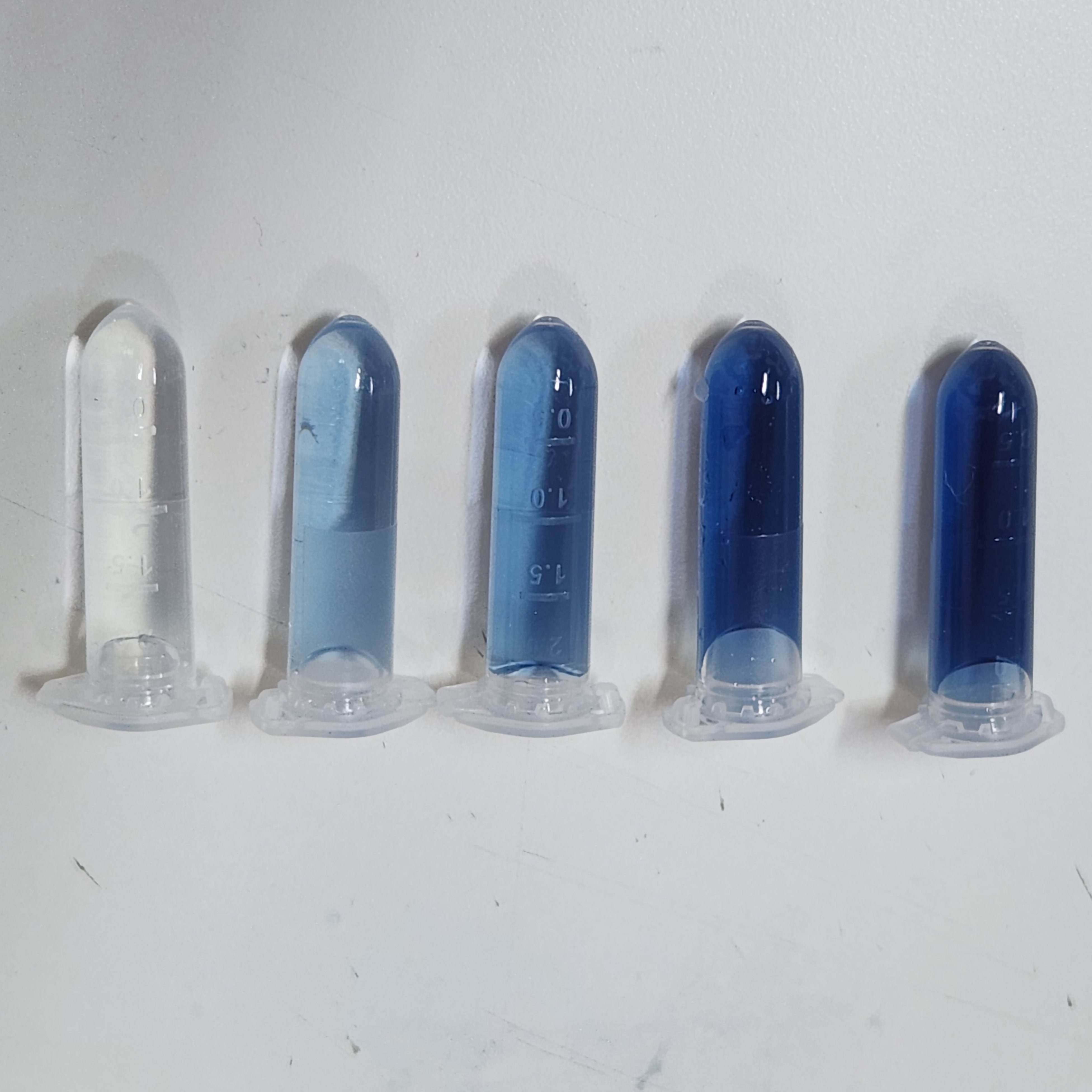
For the calibration curve, prepare solutions of KHPO4 at 0, 0.1, 0.2, 0.5, and 1 mM.
Distribute each sample in a 96-well flat-bottom plate.
Read each sample at 820nm.
- It might be necessary to dilute some samples with water before reading, considering the equipment's detection rate.