Jun 29, 2026
DPPH radical scavenging capacity by extract plants
- 1College of Natural Sciences, Can Tho University



External link: https://doi.org/10.1016/j.bcab.2026.104063
Protocol Citation: Cuong-Quoc NGUYEN 2026. DPPH radical scavenging capacity by extract plants. protocols.io https://dx.doi.org/10.17504/protocols.io.dm6gp4wy1gzp/v1
Manuscript citation:
Thai, C. T., Nguyen, C. Q., Le Dang, Q., Luu, P. V., Nguyen, H. P., Nguyen, T. T. H., ... & Tran, Q. D. (2026). Bioactive-rich extract fractions from immature Nypa fruticans with anti-inflammatory and metabolic effects: Phytochemical profiling and integrated in vitro/in vivo evaluation. Biocatalysis and Agricultural Biotechnology, 104063.
License: This is an open access protocol distributed under the terms of the Creative Commons Attribution License, which permits unrestricted use, distribution, and reproduction in any medium, provided the original author and source are credited
Protocol status: Working
We use this protocol and it's working
Created: June 27, 2026
Last Modified: June 29, 2026
Protocol Integer ID: 319937
Keywords: Antioxidant, DPPH, free radical scavenging, simple steps, extract, dpph radical scavenging capacity by extract plant, dpph free radical scavenging method, dpph radical scavenging capacity, antioxidant activity, extract plant
Abstract
The protocol describes simple steps to evaluate antioxidant activity using the DPPH free radical scavenging method
Materials
Methanol or ethanol.
DPPH.
Ascorbic acid or quercetin as control.
96-well plate.
Microplate absorbance reader.
The 100 g of dried material were extracted twice with methanol (1:10 w/v) at 45 °C for 24 h under continuous stirring.
The liquid phase was filtered, and the solvents were evaporated using a rotary evaporator to extract plant.
Extractions were dissolved in dimethyl sulfoxide (DMSO) to obtain a stock solution (2 mg/mL) for antioxidant assays.
DPPH radical solution were prepared for 0.4 mM with methanol and set 0.8 to 1.2 as an ideal absorbance value to work with.
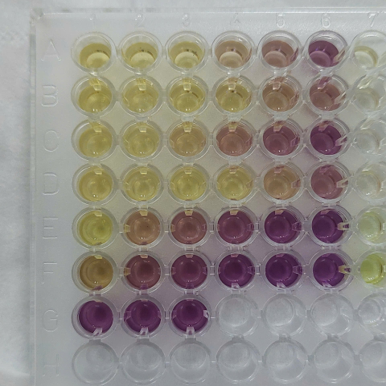
The extracts were prepared by two times dilution method in 96-well microtitre plates.
An aliquot of extract (100 μL) were mixed to 100 μL of ethanolic DPPH in 96-well microtitre plates.
The reaction mixtures were incubated at room temperature for 30 min in the dark.
Absorbance was measured at 517 nm by Microplate Reader.
The free radical scavenging activity was calculated as follows:
%RSA= [(Ablank – Asample / Ablank] x100
Where: Ablank was the absorbance of without samples, and Asample was the absorbance of the test sample. The values are expressed as the means of triplicate analyses.