Nov 24, 2023
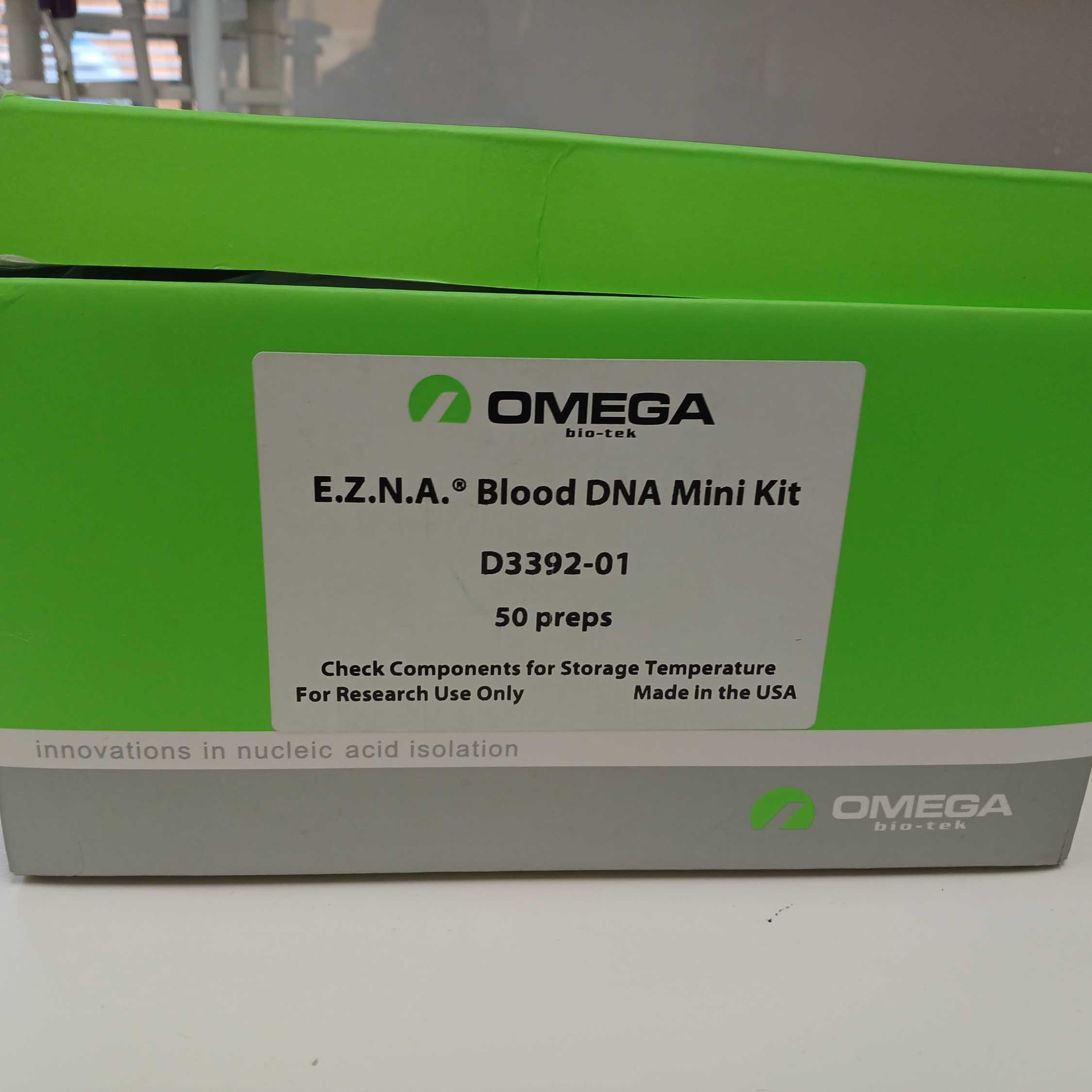
DNA extraction protocol for animal blood samples using the E.Z.N.A blood mini kit
- Louis-Stéphane Le Clercq1,2,
- Desiré ee Dalton3,
- Antoinette Kotzé1,2,
- Paul Grobler1
- 1University of the Free State;
- 2South African National Biodiversity Institute;
- 3Teesside University
- Biological clock measures the association between the circadian and epigenetic clock as predictors of migration and ageTech. support email: [email protected]



Protocol Citation: Louis-Stéphane Le Clercq, Desiré ee Dalton, Antoinette Kotzé, Paul Grobler 2023. DNA extraction protocol for animal blood samples using the E.Z.N.A blood mini kit. protocols.io https://dx.doi.org/10.17504/protocols.io.ewov141xpvr2/v1
Manuscript citation:
Le Clercq, L.S., 2023. Biological clock measures: Assessing the association between the circadian and epigenetic clock as predictors of migration phenology and biological aging in wildlife (Doctoral thesis, University of the Free State).
License: This is an open access protocol distributed under the terms of the Creative Commons Attribution License, which permits unrestricted use, distribution, and reproduction in any medium, provided the original author and source are credited
Protocol status: Working
We use this protocol and it's working
Created: June 25, 2021
Last Modified: November 24, 2023
Protocol Integer ID: 51045
Keywords: DNA Extraction, Omega, Manual, Blood, Columns, Animals, dna extraction protocol for animal blood sample, dna extraction protocol, dna extraction, animal blood sample, preparation of genomic dna, purified dna, dna, genomic dna for consistent pcr, genomic dna, anticoagulated whole blood, such as pcr, blood, extraction, whole blood, rapid method for the isolation
Funders Acknowledgements:
National Research Foundation (RSA)
Grant ID: 112062
Abstract
The E.Z.N.A. Blood DNA Mini Kit provides an easy and rapid method for the isolation of genomic DNA for consistent PCR and Southern analysis. Up to 250 μL fresh, frozen, or anticoagulated whole blood can be readily processed at one time. The E.Z.N.A. Blood DNA Mini Kit can also be used for the preparation of genomic DNA from buffy coat, serum, plasma, saliva, buccal swabs, and other body fluids. The E.Z.N.A. Blood DNA Kit allows for single or multiple simultaneous processing of multiple samples. There is no need for phenol/chloroform extractions, and time-consuming steps are eliminated (e.g. precipitation using isopropanol or ethanol). Purified DNA obtained with the E.Z.N.A. Blood DNA Kit is ready for applications such as PCR, restriction digestion, and Southern blotting.
Image Attribution
https://www.omegabiotek.com/product/e-z-n-a-blood-dna-mini-kit/
Guidelines
Read and review the included product manual before starting.
Materials
- E.Z.N.A. Blood DNA kitWhitehead ScientificCatalog #D3392-01
- RNase I - 25,000 unitsNew England BiolabsCatalog #M0243L
- 100% Ethanol
- Isopropanol
- Tabletop microcentrifuge capable of at least 13,000 x g
- Nuclease-free 2 mL microcentrifuge tubes
- Water bath, incubator, or heat block capable of 65°C
- Vortexer
Protocol materials
Isopropanol
E.Z.N.A. Blood DNA kitWhitehead ScientificCatalog #D3392-01
RNase I - 25,000 unitsNew England BiolabsCatalog #M0243L
100% Ethanol
Safety warnings
None
Ethics statement
Protocol approval for the present study was obtained from the protocol committee of the Department of Genetics, University of the Free State (approval number: Res18/2020). Ethics approvals were obtained from the University of the Free State (approval number: UFS-AED2020/0015/1709) as well as the South African National Biodiversity Institute (approval number: SANBI/RES/P2020/30). Appropriate research permits were also obtained from South African regulatory authorities including the Department of Agriculture, Land Reform, and Rural Development (Section 20 permit: 12/11/1/1/18(1824JD)) and the Department of Environmental Affairs (Threatened Or Protected Species (TOPS) permit: O-52903).
Before start
- Prepare HBC Buffer and DNA Wash Buffer according to the directions.
- Set water bath, incubator, or heat block to 65°C.
- Heat the Elution Buffer to 65°C.
Lyse
Transfer the Sample into a sterile microcentrifuge tube and bring the volume up to 250 µL with 10mMTris-HCl, PBS, or Elution Buffer (provided).
Add 25 µL Proteinase K Solution (provided), 250 µL BL Buffer (provided), and 5 µL RNase I - 25,000 unitsNew England BiolabsCatalog #M0243L (50 mg/mL).
Vortex at maximum speed for 00:00:15 seconds.
15s
Incubate at 65 °C for 00:10:00 minutes. Vortex briefly once during incubation.
Heating block set to 65 degrees Celsius.
10m
Adjust binding conditions
Add 260 µL 100% Ethanol . Vortex at maximum speed for 00:00:20 seconds.
20s
Centrifuge briefly to collect any drops from the inside of the lid.
Bind
Insert a HiBind DNA Mini Column (provided) into a 2 mL Collection Tube.
Green HiBind columns to be placed in clear collection tubes. Can label samples on cap.
Transfer the entire sample to the column.
Centrifuge at 11000 x g, 21°C, 00:01:00
1m
Discard the filtrate and the Collection Tube. Insert the HiBind DNA Mini Column into a new 2 mL Collection Tube.
Add 500 µL HBC Buffer.
Note
HBC Buffer must be diluted with 100% isopropanol before use.
Centrifuge at 11000 x g, 21°C, 00:01:00
1m
Discard the filtrate and reuse Collection Tube.
Wash
Add 700 µL DNA Wash Buffer (provided).
Note
DNA Wash Buffer must be diluted with 100% ethanol before use.
Centrifuge at 10000 x g, 21°C, 00:01:00
1m
Discard the filtrate and reuse the Collection Tube.
Repeat once
Dry
Centrifuge the empty HiBind DNA Mini Column at 13000 x g, 21°C, 00:02:00 .
Note
It is important to dry the column membrane before elution. Residual ethanol may interfere with downstream applications.
2m
Elute
7m
Transfer the HiBind DNA Mini Column into a nuclease-free 2 mL microcentrifuge tube.
Add 50 µL Elution Buffer heated to 65 °C .
Incubate the HiBind DNA Mini Column at 65 °C for 00:05:00 .
5m
Centrifuge at 13000 x g, 21°C, 00:02:00 .
2m
Optional: Apply filtrate to column and repeat centrifugation.
Store
Store eluted DNA at -20 °C .
Samples extracted using this protocol were submitted to NCBI BioSample and linked to BioProject PRJNA737185.
Expected result
Nanodrop One results for samples:
| Sample | A260 | A280 | A260/A230 | A260/A280 | ng/uL | |
| 1 | 0.185 | 0.096 | 0.359 | 1.934 | 9.26 | |
| 2 | 0.125 | 0.059 | 0.732 | 2.131 | 6.26 | |
| 3 | 0.159 | 0.102 | 0.528 | 1.558 | 7.94 | |
| 4 | 0.082 | 0.047 | 0.405 | 1.723 | 4.08 | |
| 5 | 0.107 | 0.058 | 0.815 | 1.838 | 5.33 | |
| 6 | 0.110 | 0.063 | 1.020 | 1.742 | 5.51 | |
| 7 | 0.143 | 0.070 | 0.518 | 2.033 | 7.14 | |
| 8 | 0.077 | 0.029 | 1.443 | 2.615 | 3.83 | |
| 9 | 0.060 | 0.039 | 1.156 | 1.534 | 2.99 | |
| 10 | 0.059 | 0.032 | 0.398 | 1.844 | 2.95 | |
| 11 | 0.082 | 0.044 | 1.039 | 1.855 | 4.10 | |
| 12 | 0.119 | 0.073 | 1.025 | 1.637 | 5.96 | |
| 13 | 0.072 | 0.032 | 0.938 | 2.237 | 3.60 | |
| 14 | 0.098 | 0.051 | 1.051 | 1.918 | 4.88 | |
| 15 | 0.092 | 0.049 | 1.475 | 1.869 | 4.59 |
The extractions yielded pure DNA (A260/A280 approximately 1.6 to 1.8) with sufficiently high concentrations of around 4 ng/uL.