Jun 05, 2025
Detection of the IL-8 Gene Polymorphism rs4073 by TaqMan qPCR in Individuals Infected with Dengue Virus
- Maike Vieira Sabath1,
- Raquel da Silva Carvalho2,
- Vanessa Rafaela Milhomen Cruz Leite3,
- Jéssica arletto de Sousa Barros4,
- Irmtraut Araci Hoffmann Pfrimer4
- 1Undergraduate student in Biomedicine at the Pontifical Catholic University of Goiás (PUC-GO). Research trainee at the Center for Immunological Studies and Research (NEPY).;
- 2Ph.D. student in Environmental and Health Sciences (PPGCAS) at the Pontifical Catholic University of Goiás (PUC-GO). Member of the Center for Immunological Studies and Research (NEPY);
- 3Laboratory of Genetics and Molecular Biology - Institute of Biological Sciences II - Federal University of Goiás, Goiânia, Goiás;
- 4Ph.D. in Environmental and Health Sciences (PPGCAS) at the Pontifical Catholic University of Goiás (PUC-GO). Member of the Center for Immunological Studies and Research (NEPY).
- Maike Vieira Sabath: *These authors have contributed equally to this work.;
- Raquel da Silva Carvalho: *These authors have contributed equally to this work.;
- Jéssica arletto de Sousa Barros: #These authors have contributed equally to this work.;
- Irmtraut Araci Hoffmann Pfrimer: #These authors have contributed equally to this work.



Protocol Citation: Maike Vieira Sabath, Raquel da Silva Carvalho, Vanessa Rafaela Milhomen Cruz Leite, Jéssica arletto de Sousa Barros, Irmtraut Araci Hoffmann Pfrimer 2025. Detection of the IL-8 Gene Polymorphism rs4073 by TaqMan qPCR in Individuals Infected with Dengue Virus. protocols.io https://dx.doi.org/10.17504/protocols.io.bp2l68bxdgqe/v1
License: This is an open access protocol distributed under the terms of the Creative Commons Attribution License, which permits unrestricted use, distribution, and reproduction in any medium, provided the original author and source are credited
Protocol status: Working
We use this protocol and it's working
Created: April 08, 2025
Last Modified: June 05, 2025
Protocol Integer ID: 126296
Keywords: Dengue Virus, polymorfhism, infection fever, gene IL8, SNP IL-8 rs4073, immune response in dengue, dengue infection, dengue virus, infection by the dengue virus, dengue, rs4073 snp, such as snp rs4073, snp rs4073, immune response, modulation of the immune response, knowledge about biomarker, inflammatory disease, severity of inflammatory disease, taqman qpcr in individual, antibody, biomarker, infected individual, gene expression, igg antibody, understanding such genetic factor, ns1 antigen,
Funders Acknowledgements:
Fundação de Amparo à Pesquisa do Estado de Goiás (FAPEG)
Coordenação de Aperfeiçoamento de Pessoal de Nível Superior (CAPES)
Conselho Nacional de Desenvolvimento Científico e Tecnológico (CNPq)
Abstract
Interleukin-8 (IL-8) is a key pro-inflammatory cytokine involved in neutrophil recruitment and modulation of the immune response. Polymorphisms in its gene, such as SNP rs4073 (A>T), located in the promoter region, may influence gene expression and affect susceptibility and severity of inflammatory diseases, including infection by the dengue virus (DENV). This study aimed to genotype the rs4073 SNP in the IL-8 gene using real-time PCR (qPCR) with TaqMan probes. The sample included DENV-infected individuals and healthy controls, all residents of the state of Goiás, Brazil. Dengue infection was confirmed by fluorescent immunoassay for NS1 antigen and IgM/IgG antibodies. Genomic DNA was extracted from peripheral blood and genotyped.Understanding such genetic factors may contribute to advancing knowledge about biomarkers related to the immune response in dengue.
Materials
1- Personal Protective Equipment:
• Nitrile gloves
• Lab coat
• Mask
• Cap
• Closed shoes
• Pants
2-Required Materials:
• Thermocycler (Roche, LightCycler 480)
• Master Mix (Thermo Fisher) specific to the SNP IL-8 rs4073 probe
• DNA samples (ARB)
• 96-well PCR plate (DNAse, RNAse Free)
• Sealant (to place on top of the plate)
• Distilled water
• TaqMan genotyping assay SNP IL-8 rs4073 (Thermo Fisher - C__11748116_10)
• Pipettes with volumes of 1, 2, 10, 20, 500, and 1000 µl.
"Detection of the IL-8 Gene Polymorphism rs4073 by TaqMan qPCR in Individuals Infected with Dengue Virus from the Central Region of Brazil: A Case-Control Study"
Definition:
Real-time PCR, or quantitative PCR, is an advanced technique that allows the DNA amplification process to be monitored in real time. It amplifies specific regions of DNA, creating thousands or even millions of copies, using template DNA, primers, nucleotides, and a thermostable DNA polymerase. The main advantage over conventional PCR is the ability to accurately quantify the target DNA during amplification, which is crucial for studies such as mRNA quantification in gene expression or viral load
measurement. In addition, it eliminates the need for post-PCR steps, reducing the risk of contamination. As a result, real-time PCR has become an indispensable tool in the detection and quantification of nucleic acids and is widely used in various scientific fields.
Objectives:
To analyze and quantify DNA sequences to detect the presence of SNP rs4073 and expand these sequences for more detailed identification.
Personal Protective Equipment:
• Nitrile gloves
• Lab coat
• Mask
• Cap
• Closed shoes
• Pants
Required Materials:
• Thermocycler (Roche, LightCycler 480)
• Master Mix (Thermo Fisher) specific to the SNP IL-8 rs4073 SNP probe
• DNA samples (ARB)
• 96-well PCR plate (DNAse, RNAse Free)
• Sealant (to place on top of the plate)
• Distilled water
• TaqMan genotyping assay SNP IL-8 rs4073 (Thermo Fisher - C__11748116_10)
• Pipettes with volumes of 1, 2, 10, 20, 500, and 1000 µl.
STEP 1: Prepare the PCR reaction mixture.
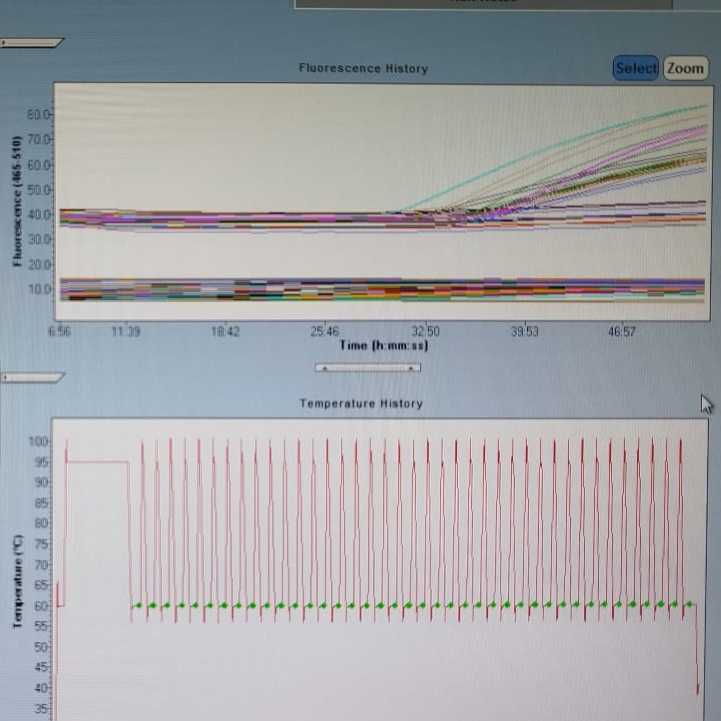
Figure 1: qPCR cycles in the thermocycler device.
a. Prepare at least two no-template controls (NTCs) and (if
necessary) at least one genomic DNA control with a known genotype on each plate
to ensure the accuracy of genotype calling.
b. Calculate the volume of each component required for all
wells in each assay, based on the number of reactions. Include extra volume to
compensate for losses during pipetting.
PCR Reaction Mixture Volumes (µL/Well):
Example calculation of final volumes for 96 reactions of 25
µL using the dry-down and delivery method:
• TaqMan Genotyping Master Mix: (10 µL × 1) = 10 µL
• TaqMan Assay Mix: (1 µL × 1) = 1 µL
• DNase/RNase-free water: (5 µL × 1) = 5 µL
• DNA: (4 µL × 1) = 4 µL
| A | B | |
| Components | 1 reaction | |
| TaqMan Genotyping Master Mix (1X) | 10 | |
| Taqman assay mix (1X) | 1 | |
| DNase/RNase-free water | 5 | |
| DNA | 4 | |
| Total Volume | 20 |
Table 1: PCR Reaction Mix Volumes (uL/Well)
STEP 2: Prepare the reaction plate:
Transfer the appropriate volume of PCR reaction mixture to
each well:
• 5 µL per well for 384-well plates.
• 10 µL per well for 96-well Fast plates.
• 25 µL per well for 96-well plates.
Pipette a control or sample (1 to 10 ng of purified genomic
DNA) into each well.
Figure 2: Pipetting control map in the laminar flow hood.
STEP 3: Run the PCR reaction plate:
a. Set the thermal cycling conditions as follows:
| A | B | C | D | |
| Stage | Temperature (ºC) | Duration | Cycles | |
| Holding | 95 | 10 minutes | 1 | |
| Cycling | 95 | 15 seconds | 40 | |
| Holding | 60 | 1 minuttes | 1 | |
| Cooling | 60 | 30 seconds | 1 |
Table 2: Run the PCR reaction plate
STEP 4: Read and analyze the results:
Perform an end-point plate reading and analyze the results using an Applied Biosystems real-time PCR system. Refer to the instrument user guide for details on data analysis.
Temperature:
Storage and Stability:
Upon receipt of TaqMan Genotyping Master Mix, store it between 2 and 8 °C. TaqMan Genotyping Master Mix is stable until the date indicated on the package and vial label when stored between 2 and 8 °C. If TaqMan Genotyping Master Mix is stored at −20°C, transfer it to 2 to 8°C. Applied Biosystems does not recommend storing TaqMan Genotyping Master Mix at temperatures other than 2 to 8°C or using it after the date printed on the package and bottle label. Before using the Master Mix, make sure it is completely thawed and thoroughly mixed.
Actions in cases of non-compliance:
Record any incidents in the student's ATA notebook.
- If any incidents occur in relation to the product or equipment, contact technical support.
Interpretation of genotypes
After completing genotyping, the results must be classified and interpreted. Where individuals with allele X (VIC) are represented by the AA genotype, being Wild, allele Y (FAM) is represented by the TT genotype, being Mutant, and the AT genotype is classified as Heterozygous.
| A | B | C | D | |
| Sample | Allele | Genotype | ||
| A1 | Sample 1 | AA | Wild | |
| B1 | Sample 1 Duplicate | AA | Wild | |
| A2 | Sample 2 | AT | Heterozygous | |
| B2 | Sample 2 Duplicate | AT | Heterozygous | |
| A3 | Sample 3 | TT | Mutant | |
| B3 | Sample 3 Duplicate | TT | Mutant |
Table 3: Interpretation of SNP IL-8 rs4073 genotypes.
Statistical analyses
Genetic models of inheritance by logistic regression:
• For the study, the Codominant, Dominant, Recessive, and Overdominant genotypes will be analyzed by different genetic inheritance models using logistic regression.
• They will be analyzed using Hardy-Weinberg equilibrium.
• The Test-Quidrado will also be used, where genotypes were analyzed in relation to the number of symptoms.
Protocol references
BUSTIN, S. A. et al. Quantitative real-time RT-PCR–a perspective. Journal of molecular endocrinology, v. 34, n.3, p. 597-601, 2005.
BLUMENTHAL, Melissa J. et al. Evidence for altered host genetic factors in KSHV infection and KSHV‐related disease development. Reviews in medical virology, v. 31, n. 2, p. e2160, 2021.
ELSAYED, Shaimaa Moustafa; HASSANEIN, Omayma Mohamed; HASSAN, Nagwa Hassan Ali. Influenza A (H1N1) virus infection and TNF-308, IL6, and IL8 polymorphisms in Egyptian population: a case–control study. The Journal of Basic and Applied Zoology, v. 80, p. 1-6, 2019.
KENNEDY, Richard B. et al. Multigenic control of measles vaccine immunity mediated by polymorphisms in measles receptor, innate pathway, and cytokine genes. Vaccine, v. 30, n. 12, p. 2159-2167, 2012.
Acknowledgements
Funding:
1- National Council for Scientific and Technological Develompment (CNPQ).
2-Research Support Foundation of the State of Goiás (FAPEG).
3-Coordination for the Improvement of Higher Education Personnel (CAPES).
4-Pontifical Catholic University of Goiás (PUC-GO).
First, I thank God for everything, and I sincerely thank Dr. Irmtraut Araci Hoffmann Pfrimer, Dr. Jéssica Barletto de Sousa Barros, and Dr. Vanessa Rafaela Mihomen Cruz Leite for their guidance, support, and encouragement throughout the scientific initiation process.
In particular, I would like to express my deep gratitude to Raquel Da Silva Carvalho, for her dedication, patience, and constant help, which were fundamental to the development of this work.