Jan 29, 2024
Detection of seeded pathology using tyramide amplification
- 1Rush University Medical Center
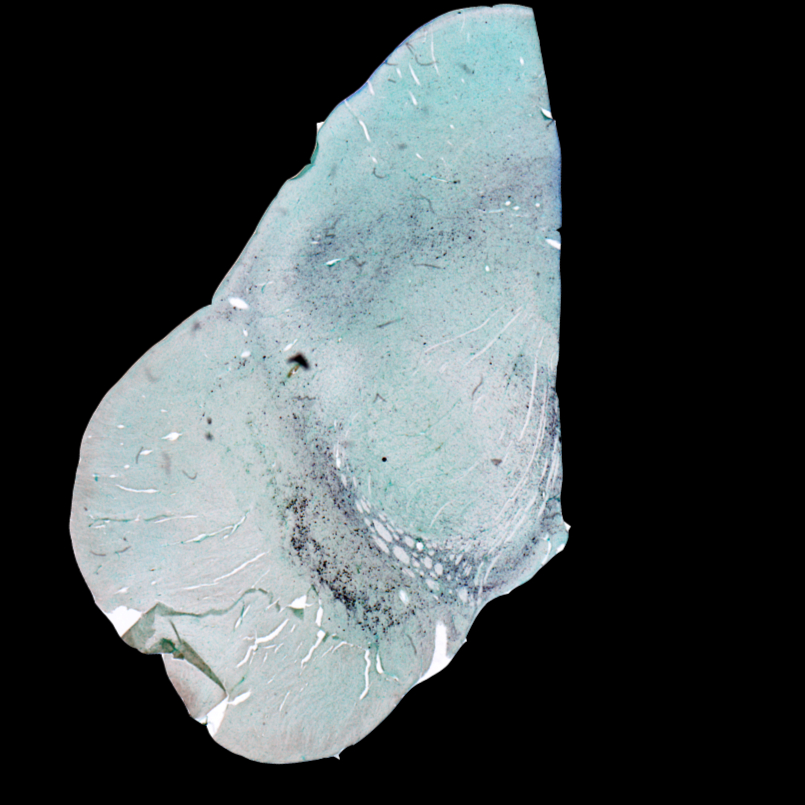


Protocol Citation: Bryan_Killinger 2024. Detection of seeded pathology using tyramide amplification. protocols.io https://dx.doi.org/10.17504/protocols.io.5jyl8pzzdg2w/v1
License: This is an open access protocol distributed under the terms of the Creative Commons Attribution License, which permits unrestricted use, distribution, and reproduction in any medium, provided the original author and source are credited
Protocol status: Working
We use this protocol and it's working
Created: January 15, 2024
Last Modified: May 18, 2026
Protocol Integer ID: 94352
Keywords: detection of seed pathology, detection of seeded pathology, using tyramide amplification, tyramide amplification, seed pathology, seeded pathology, tyramide amplification this protocol, amplification, detection
Funders Acknowledgements:
Michael J. Fox Foundation
Grant ID: ASAP-021030
NCI
Grant ID: CCSG P30 CA060553
NIH Office of Director
Grant ID: S10OD025194
National Resource for Translational and Developmental Proteomics
Grant ID: P41 GM108569
EraPerMed DEEPEN-iRBD project
Grant ID: ANR-22-PERM-0006
Michael J. Fox Foundation
Grant ID: ASAP-000458
NINDS
Grant ID: 1R01NS128467
NIH
Grant ID: R21 NS109871
NINDS
Grant ID: K23-NS097625-06
Abstract
This protocol details the detection of seed pathology using tyramide amplification.
Attachments

956-2484.docx
14KB
Materials
TBST:
| A | B | |
| Tris-HCl pH 7.4 | 20 mM | |
| NaCl | 150 mM | |
| Triton X 100 | 0.05% |
Detection of seeded pathology using tyramide amplification
40m
Mount the fixed floating 40-micron sections onto gelatin-coated slides and dry at Room temperature Overnight .
20m
Rehydrate the slides in TBST (refer materials section) and digest with proteinase K (PK, 20 µL ) diluted in TBST for 00:20:00 at 37 °C .
20m
Fix the slides in 4% paraformaldehyde for 00:20:00 , rinse 3 times in TBST, and incubate with 3% hydrogen peroxide for 00:30:00 to quench endogenous peroxidases.
50m
Place the slides in blocking buffer (TBST, 3% bovine serum albumin, 2% goat serum) for 01:00:00 and then incubate it Overnight at 4 °C in blocking buffer containing anti-PSER129 antibody EP1536Y (Abcam) diluted 1:50,000.
2h
Next day, wash the slides 3 times in TBST and incubate with biotinylated anti-rabbit antibody (Vector Labs) diluted 1:400 in blocking buffer for 01:00:00 .
1h
Wash the slides 3 times in TBST and incubate with avidin-biotin complex (ABC) reagent (Vector labs) diluted in blocking buffer for 01:00:00 .
1h
Wash the slides twice with borate buffer 0.1 Mass Percent Sodium tetraborate 8.5 ) and incubate in borate buffer containing 0.003% hydrogen peroxide and 5 micromolar (µM) biotinyl tyramide (Sigma-Aldrich) for 00:30:00 .
30m
Wash the slides 3 times in TBST and incubate with ABC reagent for 01:00:00 .
1h
Heating the slides for 00:30:00 at 80 °C in 20 millimolar (mM) citrate buffer 6.0 before ABC reagent can increase detection sensitivity.
30m
Wash the slides in TBST and develop using nickel-enhanced 3,3'-Diaminobenzidine DAB as previously described (refer references section).
Counterstain the slides with methylgreen (Sigma), dehydrate with graded alcohols, clear with xylenes, and cover the slides using cover slipps with cytoseal 60 (Fisher Scientific).
Perform the Brightfield microscopy using Nikon A1 laser scanning microscope.
Perform the density analysis including binary masks and region of interest (ROI) analyses using Elements software (Nikon).
Protocol references
Trojanowski, J. Q., Obrocka, M. A. & Lee, V. M. A comparison of eight different chromogen protocols for the demonstration of immunoreactive neurofilaments or glial filaments in rat cerebellum using the peroxidase-antiperoxidase method and monoclonal antibodies. J Histochem Cytochem 31, 1217-1223, doi:10.1177/31.10.6350434 (1983).