Mar 21, 2024
Version 1
CRISPR/Cas9-Mediated Knockdown in LUHMES Cells: Nucleofection and Validation Protocol V.1
- Mallory Wright1,
- William Buchser2,
- Colin Kremitzki3,
- Serena Elia3,
- Graham Bachman3,
- Jason Waligorski4,
- Nicholas Tu5,
- Lina Mohammed Ali5,
- Emanuel Gerbi6
- 1Washington University, Saint Louis. McDonnell Genome Institute (MGI);
- 2Washington University in St. Louis;
- 3Washington University School of Medicine;
- 4Washington University School of Medicine @FIVE;
- 5McDonnell Genome Institute;
- 6Washington University: MGI
- WashU FIVE @ MGI


Protocol Citation: Mallory Wright, William Buchser, Colin Kremitzki, Serena Elia, Graham Bachman, Jason Waligorski, Nicholas Tu, Lina Mohammed Ali, Emanuel Gerbi 2024. CRISPR/Cas9-Mediated Knockdown in LUHMES Cells: Nucleofection and Validation Protocol. protocols.io https://dx.doi.org/10.17504/protocols.io.36wgq32d3lk5/v3Version created by Mallory Wright
License: This is an open access protocol distributed under the terms of the Creative Commons Attribution License, which permits unrestricted use, distribution, and reproduction in any medium, provided the original author and source are credited
Protocol status: Working
We use this protocol and it's working
Created: March 21, 2024
Last Modified: March 21, 2024
Protocol Integer ID: 97114
Keywords: LUHMES, Ribonucleoprotein Complex (RNP), Neurodegenerative disease models, Gene knockout, Neuroscience, CRISPR /Cas9, Gel electrophoresis, PCR, distinctive dopaminergic marker, investigating dopaminergic dysfunction, dopaminergic dysfunction, crispr rnp complex, induced dopamine release, dopamine release, knockdown in luhmes cell, luhmes cell, crispr, precise gene knockout, luhmes cell line, human fetal mesencephalic tissue, p3 primary cell 4d
Abstract
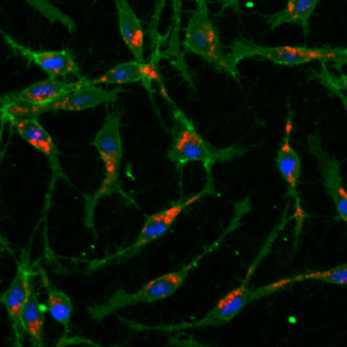
Utilizing a CRISPR RNP complex and nucleofection, this protocol enables precise gene knockout. LUHMES cells, sourced from human fetal mesencephalic tissue, provide a valuable model for investigating dopaminergic dysfunction. They exhibit stimulus-induced dopamine release, pertinent electrophysiological traits, and distinctive dopaminergic markers, validating their phenotypic relevance.
LUHMES Cell Line: (ATCC Catalog Number: CRL-2927)
Nucleofection kit: P3 Primary Cell 4D-Nucleofector X Kit S Catalog #V4XP-3032
Materials
Alt-R CRISPR-Cas9 sgRNA,10Integrated DNA Technologies, Inc. (IDT) , Length 100
P3 Primary Cell 4D-Nucleofector X Kit S LonzaCatalog #V4XP-3032
Alt-R S.p. Cas9 Nuclease/NickaseIntegrated DNA Technologies, Inc. (IDT)
Cas9 (Nuclear Localized Signaling) purified proteinMacro labs (Berkeley)Catalog #1111
1XPBS Fisher ScientificCatalog #10-010-023
| Lonza Single Nucleocurvette (100uL) | Lonza Nucleocurvette strip (25 uL) | ||
| Nucleofection solution (P3) | 82 uL | 16.4 uL | |
| Nucleofection supplement (P3) | 18 uL | 3.6 uL | |
| Amount of cells | ~ 1.3 million | ~500,000 cells | |
| pmaxGFP Vector (0.5ug/uL) (optional positive control) | Add 4 uL | Add 1.2 uL |
Ribonucleoprotein components(RNP): gRNA + Cas9 + 1XPBS
| Components | Stock Concentration | Lonza Single Nucleocuvette (100uL) | Lonza Nucleocuvette strip (20uL) | Final Concentration | |
| gRNA (IDT) | 100 uM | 6 uL | 1.2 uL (120 pmol) | 4.8 μM | |
| Cas9 (IDT) | 62 uM | Add 8.5 μL | Add 1.7 uL | 4.216 μM | |
| 1X PBS | 1X | Add 10.5 uL | Add 2.1 uL | ||
| Total volume of RNP Complex: | 25 uL | 5 uL |
For a second Cas9 option, use Cas9 NLS (Berkeley) at 40 μM:
- Add 10.54 μL to a single nucleocuvette.
- Add 2.635 μL to a cuvette strip to achieve 4.216 μM.
*By adding 1.7μL of Alt-R Cas9 enzyme from a 62 μM stock, 105.4 pmol is introduced into the RNP mixture. The inclusion of the RNP Complex into the nucleofection solution along with the supplement yields a final concentration of 4.216 uM.
*Adding 8.5 μL from the same stock introduces 527 pmol into the RNP complex. The final Alt-R Cas9 concentration in a 125 μL volume is approximately 4.216 μM.
Protocol materials
trypsin-EDTA (TE)Fisher ScientificCatalog #R001100
Lysis Buffer 1X Working solutionTakara Bio Inc.Catalog #635013
Nucleofection Protocol
Maintain cell confluency between 70–85% to optimize Nucleofection efficiencies; optimal results typically occur with cells in the logarithmic growth phase.
Coat a new 6-well plate freshly with poly-L-ornithine (50ug/mL) and fibronectin (2ug/mL) to facilitate LUHMES attachment.
Add 2 mL of the LUHMES growth media to the 6-well plate and pre-incubate/equilibrate the plates in a humidified incubator set at 37°C with 5% CO2.
Rinse LUHMES with 5 mL 1XPBS, then add trypsin-EDTA (TE)Fisher ScientificCatalog #R001100 to dissociate the cells, using4 mL for a T-75 flask, and incubate for 00:03:00
3m
Centrifuge1200 rpm for 00:05:00 , then carefully discard the supernatant
5m
Re-suspend cells with5 mL of 1X PBS and count cells.
After cell counting, distribute the cells into individual 15mL tubes according to the number of samples.
Add approximately 1 million cells per single cuvette and 500,000 cells per well in a nucleocuvette strip.
Centrifuge the samples a second time at a low speed90 x g for00:10:00 , ensuring minimal cell agitation before nucleofection.
10m
While centrifuging, prepare the RNP complex as outlined in the table below and configure the Nucleofector 4D accordingly. Select the plate layout (e.g., single cuvette or strip), program CA-137, and specify the cell type.
Carefully re-suspend each cell pellet in room temperature 4D-Nucleofection Solution + supplement.
| Lonza Single Nucleocuvette (100uL) | Lonza Nucleocuvette strip (20uL) | ||
| Nucleofection supplement (P3) | 18 uL | 3.6 uL | |
| Nucleofection solution (P3) | 82 uL | 16.4 uL | |
| pmaxGFP Vector (0.5ug/uL) (optional positive control) | Add 4 uL | Add 1.2 uL |
Add cells to the cuvette, ensuring the sample covers the bottom of the cuvette. Gently tap to distribute evenly and avoid bubbles.
For each single nucleocuvette, add25 µL of the RNP Complex, or for each well of a strip, add 5 µL of the RNP complex.
Insert the nucleocuvettes into the nucleofector cuvette slot, ensuring they are properly aligned, then press start.
Following nucleofection, immediately add an additional500 µL of pre-warmed media to each individual single cuvette or 50 uL to a curvette strip.
Maintain cell stability by avoiding any disturbance for at least00:15:00 at room temperature 2 °C or within an incubator
15m
Transfer the cells to the previously coated flask or plate containing pre-warmed LUHMES growth media, and incubate.
A typical analysis time is 24-Hours post-nucleofection.
Nucleofection Validation
24 hours after nucleofection, rinse the cells using 5 mL 1X PBS, apply TE dissociation solution, allow a00:03:00 incubation period, transfer to a 15 mL tube, and then centrifuge1200 rpm, 00:05:00
8m
Lysis Buffer 1X Working solutionTakara Bio Inc.Catalog #635013
Re-suspend the cells in 100 µL 1X lysis buffer, gently triturating approximately 5 times to ensure efficient cell membrane disruption and DNA extraction.
Note
Excessive trituration can result in increased shearing of DNA
Add cell suspension to a 1.5 mL snap cap tube
Add the 1.5 mL snap cap tube to a65 °C heat block for 00:15:00 to disrupt cellular structures, denature proteins, and aid DNA extraction.
15m
Follow with a second heat treatment at 95 °C for00:03:00
3m
Add the Snap cap tube to fridgeOvernight in 4 °C
3m
PCR Protocol
Utilize a nanodrop device to determine the nucleic acid concentration of your bulk sample.
Prepare the PCR reaction mix in a sterile microcentrifuge tube by combining the following components:
- Template DNA: The DNA you wish to amplify, need ~100 ng of DNA per 25 µL reaction
- Forward and Reverse Primers: Short DNA sequences that bind to the start and end of the target DNA region you want to copy.
- MyTaq Red Mix (Meridian Life Science Catalog #BIO-25047): A ready-to-use PCR master mix containing DNA polymerase, dNTPs, buffer, and a red dye.
- DMSO (Dimethyl Sulfoxide): Added to enhance PCR specificity and amplification of GC-rich templates
| Components | Concentrations | 1 | 20 | |
| Forward Primer (100uM) | 0.5 μM | 0.125 μL | 2.5 μL | |
| Reverse Primer (100uM) | 0.5 μM | 0.125 μL | 2.5 μL | |
| MyTaq (DNA Polymerase) | 2X | 12.5 | 250 uL | |
| DMSO | 5% | 1.25 μL per reaction. | 25 μL | |
| Water (ddH2O) | amount depends on the remaining volume after adding the other components | 9 uL | 180 uL | |
| Template DNA | need ~100 ng per 25uL reaction | 2 uL | 2 uL | |
| Total amount | 25 uL | |||
PCR1 components
Running an Agarose Gel for DNA Electrophoresis
35m
Prepare Agarose Gel:
- Measure 1 g of agarose.
- Dissolve in70 mL of 0.5X TBE buffer in a beaker
- Microwave for 00:01:15 or until completely dissolved.
- Add SybrSafe dye at 1 µL for ever10 mL of 0.5X TBE Buffer to the agarose solution for staining the DNA bands.
- Cool for about00:05:00
6m 15s
Pour Gel and Insert Combs:
- Pour the cooled agarose into a gel tray.
- Insert combs to create wells for loading samples.
- Remove any bubbles in gel
- Let the gel sit undisturbed for about 00:30:00 to solidify.
30m
Prepare Samples:
-Remove combs
- Add 5 µL of DNA ladder 100bp (Gold bio)
-Add 5 µL of each DNA sample to the wells. Ensure proper labeling to keep track of the samples.
Run the Gel:
-Connect wires to matching color ports on the power supply (red to red, black to black)
-Set voltage to 170V, 400mA and run gel for 00:25:00
Monitor gel progress as DNA fragments move through agarose: smaller ones faster, longer ones slower.
25m
Once complete:
- Carefully remove the gel from the casting tray and place it in a gel imaging system.
- Visualize the DNA bands under UV light.
- The Sybr Safe dye will fluoresce upon binding to DNA, allowing for the visualization of DNA fragments.
Analyze the gel to identify the presence of contaminants, estimate the size of amplified DNA fragments, and confirm whether they match the expected sizes based on primer design.
Last, perform PCR2 to incorporate barcodes and then submit the samples for next-generation sequencing.