Jun 08, 2023
Clinical metagenomic sequencing - CSF RNA and DNA Illumina MiSeq
- Gert Marais1,
- Ziyaad Valley-Omar1,
- Kathleen Bateman2,
- Kate McMullen2,
- Dieter van der Westhuizen1,
- Moepeng Maseko1,
- Suzaan Marais2,
- Diana Hardie1,
- Adrian Brink1
- 1University of Cape Town, National Health Laboratory Service;
- 2University of Cape Town
- Gert Marais: Medical Microbiology;
- Ziyaad Valley-Omar: Medical Virology
- Kathleen Bateman: Neurology
- Kate McMullen: Neurology
- Dieter van der Westhuizen: Chemical Pathology
- Moepeng Maseko: Medical Virology
- Suzaan Marais: Neurology
- Diana Hardie: Medical Virology
- Adrian Brink: Medical Microbiology



Protocol Citation: Gert Marais, Ziyaad Valley-Omar, Kathleen Bateman, Kate McMullen, Dieter van der Westhuizen, Moepeng Maseko, Suzaan Marais, Diana Hardie, Adrian Brink 2023. Clinical metagenomic sequencing - CSF RNA and DNA Illumina MiSeq. protocols.io https://dx.doi.org/10.17504/protocols.io.j8nlkk7wdl5r/v1
License: This is an open access protocol distributed under the terms of the Creative Commons Attribution License, which permits unrestricted use, distribution, and reproduction in any medium, provided the original author and source are credited
Protocol status: Working
We use this protocol and it's working
Created: August 16, 2022
Last Modified: June 08, 2023
Protocol Integer ID: 68673
Keywords: Clinical metagenomics, CSF, central nervous system infections, unbiased cerebrospinal fluid metagenomic, csf rna, commercial kit protocol
Funders Acknowledgements:
Oppenheimer Generations Research and Conservation
Grant ID: N/A
Poliomyelitis Research Foundation
Grant ID: 21/68
Disclaimer
DISCLAIMER – FOR INFORMATIONAL PURPOSES ONLY; USE AT YOUR OWN RISK
The protocol content here is for informational purposes only and does not constitute legal, medical, clinical, or safety advice, or otherwise; content added to protocols.io is not peer reviewed and may not have undergone a formal approval of any kind. Information presented in this protocol should not substitute for independent professional judgment, advice, diagnosis, or treatment. Any action you take or refrain from taking using or relying upon the information presented here is strictly at your own risk. You agree that neither the Company nor any of the authors, contributors, administrators, or anyone else associated with protocols.io, can be held responsible for your use of the information contained in or linked to this protocol or any of our Sites/Apps and Services.
Abstract
This protocol was developed to evaluate unbiased cerebrospinal fluid metagenomics at a referral centre in South Africa. Commercial kit protocols are generally used unmodified and limited use of in-house developed methods or reagents is made. This maintains the simplicity and accessibility of the protocol which can serve as a base for evaluation of process improvements.
Guidelines
Please note: This protocol is intended for research use only.
1) This protocol functions optimally with low cell-count CSF specimens with minimal human DNA. High cell-count specimens should ideally be evaluated using sequencing protocols that include general microbiome enrichment or targeted enrichment and/or human DNA depletion.
2) The number of individuals performing the clinical metagenomic sequencing (CMS) protocol and the number of days over which it is performed determines the order of steps.
3) Sodium hypochlorite is the preferred cleaning solution
4) The preferred run size is 10 samples and 2 controls though the cellularity of used CSF may alter the preferred run size due to increased quantity of human DNA. Master mix volumes are calculated and presented here for this run size.
5) The total hands-on time (including incubation and thermocycler time) for the protocol is 14 hours and 11 minutes. This assumes a single operator and 10 samples with 2 controls. The time estimate excludes sequencing time (generally 48-56 hours with the MiSeq v3 600-cycle kits) and bioinformatics time. It is generally advisable to perform the protocol over 2 days.
6) Prior to use samples should be stored at -70 °C and defrosted immediately prior to use.
Materials
Reagents
NUCLISENS easyMAG extraction reagentsbioMérieux
RNA Clean & Concentrator™-5Zymo ResearchCatalog #R1015
SuperScript™ IV First-Strand Synthesis SystemThermo Fisher ScientificCatalog #18091050
Second strand synthesis kit Invitrogen - Thermo FisherCatalog #A48571
iTaq Universal SYBR® Green One-step kitBio-Rad LaboratoriesCatalog #1725150
Illumina DNA Prep (M) Tagmentation (24 Samples)Illumina, Inc.Catalog #20018704
Illumina Nextera DNA CD indexes (24 indexes) Illumina, Inc.
MiSeq v3 Sequencing Reagents (600 cycles)Illumina, Inc.Catalog #MS-102-3003
PhiX Control v3Illumina, Inc.Catalog #FC-110-3001
Qubit 1X dsDNA HS Assay KitThermo Fisher ScientificCatalog #Q33230
Agencourt AMPure XPBeckman CoulterCatalog #A63880
Viral Multiplex Reference 11/242 NIBSCNational Institute of Biological Standards and Control (NIBSC)Catalog #11/242
Optional (High Sensitivity D5000 ScreenTapeAgilent TechnologiesCatalog #5067-5592 )
Optional (High Sensitivity D5000 ReagentsAgilent TechnologiesCatalog #5067-5593 )
Custom reagents
Consumables
Ethanol (100%, Molecular Biology Grade)Fisher ScientificCatalog #BP2818500
Sodium Hydroxide 1M solution
Falcon tube (50 mL)
Safe-Lock Tubes 1.5 ml PCR clean DNA LoBindEppendorfCatalog #0030108051
96 well LoBind PCR plates Semi-skirtedEppendorfCatalog #0030129504
Nuclease-free Water
Assorted Pipette tips (filter) 10ul 100ul 200ul 1000ul
Sodium Hypochlorite Solution
Equipment
Equipment
NUCLISENS easyMag
NAME
Nucleic acid extraction
TYPE
bioMerieux
BRAND
N/A
SKU
LINK
Equipment
MiSeq
NAME
Sequencer
TYPE
illumina
BRAND
SY-410-1003
SKU
LINK
Equipment
Set of micropipettes with rack: 100-1000 µl, 20-200 µl, 2-20 µl, and 0.5-10 µl
NAME
Pipettor set
TYPE
Pipetman
BRAND
QP-1001-07
SKU
LINK
Can use equivalent Pipettors
SPECIFICATIONS
Equipment
CFX96 Touch Real-Time PCR
NAME
qPCR
TYPE
Bio-Rad
BRAND
#1855195
SKU
LINK
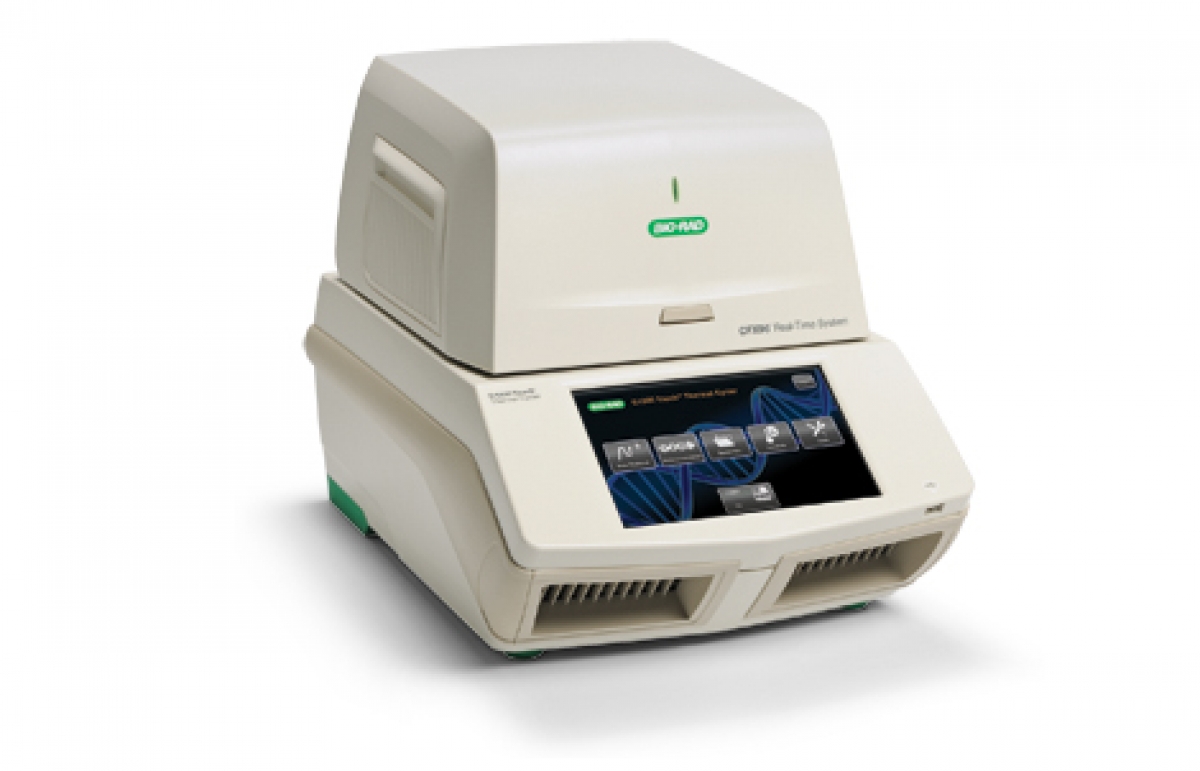
Equipment
Magnetic Stand-96
NAME
ThermoFisher Scientific
BRAND
AM10027
SKU
LINK
Equipment
Qubit Fluorometer
NAME
Fluorometer
TYPE
Invitrogen
BRAND
Q33238
SKU
LINK
Equipment
Centrifuge
NAME
Benchtop Centrifuge
TYPE
Eppendorf
BRAND
5405000441
SKU
LINK
Any benchtop centrifuge will suffice
SPECIFICATIONS
Equipment
SimpliAmp Thermal Cycler
NAME
PCR
TYPE
Applied Biosystems
BRAND
A24811
SKU
LINK
Any standard PCR thermocycler will suffice
SPECIFICATIONS
Equipment
Plate centrifuge
NAME
Centrifuge
TYPE
Any
BRAND
N/A
SKU
Protocol materials
Sodium Hydroxide 1M solution
PhiX Control v3Illumina, Inc.Catalog #FC-110-3001
MiSeq v3 Sequencing Reagents (600 cycles)Illumina, Inc.Catalog #MS-102-3003
NUCLISENS easyMAG extraction reagentsbioMérieux
Sodium Hypochlorite Solution
High Sensitivity D5000 ScreenTapeAgilent TechnologiesCatalog #5067-5592
Second strand synthesis kit Invitrogen - Thermo FisherCatalog #A48571
Illumina DNA Prep (M) Tagmentation (24 Samples)Illumina, Inc.Catalog #20018704
Falcon tube (50 mL)
Safe-Lock Tubes 1.5 ml PCR clean DNA LoBindEppendorfCatalog #0030108051
Viral Multiplex Reference 11/242 NIBSCNational Institute of Biological Standards and Control (NIBSC)Catalog #11/242
96 well LoBind PCR plates Semi-skirtedEppendorfCatalog #0030129504
SuperScript™ IV First-Strand Synthesis SystemThermo Fisher ScientificCatalog #18091050
Qubit 1X dsDNA HS Assay KitThermo Fisher ScientificCatalog #Q33230
High Sensitivity D5000 ReagentsAgilent TechnologiesCatalog #5067-5593
Ethanol (100%, Molecular Biology Grade)Fisher ScientificCatalog #BP2818500
Nuclease-free Water
iTaq Universal SYBR® Green One-step kitBio-Rad LaboratoriesCatalog #1725150
Assorted Pipette tips (filter) 10ul 100ul 200ul 1000ul
Illumina Nextera DNA CD indexes (24 indexes) Illumina, Inc.
RNA Clean & Concentrator™-5Zymo ResearchCatalog #R1015
Agencourt AMPure XPBeckman CoulterCatalog #A63880
Safe-Lock Tubes 1.5 ml PCR clean DNA LoBindEppendorfCatalog #0030108051
Nucleic Acid Purification
1h 35m
Safety information
Clinical samples should be handled with appropriate biosafety and infection prevention and control precautions.
Perform total nucleic acid extraction using the NUCLISENS easyMAG platform or another similar total nucleic acid extraction platform.
- The preferred run size is 10 samples and 2 controls
- The preferred positive control is the NIBSC Viral Multiplex Reference 11/242
- The preferred negative control is the extraction platform lysis buffer
- The internal control used is laboratory specific and the volume used is dependent on its specific characteristics and lab optimisation prior to use
- Enter the sample details in the table below
| Sample identifier | Sample input volume (ul) | |
| Positive control | ||
| Negative control |
Table: Sample details and input volume
The following consumables are required for this step:
Safe-Lock Tubes 1.5 ml PCR clean DNA LoBindEppendorfCatalog #0030108051
Viral Multiplex Reference 11/242 NIBSCNational Institute of Biological Standards and Control (NIBSC)Catalog #11/242
The following equipment is required for this step:
Equipment
NUCLISENS easyMag
NAME
Nucleic acid extraction
TYPE
bioMerieux
BRAND
N/A
SKU
LINK
Equipment
Centrifuge
NAME
Benchtop Centrifuge
TYPE
Eppendorf
BRAND
5405000441
SKU
LINK
Any benchtop centrifuge will suffice
SPECIFICATIONS
1h 35m
Remove CSF samples from-70 °C storage and defrost On ice . Label the sample elution tubes (1 for RNA and 1 for total nucleic acids for each sample) and easyMAG lysis buffer tubes while the samples defrost.
15m
Briefly centrifuge the samples.
280 x g, 4°C, 00:00:30
5m
Add 200-1000 µL of sample to a easyMAG lysis buffer tube. Similarly add 200-1000 µL of the positive control to a lysis buffer tube. CAUTION: Avoid sample cross-contamination.
Viral Multiplex Reference 11/242 NIBSCNational Institute of Biological Standards and Control (NIBSC)Catalog #11/242
5m
Add 10 µL of internal control to each sample in lysis buffer (including the positive control and negative control lysis buffer tube which contains no sample). CAUTION: Avoid sample cross-contamination.
5m
Incubate at Room temperature for 00:10:00 . Program the sample order on the easyMAG instrument and load the required disposable plastics. Set the elution volume to 35 µL .
10m
Add 50 µL of easyMAG magnetic silica to each sample and internal control containing lysis buffer tube.
5m
Add the contents of the lysis buffer tube to the easyMAG processing wells and start the instrument.
40m
Store 20 µL of extracted total nucleic acids in a labelled tube and store at -20 °C until ready to proceed to library preparation. The remaining 15 µL of extracted total nucleic acids is used generate cDNA from the RNA fraction of extracted total nucleic acids.
5m
cDNA from purified RNA
4h 10m
Perform RNA purification from a fraction of the extracted total nucleic acids using the RNA Clean & Concentrator™-5Zymo ResearchCatalog #R1015
The following consumables are required for this step:
Ethanol (100%, Molecular Biology Grade)Fisher ScientificCatalog #BP2818500
Safe-Lock Tubes 1.5 ml PCR clean DNA LoBindEppendorfCatalog #0030108051
The following equipment is required for this step:
Equipment
Centrifuge
NAME
Benchtop Centrifuge
TYPE
Eppendorf
BRAND
5405000441
SKU
LINK
Any benchtop centrifuge will suffice
SPECIFICATIONS
Prior to starting:
- Add 96 mL of 100% ethanol to the 24 mL RNA wash buffer concentrate.
- Reconstitute the lyophilised DNAse I with nuclease-free water to a concentration of 1 U/ul or defrost an aliquot of previously reconstituted DNAse I.
1h 10m
Prepare DNAse I master mix as follows:
| Component | Volume per sample (ul) | Total volume (ul) (13) | |
| DNA digestion buffer | 5 | 65 | |
| DNAse I enzyme (1 U/ul) | 5 | 65 | |
| Nuclease-free water | 25 | 325 | |
| Total | 35 | 455 |
Table: DNAse I master mix
5m
Add 35 µL of DNAse I master mix to each sample tube with 15 µL of total nucleic acids and mix my inverting gently.
5m
Incubate at Room temperature for 00:15:00 . Label a Zymo-Spin IC column and an elution tube for each sample and set aside.
15m
Add 100 µL RNA binding buffer to each sample
5m
Add 150 µL of 100% ethanol to each sample and mix by inverting
5m
Transfer the sample to its labelled Zymo-Spin IC column in a collection tube and centrifuge. Discard the flow-through.
10000-16000 x g, 00:00:30
5m
Add 400 µL RNA Prep Buffer to each column and centrifuge. Discard the flow-through.
10000-16000 x g, 00:00:30
5m
Add 700 µL RNA Wash Buffer to each column and centrifuge. Discard the flow-through.
10000-16000 x g, 00:00:30
5m
Add 400 µL RNA Wash Buffer to each column and centrifuge. Transfer the column to a labelled elution tube.
10000-16000 x g, 00:01:00
10m
Add 12 µL of DNAse/RNAse-Free Water directly to the column matrix and centrifuge.
10000-16000 x g, 00:01:00
10m
Perform first-strand synthesis on the purified RNA using the SuperScript™ IV First-Strand Synthesis SystemThermo Fisher ScientificCatalog #18091050 kit.
The following consumables are required for this step:
96 well LoBind PCR plates Semi-skirtedEppendorfCatalog #0030129504
The following equipment is required for this step:
Equipment
SimpliAmp Thermal Cycler
NAME
PCR
TYPE
Applied Biosystems
BRAND
A24811
SKU
LINK
Any standard PCR thermocycler will suffice
SPECIFICATIONS
1h
Prepare priming master mix as follows On ice :
| Component | Volume per sample (ul) | Total volume (ul) (13) | |
| 50ng/ul random hexamers | 1 | 13 | |
| 10mM dNTP mix | 1 | 13 | |
| Total | 2 | 26 |
Table: Priming master mix
5m
Combine the priming master mix with 11 µL of purified RNA
5m
Incubate the priming reaction at 65 °C for 00:05:00 and then put the reaction On ice for 00:01:00 . Set the thermocycler lid to 105 °C
10m
Prepare the 1st strand synthesis master mix as follows On ice :
| Component | Volume per sample (ul) | Total volume (ul) (13) | |
| 5X SSIV Buffer | 4 | 52 | |
| 100mM DTT | 1 | 13 | |
| Ribonuclease inhibitor | 1 | 13 | |
| Superscript IV RT (200U/ul) | 1 | 13 | |
| Total | 7 | 91 |
Table: 1st strand master mix
5m
Add the 13 µL of RNA with annealed primers to 7 µL of 1st strand master mix On ice
5m
Incubate the reaction in a thermocycler with the lid set to 105 °C as follows:
| Temperature (degrees Celsius) | Time (minutes) | |
| 23 | 10 | |
| 55 | 10 | |
| 80 | 10 | |
| 4 | Hold |
Table: 1st strand thermocycler parameters
30m
Perform 2nd strand synthesis on the 1st strand synthesis product using the Second strand synthesis kit Invitrogen - Thermo FisherCatalog #A48571 kit.
The following consumables are required for this step:
96 well LoBind PCR plates Semi-skirtedEppendorfCatalog #0030129504
The following equipment is required for this step:
Equipment
SimpliAmp Thermal Cycler
NAME
PCR
TYPE
Applied Biosystems
BRAND
A24811
SKU
LINK
Any standard PCR thermocycler will suffice
SPECIFICATIONS
1h 15m
Prepare the 2nd strand cDNA synthesis master mix as follows On ice :
| Component | Volume per sample (ul) | Total volume (ul) (13) | |
| Nuclease-free water | 55 | 715 | |
| 5X second strand reaction mix | 20 | 260 | |
| Second strand enzyme mix | 5 | 65 | |
| Total | 80 | 1040 |
Table: 2nd strand synthesis master mix
5m
Add 20 µL of 1st strand synthesis product to 80 µL of 2nd strand synthesis master mix
5m
Incubate the reaction at 16 °C for 01:00:00 . Set the thermocycler lid to 40 °C .
1h
Stop the reaction by adding 6 µL of 0.5 Mass Percent EDTA, 8
5m
Purify the cDNA using Agencourt AMPure XPBeckman CoulterCatalog #A63880 beads.
The following consumables are required for this step:
Ethanol (100%, Molecular Biology Grade)Fisher ScientificCatalog #BP2818500
Safe-Lock Tubes 1.5 ml PCR clean DNA LoBindEppendorfCatalog #0030108051
Nuclease-free Water
The following equipment is required for this step:
Equipment
Magnetic Stand-96
NAME
ThermoFisher Scientific
BRAND
AM10027
SKU
LINK
Prior to starting:
- Prepare 80% ethanol
- Label the purified cDNA tubes
- Bring the Agencourt AMPure XPBeckman CoulterCatalog #A63880 beads to Room temperature and resuspend by vortexing.
45m
Add 180 µL (1.8X) of Agencourt AMPure XPBeckman CoulterCatalog #A63880 to 100 µL of 2nd strand synthesis product from 4.4 and mix well by pipetting up and down 10 times.
5m
Incubate for 00:05:00 at Room temperature
5m
Place the sample plate on a magnetic stand and allow the solution to clear (00:05:00 )
5m
Discard the supernatant without disturbing the beads
2m
Add 200 µL of 80% ethanol to each well with the sample plate on the magnetic stand and incubate at room temperature for 00:00:30 .
2m
Discard the supernatant without disturbing the beads
2m
Repeat the wash steps once. Use a P20 pipette to remove residual ethanol from each well
5m
Air dry the beads (±00:02:00 ) but do not allow the surface to crack.
2m
Remove the plate from the magnetic rack. Elute the DNA from the beads by adding 25 µL nuclease-free water to the beads. Mix well by pipetting up and down 10 times.
5m
Incubate for 00:02:00 at Room temperature
2m
Place the sample plate on a magnetic stand and allow the solution to clear (00:05:00 )
5m
Remove 22 µL of the supernatant and transfer to a clean nuclease-free tube
5m
Pre-Sequencing QC PCR
40m
Perform a QC real-time PCR using the iTaq Universal SYBR® Green One-step kitBio-Rad LaboratoriesCatalog #1725150 kit. The primers should be specific to the internal control used. This protocol used Tobacco Mild Green Mosaic virus as an internal control with the following primers diluted as per the iTaq kit package insert:
| Primer | Sequence | |
| Forward | 5'-GGATATGTCTAAGTCTGTTGC-3' | |
| Reverse | 5'-CAGACAACTCGGGTGCG-3' |
Ellis MD, Hoak JM, Ellis BW, Brown JA, Sit TL, Wilkinson CA, Reed TD, Welbaum GE. Quantitative real-time PCR analysis of individual flue-cured tobacco seeds and seedlings reveals seed transmission of tobacco mosaic virus. Phytopathology. 2020 Jan 19;110(1):194-205.
The following consumables are required for this step:
96 well LoBind PCR plates Semi-skirtedEppendorfCatalog #0030129504
The following equipment is required for this step:
Equipment
CFX96 Touch Real-Time PCR
NAME
qPCR
TYPE
Bio-Rad
BRAND
#1855195
SKU
LINK
40m
Prepare the master mix as follows On ice
| Component | Volume per sample (ul) | Total (ul) (13) | |
| iTaq Universal SYBR reaction mix (2X) | 10 | 130 | |
| iScript RT | 0.25 | 3.25 | |
| Nuclease-free water | 2.75 | 35.75 | |
| Forward primer | 1 | 13 | |
| Reverse primer | 1 | 13 | |
| Total volume | 15 | 195 |
Table: Spiked internal control PCR master mix. Sample volume per reaction is 5ul
5m
Add 5 µL of post 2nd strand synthesis clean-up product to 15 µL of master mix
5m
Run the following PCR program on a qPCR machine reading the SYBR green fluorophore
| Temperature (degrees Celsius) | Time (seconds) | Cycles | |
| 95 | 60 | 1 | |
| 95 | 10 | 40 | |
| 58 | 20 (+Read) |
Table: Spiked internal control PCR thermocycler parameters. The internal control spike-in should be to a target Ct value of 30±2. The kit reverse transcriptase step is skipped.
30m
Library Preparation
6h 40m
Prepare the tagmentation reaction from theIllumina DNA Prep (M) Tagmentation (24 Samples)Illumina, Inc.Catalog #20018704 kit.
The following consumables are required for this step:
96 well LoBind PCR plates Semi-skirtedEppendorfCatalog #0030129504
The following equipment is required for this step:
Equipment
SimpliAmp Thermal Cycler
NAME
PCR
TYPE
Applied Biosystems
BRAND
A24811
SKU
LINK
Any standard PCR thermocycler will suffice
SPECIFICATIONS
Equipment
Magnetic Stand-96
NAME
ThermoFisher Scientific
BRAND
AM10027
SKU
LINK
Prior to starting:
- Bring the bead-linked transposomes (BLT), tagmentation buffer 1 (TB1), tagmentation stop buffer (TSB) and tangent wash buffer (TWB) to Room temperature and vortex to mix
1h 17m
Pool 15 µL of extracted total nucleic acids (from initial nucleic acid purification step) and 15 µL of purified cDNA (prepared from purified and isolated RNA) in a 96 well LoBind PCR plates Semi-skirtedEppendorfCatalog #0030129504
5m
Prepare the tagmentation master mix as follows:
| Component | Volume per sample (ul) | Total (ul) (12) | |
| Bead-linked transposomes (BLT) | 11 | 132 | |
| Tagmentation buffer 1 (TB1) | 11 | 132 | |
| Total | 22 | 264 |
Table: Tagmentation master mix. Vortex to mix.
5m
Add 20 µL of master mix to 30 µL of pooled DNA and mix by pipetting up and down 10 times
5m
Run the following program on a thermocycler with the lid set to 100 °C
| Step | Temperature (degrees Celsius) | Time (minutes) | |
| Tagmentation | 55 | 15 | |
| Hold | 10 | Hold |
Table: Tagmentation thermocycler parameters.
15m
Add 10 µL of tagmentation stop buffer to each reaction and pipette up and down slowly to resuspend
5m
Run the following program on a thermocycler with the lid set to 100 °C
| Step | Temperature (degrees Celsius) | Time (minutes) | |
| Incubation | 37 | 15 | |
| Hold | 10 | Hold |
Table: Tagmentation stop thermocycler parameters.
15m
Place the sample plate on a magnetic stand and allow it to clear 00:03:00
3m
Remove and discard the supernatant
2m
Wash by removing the plate from the magnetic stand and adding 100 µL of tagment wash buffer directly onto the beads, pipetting up and down slowly to resuspend
5m
Place the plate on the magnetic stand and wait for the solution to clear 00:03:00
3m
Remove and discard the supernatant
2m
Repeat the wash step
10m
Remove the plate from the magnetic stand and add 100 µL of tagment wash buffer directly onto the beads and resuspend. Cover the plate and place on the magnetic stand until the amplification step.
2m
Amplify the tagmented DNA using the Illumina Nextera DNA CD indexes (24 indexes) Illumina, Inc. and theIllumina DNA Prep (M) Tagmentation (24 Samples)Illumina, Inc.Catalog #20018704 kit.
The following consumables are required for this step and steps immediately following:
Ethanol (100%, Molecular Biology Grade)Fisher ScientificCatalog #BP2818500
96 well LoBind PCR plates Semi-skirtedEppendorfCatalog #0030129504
Nuclease-free Water
Qubit 1X dsDNA HS Assay KitThermo Fisher ScientificCatalog #Q33230
The following equipment is required for this step:
Equipment
SimpliAmp Thermal Cycler
NAME
PCR
TYPE
Applied Biosystems
BRAND
A24811
SKU
LINK
Any standard PCR thermocycler will suffice
SPECIFICATIONS
Equipment
Centrifuge
NAME
Benchtop Centrifuge
TYPE
Eppendorf
BRAND
5405000441
SKU
LINK
Any benchtop centrifuge will suffice
SPECIFICATIONS
Equipment
Plate centrifuge
NAME
Centrifuge
TYPE
Any
BRAND
N/A
SKU
Equipment
Magnetic Stand-96
NAME
ThermoFisher Scientific
BRAND
AM10027
SKU
LINK
Equipment
Qubit Fluorometer
NAME
Fluorometer
TYPE
Invitrogen
BRAND
Q33238
SKU
LINK
Prior to starting this step and and steps immediately following:
- Thaw and bring to Room temperature the index adaptors. Thaw the Enhanced PCR mix On ice .
- Bring the sample purification beads (SPB) to Room temperature
- Thaw the resuspension buffer (RSB) and allow it to come to Room temperature
- Prepare 80% ethanol
| Sample identifier | Sample indexes | |
| Positive control | ||
| Negative control |
Table: Sample identifier and barcoding details.
2h 31m
Prepare amplification master mix as follows:
| Component | Volume (ul) | Total (ul) (12) | |
| Enhanced PCR mix (EPM) | 22 | 264 | |
| Nuclease-free water | 22 | 264 | |
| Total | 44 | 528 |
Table: Amplification master mix.
5m
Vortex and centrifuge 280 x g, 00:00:10
1m
With the plate/tube from the post-tagmentation clean-up, discard the supernatant and remove from the magnetic stand
2m
Add 40 µL of PCR master mix directly onto the beads of each sample and pipette up and down to ensure the beads are fully suspended before sealing the plate and centrifuge 280 x g, 00:00:10
5m
Add adaptors to each sample – 5 µL i7 adaptor and 5 µL i5 adaptor and record the used combination – and mix by pipetting up and down 10 times and centrifuge 280 x g, 00:00:10
10m
Run the following PCR program with the lid set to 100 °C
| Temperature (degrees Celsius) | Time (seconds) | Cycles | |
| 68 | 180 | 1 | |
| 98 | 180 | 1 | |
| 98 | 45 | 12 | |
| 62 | 30 | ||
| 68 | 120 | ||
| 68 | 60 | 1 | |
| 10 | Hold | Hold |
Table: Amplification thermocycler parameters. The cycle number can be adjusted based on input DNA.
50m
Centrifuge the samples 280 x g, 00:01:00
1m
Place the plate on a magnetic stand and allow the liquid to clear00:05:00
5m
Transfer 45 µL supernatant from each well into a new plate
2m
Vortex the sample purification beads and add 81 µL to each well containing supernatant and pipette 10 times to mix
5m
Incubate the plate for 00:05:00 at Room temperature
5m
Place plate on a magnetic stand and wait for the liquid to clear 00:05:00
5m
Remove and discard the supernatant
2m
Wash by adding 200 µL of freshly prepared 80% ethanol to each well without mixing
5m
Incubate for 00:00:30
30s
Remove and discard the supernatant
5m
Repeat the wash step once
10m 30s
Use a small volume pipettor remove residual ethanol
2m
Air-dry for up to 00:01:00 but do not let the beads crack
1m
Add 32 µL of resuspension buffer (RSB) to the beads and resuspend
5m
Incubate at room temperature for 00:02:00
2m
Place on a magnetic stand and allow the liquid to clear (00:02:00 )
2m
Transfer 30 µL of supernatant to a new plate
5m
Quantify the libraries using a Qubit fluorometer using:
Qubit 1X dsDNA HS Assay KitThermo Fisher ScientificCatalog #Q33230
| Sample identifier | Concentration (ng/ul) | |
| Positive control | ||
| Negative control |
Table: Sample identifier and library concentration after clean-up 1.
15m
Additional clean-up: Libraries quantified as >10ng/ul will undergo a double-sided clean-up
27m
Add 25 µL of cleaned library to a new plate (double-sided clean-up plate 1)
5m
Add 60 µL of nuclease-free water
5m
Add 45 µL of SPB
5m
Incubate at Room temperature for 00:05:00
5m
Place the plate on a magnetic stand and allow the liquid to clear. During this time, to a second plate (double-sided clean-up plate 2) add 15 µL of undiluted SPB to each well to be used.
5m
Transfer 125 µL of supernatant from double-sided clean-up plate 1 to the predispensed 15 µL of SPB in double-sided clean-up plate 2. Discard double-sided clean-up plate 1.
2m
Additional clean-up: Libraries quantified as <10ng/ul will undergo a single-sided clean-up
15m
Add 25 µL of libary to a new plate (corresponding wells in the double-sided clean-up plate 2 from may be used)
5m
Add 60 µL of nuclease-free water
5m
Add 60 µL of SPB
5m
Finalisation of libraries
50m
Incubate the plate(s) (double-sided clean-up plate 2 ) at Room temperature for 00:05:00
5m
Place on a magnetic stand and wait for the liquid to clear (00:02:00 )
2m
Remove and discard the supernatant
5m
Wash by adding 200 µL of freshly prepared 80% ethanol to each well without mixing
5m
Incubate for 00:00:30
30s
Remove and discard the supernatant
5m
Repeat the wash step once
10m 30s
Using a small volume pipettor remove residual ethanol
2m
Air-dry for up to 00:01:00 but do not let the beads crack
1m
Add 30 µL of resuspension buffer (RSB) to the beads and resuspend
5m
Incubate at room temperature for 00:02:00
2m
Place the plate on a magnetic stand and wait for the liquid to clear (00:02:00 )
2m
Transfer 28 µL of supernatant to a nuclease-free tube
5m
Quantification and QC of libraries
1h 20m
Quantify the libraries using a Qubit fluorometer using:
Qubit 1X dsDNA HS Assay KitThermo Fisher ScientificCatalog #Q33230
| Sample identifier | Concentration (ng/ul) | |
| Positive control | ||
| Negative control |
Table: Sample identifier and library concentration after final clean-up.
15m
(Optionally) evaluate the library mean fragment size using a TapeScreen instrument. If this is not done, use a default mean fragment size of 600bp.
1h
Calculate the Molar concentration of the library using the following formula:
5m
Sequencing
2d 9h 6m
Prepare the quantified and quality controlled libraries for loading and load the Sequencing instrument.
The following consumables are required for this step:
Sodium Hydroxide 1M solution
Safe-Lock Tubes 1.5 ml PCR clean DNA LoBindEppendorfCatalog #0030108051
Nuclease-free Water
MiSeq v3 Sequencing Reagents (600 cycles)Illumina, Inc.Catalog #MS-102-3003
PhiX Control v3Illumina, Inc.Catalog #FC-110-3001
The following equipment is required for this step:
Equipment
MiSeq
NAME
Sequencer
TYPE
illumina
BRAND
SY-410-1003
SKU
LINK
Equipment
Centrifuge
NAME
Benchtop Centrifuge
TYPE
Eppendorf
BRAND
5405000441
SKU
LINK
Any benchtop centrifuge will suffice
SPECIFICATIONS
Prior to starting this step and and steps immediately following:
- Defrost the PhiX control
- Ensure the MiSeq instrument doesn't require maintenance or a weekly wash
- Remove the Illumina Miseq v3 reagent cartridge from -20 °C storage and defrost in a water bath approximately 01:00:00 before its intended use. Alternatively place it at 4 °C overnight prior to its intended use
- Defrost buffer HT-1 On ice and keep at 4 °C until use
- Prepare a fresh solution of 0.2 Molar NaOH
- Create the sample sheet using the appropriate software that will be used for the MiSeq sequencing run (this will indicate the number of cycles, the library preparation parameters and the sample names and indexes for use by the instrument to set the run parameters and demultiplex the output data)
2d 9h 6m
Dilute the prepared libraries to 4 nanomolar (nM) using nuclease-free water and pool them in a single LoBind Eppendorf tube
10m
Combine the diluted library and 0.2 Molar NaOH solution in a LoBind Eppendorf tube to denature the libraries as follows:
| Component | Volume (ul) | |
| 4nM pooled libraries | 5 | |
| 0.2M NaOH | 5 | |
| Total volume | 10 |
Table: Library denaturation.
2m
Vortex briefly and spin-down the denaturing libraries and incubate for 00:05:00 at Room temperature
5m
Stop the reaction by adding 990 µL of chilled HT-1 buffer
2m
Invert several times and spin-down the solution
2m
Repeat the denaturation and stopping of a 4 nanomolar (nM) PhiX library
21m
The denatured library concentration is 20 picomolar (pM) . Remove 100 µL from the library and add 100 µL of the 20 picomolar (pM) denatured and stopped PhiX library
2m
Further dilute the library (with added PhiX) to a 10 picomolar (pM) concentration and keep the reaction On ice until the library is loaded into the MiSeq reagent cartridge
2m
Follow the prompts on the MiSeq screen to load the flow cell, wash buffer and reagent cartridge and load 600 µL of 10 picomolar (pM) pooled libary solution (with PhiX) prior to loading the cartridge.
20m
Start the sequencer
2d 8h
Bioinformatics
The bioinformatics tools needed to perform the complete analysis are available at: https://github.com/RuanMarais/UCT_metagenomics. Alternatively, basic analysis can be performed as described below.
The analysis described below was performed on a computer with a 32-core Intel(R) Xeon(R) CPU and 124Gb of RAM. Analysis was done locally and the computer was running Linux (Ubuntu distribution).
Install conda, instructions are available at:
To install the required packages run the following commands:
Command
Installs biobakery_workflows (Linux Ubuntu)
Install biobakery
Command
Biobakery dependency (Linux Ubuntu)
Install bio bakery dependency
Command
Download kneaddata database (Linux Ubuntu)
Biobakery database
The kneaddata database can also be directly dowloaded from:
Command
Install kraken2 (Linux Ubuntu)
Command
Install SPAdes (Linux Ubuntu)
Install spades
Command
Install DIAMOND (Linux Ubuntu)
Command
Install krakentools (Linux Ubuntu)
Command
Install PEAR (Linux Ubuntu)
Additional dependencies:
Kraken2 databases can be constructed de novo or are available as pre-constructed databases at:
Download the standard database and the EuPathDB48 database and extract into the working directory where you will analyse the sequencing data.
Additional dependencies:
Download the Trimmomatic (Trimmomatic-0.39) binary file from:
usadellab.org/cms/?page=trimmomatic
and move it (after extraction) to bin as follows:
Command
Move trimmomatic binary file to bin (Linux Ubuntu)
Move trimmomatic to bin
Additional dependencies:
Download the {Reviewed (Swiss-Prot)} fasta file to generate the DIAMOND database from:
Analyse the raw sequencing reads as follows:
1) Human read, contaminant and low-complexity read removal with kneaddata:
Command
kneaddata - human, contaminant and low complexity read removal (Linux Ubuntu)
Run kneaddata
Review the kneaddata paired reads in FastQC and make any required modifications to the trimming algorithm if necessary.
2) Taxonomic classification using kraken2:
Command
Run kraken2 taxonomic classifier (Linux Ubuntu)
Run kraken2
This command is run once for each kraken2 database used. Thus, for this analysis the command twice for the standard and EuPathDB48 databases.
3) Extract unclassified reads using krakentools:
Command
Extract unclassified reads using kraken tools (Linux Ubuntu)
Extract unclassified reads
The reads not classified by kraken2 are extracted for further analysis.
4) Generate contigs from unclassified reads using SPAdes:
Command
Generate contigs using SPAdes (Linux Ubuntu)
SPAdes
5) Generate merged paired-end reads if no contigs are generated:
Command
Assemble paired-end reads (Linux Ubuntu)
6) Generate the DIAMOND database as follows:
Command
Generate DIAMOND database (Linux Ubuntu)
Generate DIAMOND database
7) Run DIAMOND on generated contigs and/or assembled unclassified reads (if no contigs are generated):
Command
Run DIAMOND (Linux Ubuntu)
Data visualisation can be done using Pavian. Installation and usage instructions are available here: