Aug 08, 2025
Version 1
CAMbank: Saliva Collection (preservative, v1) V.1
- 1University of Austin (UATX);
- 2Weill Cornell Medicine;
- 3BioAstra



Protocol Citation: Eliah Overbey, Jaume Puig, Jeremy Wain Hirschberg, JangKeun Kim, Christopher Mason 2025. CAMbank: Saliva Collection (preservative, v1). protocols.io https://dx.doi.org/10.17504/protocols.io.kqdg31971l25/v1
Manuscript citation:
Overbey, E.G., Ryon, K., Kim, J. et al. Collection of biospecimens from the inspiration4 mission establishes the standards for the space omics and medical atlas (SOMA). Nat Commun 15, 4964 (2024). https://doi.org/10.1038/s41467-024-48806-z
License: This is an open access protocol distributed under the terms of the Creative Commons Attribution License, which permits unrestricted use, distribution, and reproduction in any medium, provided the original author and source are credited
Protocol status: Working
We use this protocol and it's working
Created: August 08, 2025
Last Modified: August 22, 2025
Protocol Integer ID: 224368
Keywords: saliva, astronaut, spaceflight, omics, preserved saliva sample, saliva sample, saliva collection, nucleic acid, integrated preservative, microbiome profiling, proteomic, rna, omnigene oral, protein stabilization in both ground, spacex inspiration4 mission, astronaut health research, protein stabilization, downstream analysis
Abstract
This protocol describes the collection of preserved saliva samples using the OMNIgene ORAL (OME-505) kit, optimized for nucleic acid and protein stabilization in both ground-based and spaceflight environments. Participants deposit saliva directly into the OME-505 collection tube until reaching the indicated fill line, after which the integrated preservative is released upon capping and mixed thoroughly by inversion. Samples are stored at −20°C until downstream processing. This method was implemented during the SpaceX Inspiration4 mission at multiple ground timepoints, yielding DNA (28.1–3187.8 ng), RNA (396.0–3544.2 ng), and protein (92.97–93.15 ng) suitable for a wide range of downstream analyses, including genomic, transcriptomic, proteomic, and microbiome profiling. The preservative enables room-temperature stability during transit and mitigates degradation risks associated with delayed processing, making it compatible with mission scenarios lacking immediate cold stowage. This standardized collection approach supports the Space Omics and Medical Atlas (SOMA) initiative’s goal of generating high-quality, cross-mission comparable multi-omics datasets for astronaut health research.
Materials
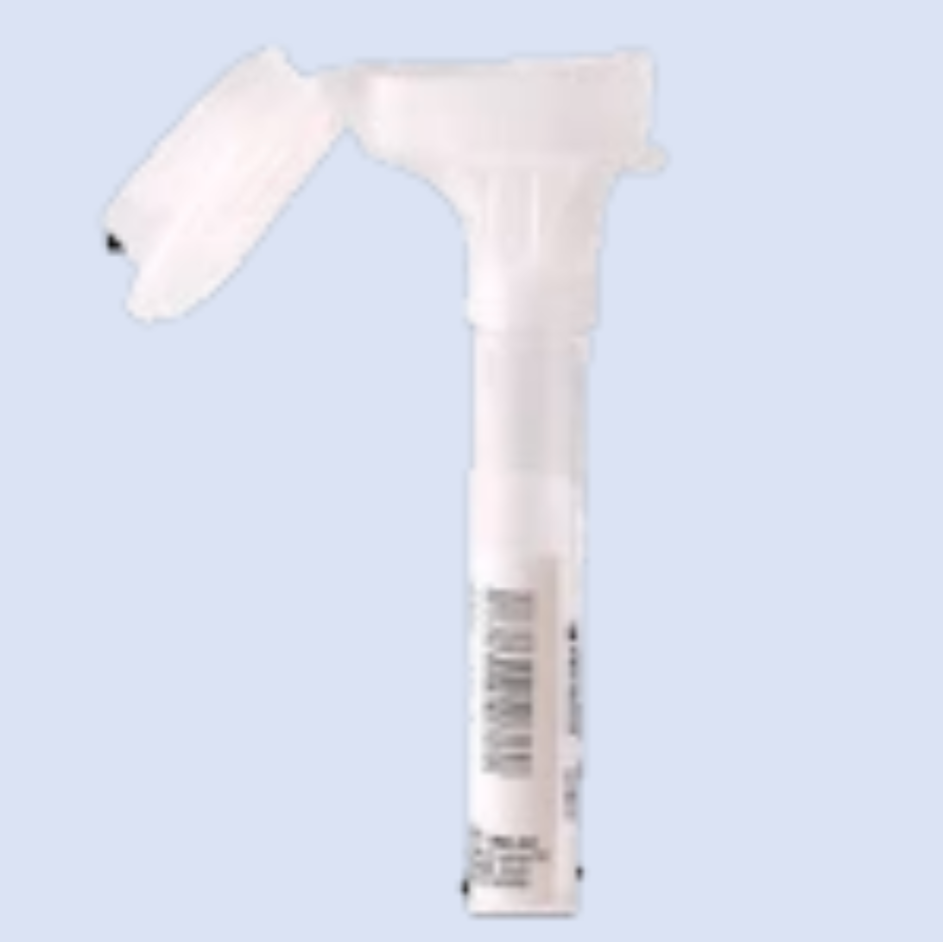
DNA Genotek OMNIgene•ORAL (OME-505) kit
Sterile nitrile gloves
70% Ethanol in a spray bottle
VWR KimWipes
Cryogenic Freezer
Preparation
3m
Verify that all necessary materials are available and the OMNIgene•ORAL kit is still sterile-sealed.
2m
Put on nitrile gloves to ensure sterile handling of the samples.
1m
Sample Collection
8m
Open the DNA Genotek OMNIgene•ORAL (OME-505) kit.
1m
Spit into the collection tube until the amount of liquid (not including bubbles) reaches the fill line.
5m
Close the lid tightly to release the stabilizing liquid into the tube.
1m
Shake the tube for 5 seconds to mix the saliva with the stabilizing liquid.
1m
Sample Handling
4m
Note the following details:
Subject ID (ex: C###)
Date of Collection (MM-DD-YYYY)
Time of Collection (HH:MM AM:PM)
2m
Verify that the collection tube is properly sealed and has not leaked.
1m
Sterilize the outside of the collection tube with 70% ethanol and wipe down with a KimWipe.
1m
Storage
2m
Place the OME-505 tube in a cryogenic freezer box.
1m
For long-term storage, keep the samples at -20°C.
1m
Acknowledgements
This work was supported by the WorldQuant Foundation, the WayPaver Foundation, and the following NASA grants: NNX14AH50G, NNX17AB26G, 80NSSC22K0254, NNH18ZTT001N-FG2, NNX16AO69A, and 80NSSC21K0316.