Aug 07, 2025
CAMbank: Saliva Collection (crude, v1)
- 1University of Austin (UATX);
- 2Weill Cornell Medicine;
- 3BioAstra


External link: https://www.nature.com/articles/s41467-024-48806-z
Protocol Citation: Eliah Overbey, Jaume Puig, Jeremy Wain Hirschberg, JangKeun Kim, Christopher Mason 2025. CAMbank: Saliva Collection (crude, v1). protocols.io https://dx.doi.org/10.17504/protocols.io.eq2ly473elx9/v1
Manuscript citation:
Overbey, E.G., Ryon, K., Kim, J. et al. Collection of biospecimens from the inspiration4 mission establishes the standards for the space omics and medical atlas (SOMA). Nat Commun 15, 4964 (2024). https://doi.org/10.1038/s41467-024-48806-z
License: This is an open access protocol distributed under the terms of the Creative Commons Attribution License, which permits unrestricted use, distribution, and reproduction in any medium, provided the original author and source are credited
Protocol status: Working
We use this protocol and it's working
Created: August 06, 2025
Last Modified: August 22, 2025
Protocol Integer ID: 224123
Keywords: saliva, spaceflight, SOMA, CAMbank, astronaut, standardized procedure for crude saliva collection, crude saliva sample, crude saliva collection strategy, crude saliva collection, saliva collection, ml of saliva, modular biospecimen methods for human spaceflight research, saliva, valuable for targeted assay, proteomic assay, targeted assay, spacex dragon capsule, flight conditions aboard the spacex dragon capsule, rnase, viral nucleic acid detection, modular biospecimen method, cytokine profiling, analyses such as cytokine profiling, dnase, hormone quantification, human spaceflight research
Abstract
This protocol outlines the standardized procedure for crude saliva collection from human subjects for downstream molecular and omics analyses. Designed for flexible use across terrestrial and spaceflight contexts, this method requires no preservatives and uses sterile, DNase/RNase-free collection tubes. Participants are instructed to spit directly into 5 mL screw-cap tubes until a minimum of 1 mL of saliva is obtained. Samples are immediately aliquoted into 500 μL portions in a sterile environment and frozen at −80 °C. This crude saliva collection strategy has been implemented in both pre-flight and in-flight conditions aboard the SpaceX Dragon capsule during the Inspiration4 mission. It enables the collection of sufficient sample volumes (150–4000 μL) to support analyses such as cytokine profiling, viral nucleic acid detection, hormone quantification, and potential transcriptomic or proteomic assays. While the absence of preservatives limits long-term stability at room temperature, crude saliva samples remain valuable for targeted assays and flight-compatible protocols. This protocol supports the broader objectives of the Space Omics and Medical Atlas (SOMA) initiative to develop scalable, modular biospecimen methods for human spaceflight research.
Materials
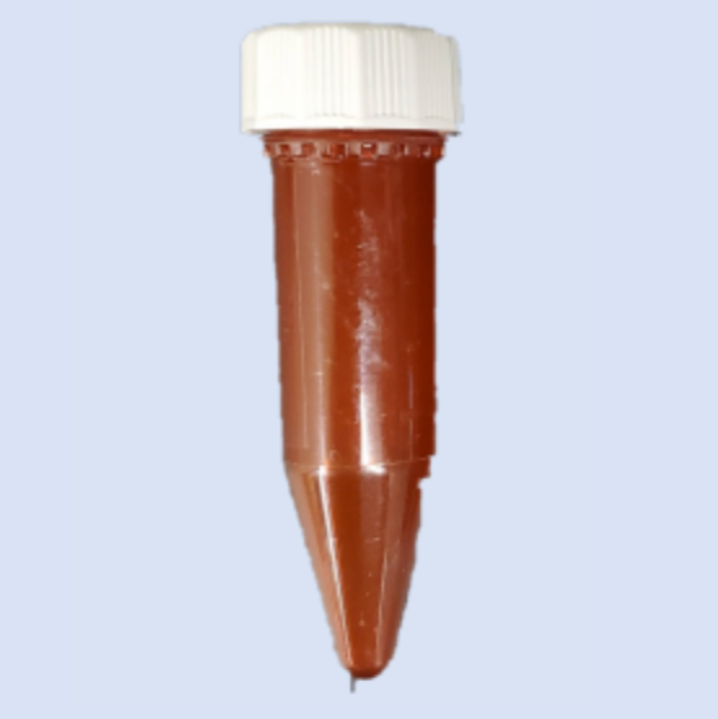
Collection tubes (5.0 mL screw-top tube, DNase/RNase-Free)
Sterile nitrile gloves
Laminar flow hood
P1000 pipette & tips
2D barcoded tubes
Cryogenic freezer (-80C)
Preparation
3m
Verify that all necessary materials are available and still sterile-sealed.
2m
Put on nitrile gloves to ensure sterile handling of the samples.
1m
Sample Collection
6m 30s
Get the saliva collection tube (5.0 mL screw-top tube)
1m
Spit into the collection tube until the amount of liquid (not including bubbles) reaches the fill line (2.0 mL).
5m
Close the lid tightly.
30s
Sample Handling
8m
Note the following details:
Subject ID (ex: C###)
Date of Collection (MM-DD-YYYY)
Time of Collection (HH:MM AM:PM)
2m
Transfer samples to a laminar flow hood.
1m
Using a P1000, carefully aliquot plasma into 2D barcoded tubes at 500µL each.
5m
Storage
1m
Place the aliquots in a cryogenic freezer box at -80C.
1m
Acknowledgements
This work was supported by the WorldQuant Foundation, the WayPaver Foundation, and the following NASA grants: NNX14AH50G, NNX17AB26G, 80NSSC22K0254, NNH18ZTT001N-FG2, NNX16AO69A, and 80NSSC21K0316.