Mar 03, 2026
BrdU and HuC/D Immunohistochemistry: Chromogen detection of thaw-mounted sections
- 1Department of Biology, University of Virginia
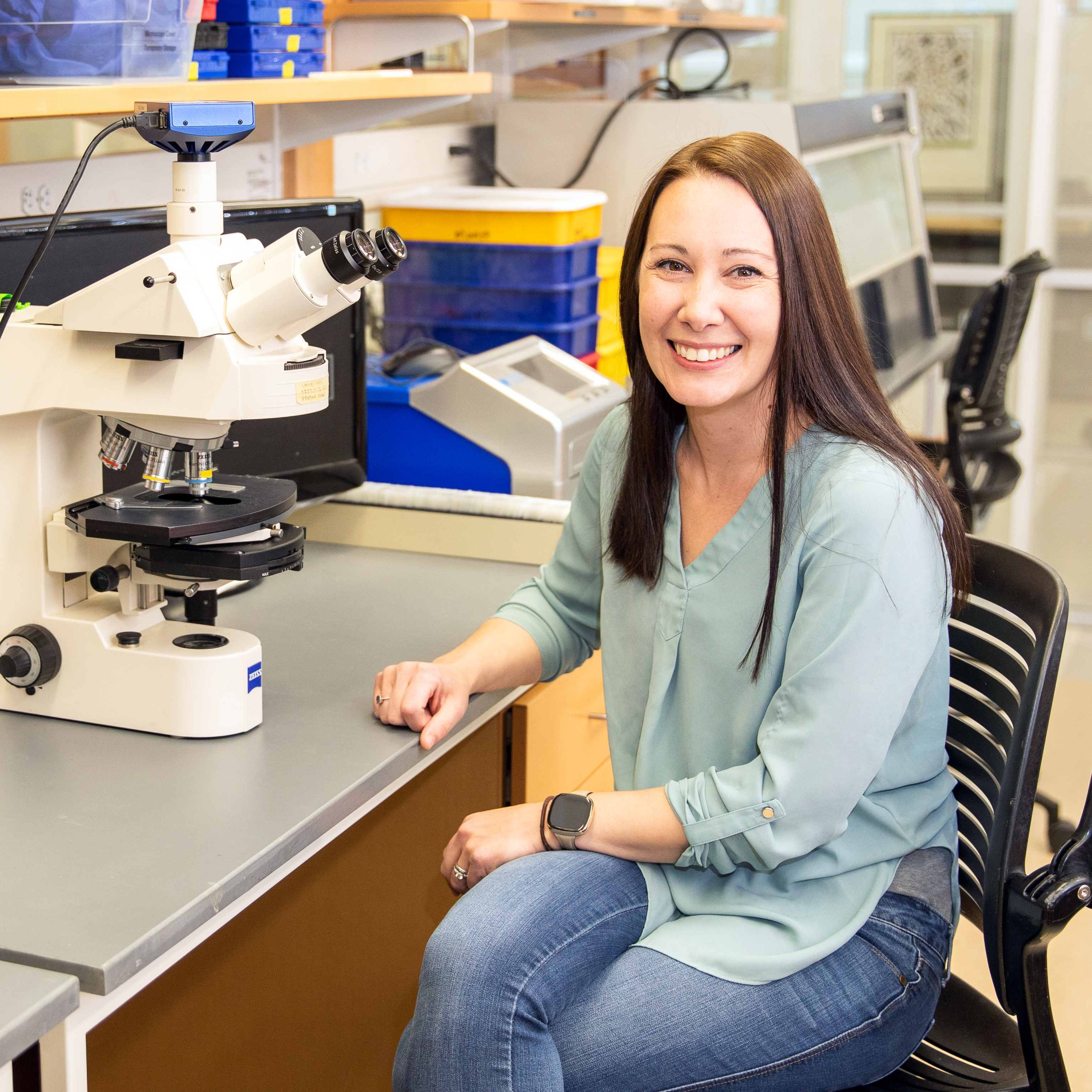


Protocol Citation: Tracy Larson 2026. BrdU and HuC/D Immunohistochemistry: Chromogen detection of thaw-mounted sections. protocols.io https://dx.doi.org/10.17504/protocols.io.14egn1r8zv5d/v1
License: This is an open access protocol distributed under the terms of the Creative Commons Attribution License, which permits unrestricted use, distribution, and reproduction in any medium, provided the original author and source are credited
Protocol status: Working
We use this protocol and it's working
Created: March 02, 2026
Last Modified: March 03, 2026
Protocol Integer ID: 244275
Keywords: neural precursor cells, radial glia, neurons, neurogenesis, immunohistochemistry, chromogen stain, dual stain, neural progenitor cell, proliferating neural progenitor cell, degree neural progenitor cell, neuronal progeny, survival of neuronal progeny, chromogen detection of thaw, labels neuron, chromogen detection, stickleback fish, neurons within the nervous system, generated neuron, dividing cell, birth marker, several songbird species, cell, brdu
Funders Acknowledgements:
NIGMS
Grant ID: 1R35GM150562
Abstract
The purpose of a BrdU and HuC/D dual-stain is to identify proliferating neural progenitor cells and recently generated neurons within the nervous system. By combining a "birth marker" (BrdU, labels dividing cells) with a “cell-type marker" (HuC/D, labels neurons), researchers can identify where, when and to what degree neural progenitor cells are proliferating and track the location and survival of neuronal progeny. This protocol has been validated in several songbird species, zebrafish, and stickleback fish.
Materials
Solutions and reagents:
10xPBS, phosphate buffered saline
To make 1 L of 10x stock:
- NaCl 80.0 g
- KCl 2.0 g
- Na2HPO4 14.4 g
- KH2PO4 2.4 g
- distilled water to 1.0 L
- pH to 7.4
*Dilute to 1x working concentration with distilled water
Immunoblock
- NGS (heat inactivated) 5 mL
- 1x PBS to 100 mL
*Store at -20C long-term. Keep at 4C for up to a week of use.
10xPDTX, phosphate buffered saline
To make 1 L of 10x stock:
- NaCl 80.0 g
- KCl 2.0 g
- Na2HPO4 14.4 g
- KH2PO4 2.4 g
- Triton-X 50 mL
- DMSO 50 mL
- distilled water to 1.0 L
- pH to 7.4
*Dilute to 1x working concentration with distilled water
Endogenous Peroxidase Solution
- 30% H2O2 50 ul
- PBS to 50 ml
*Make fresh just before use
DAB (Brown) Stain
- DAB (40 mg/mL) 300 ul
- 30% H2O2 30 ul
- 1x PBS to 30 mL
*Make fresh just before use and pH should be around 7.5
DAB with Nickle(Black) Stain
- DAB (40 mg/mL) 300 ul
- 30% H2O2 30 ul
- 0.5% nickle solution 3 ml
- 1x TBS to 30 ml
*Make fresh just before use and pH should be around 7.5
0.5% Nickle Solution
- nickle sulfate 0.5 g
- distilled water 100 mL
*pH to around 8
10x TBS
- Tris-base 30 g
- NaCl 80 g
- KCl 2 g
- dH2O to 1L
*pH to 7.6, dilute to 1x working concentration
Safety warnings
DAB is a carcinogen and should be handled with appropriate PPE and waste handling procedures.
Before start
For positive control of BrdU incorporation and staining, collect and section gut tissue from an animal of the same
species pulsed with a 2 hr pre-pulse of BrdU. Cross sections of tissue will contain rings of dividing cells that can visualized by eye during chromogenic staining.
Antigen Retrieval and Blocking Endogenous Activity
Fix thaw mounted, 40uM thick sections for 15 minutes at room temperature in 4% paraformaldehyde
Remove fixative and incubate slides with 100% MEOH 30 min at -20C
Re-hydrate, 3 min each:
75% MEOH, 25% 1x PBS
50% MEOH, 50% 1x PBS
25% MEOH, 75% 1x PBS
100% 1x PBS, two times
Wash with water briefly (less than 1 min)
Treat with 2N (2M) HCl for 30-40 min at 37C to denature DNA
Note: Make fresh dilution from stock 10M HCl, diluting 1:5 (add HCl to water to reduce thermic reaction)
Rinse in 1x PDTX, two times for 10 min
Incubate in peroxidase solution to remove endogenous peroxidase activity from tissue. Be sure to mix solution well and incubate tissue in solution for 30 minutes. Periodically reduce bubbles formation by tapping coplin jars on counter.
Rinse in 1x PDTX, two times for 10 min
Prepare incubation chamber: using a flat bottom food storage container (with lid), place a pre-fit eggcrate lighting louver over paper towels into chamber. Pre-wet with PBS.
Block endogenous avidin and biotin activity with the Avidin Biotin kit (Vector). Dilute 4 drops per 1mL in PBS, adding 400ul to each slides laid flat on top of louver in chamber. Incubate for 30-45min, sequentially with a rinse of PDTX rinse in between the incubations.
Rinse in 1x P, two times for 10 min
Antibody #1
Block with 5% Immunoblock for 1 hours at room temperature
Incubate with mouse-anti-Brd-U (1:350, DSHB G3G4) in 5% Immunoblock for 2 hrs at room temperature or overnight at 4C. For all antibody incubations, apply 200uL of slides laying flat in incubation chamber. Coverslip with plastic coverslips or pre-cut parafilm to prevent tissue from drying.
Remove coverslips and rinse in 1x PDTX four times for 15 minutes each. While removing coverslips, apply 500uL to the edges and "float" the coverslip up off the tissue. Tip the slide and the coverslip should slide off. If the coverslip does not slide off, gently grab and edge and lift coverslip at an angle.
Incubate for 2 hours at room temperature or overnight at 4C with biotinylated goat-anti-mouse antibody (Vector; 1:200) in 5% immunoblock
Rinse four times in 1x PDTX for 15 minutes each
Incubate for 45 minutes at room temperature, with ABC-elite mix. As per the manufacturer's instructions, mix solution 30 min in advance to “activate” by adding 1drop of A, 1 door of B per 5mL of 1x PBS. Incubate with slides in incubation chamber, with 400uL pipetted onto each slide.
Remove slides from the incubation chamber and rinse three times in 1x PDTX for 15 minutes each
Rinse one time in 1x PBS for 10 minutes
Mix DAB staining solution with nickel and immediately add 800-1000uL to each slide. Watch for desired staining using the positive control of one slide of BrdU-labeled gut tissue. Once preferred staining is achieved, stop the reaction by dipping in H2O.
Note: use a dedicated incubation chamber with louver to prevent contamination with DAB (a carcinogen). Use appropriate PPE and waste handling procedures.
Return slides to coplin jars and rinse in 1x PDTX four times for 15 minutes each
Antibody #2
Incubate with mouse-anti-HuC/D (Invitrogen A21271, 1:100) in 5% Immunoblock for 2 hrs at room temperature or overnight at 4C
Rinse three times in 1x PDTX for 15 minutes each
Incubate for 2 hours in room temperature or 4C overnight with biotinylated goat-anti-mouse antibody (Vector; 1:200) in 5% immunoblock
Rinse three four in 1x PDTX for 15 minutes each
Incubate for 45 minutes in room temperature with ABC mix, as above
Return slides to coplin jars and rinse three times in 1x PDTX for 15 minutes each
Rinse in 1x PBS for 10 minutes
Apply 800-1000uL of DAB staining solution without nickel to each slide. Watch for desired staining under the stereoscope. Once preferred staining is achieved, stop the reaction by dipping in H2O.
Mounting Slides
In a fume hood:
75% ethanol for 3 minutes
95% ethanol for 3 minutes
100% ethanol for 3 minutes
Xylene for 2 minutes
Apply a sufficient amount of DPX Mountant to each slide and gently lay a No.1 22x60mm glass coverslip on top of DPX. Gently adjust coverslip to ensure that it is not hanging over any edges. Note: place slides prior to DPX onto cardboard covered with two paper towels. Tape the edges of the towels so they are taught. These paper towels prevent slides from sticking to surface.
Leave in fume hood at room temperature for slides to dry, keeping flat. If paper towel or extra DPX remains on glass after dry, it can be removed by scraping off with a razor blade.
Protocol references
Larson TA, Thatra NM, Hou D, Hu RA, Brenowitz EA. (2018) Seasonal changes in neuronal turnover in a forebrain nucleus in adult songbirds. J Comparative Neurology 1–13. doi: 10.1002/cne.24552
Larson TA, Thatra NM, Lee B, Brenowitz EA. (2014) Reactive neurogenesis in response to naturally occurring apoptosis in an adult brain. The Journal of Neuroscience 34(39): 13066-76 doi:10.1523/JNEUROSCI.3316-13.2014
Larson TA, Tokareva Y, Meritt Cole M, Brenowitz EA. (2020) Inflammation induced by natural neuronal death and LPS regulates neural progenitor cell proliferation in the healthy adult brain. eNeuro doi:10.1523/ENEURO.0023-20.2020