May 06, 2026
Basic Use of Dewalt DW716 Miter Saw in Biological and Agricultural Engineering Labs (BAEL)
- Lee Schrader1,
- Eric McLamore1
- 1Biological and Agricultural Engineering, University of Arkansas
- SNAPS research group



Protocol Citation: Lee Schrader, Eric McLamore 2026. Basic Use of Dewalt DW716 Miter Saw in Biological and Agricultural Engineering Labs (BAEL). protocols.io https://dx.doi.org/10.17504/protocols.io.dm6gp7pdpgzp/v1
License: This is an open access protocol distributed under the terms of the Creative Commons Attribution License, which permits unrestricted use, distribution, and reproduction in any medium, provided the original author and source are credited
Protocol status: Working
We use this protocol and it's working
Created: May 06, 2026
Last Modified: May 06, 2026
Protocol Integer ID: 316461
Keywords: basic use of dewalt dw716 miter saw, dewalt dw716 miter saw, agricultural engineering lab, basic operating procedure, bael
Abstract
This protocol provides basic operating procedures for safe and effective use of a Dewalt DW716 Miter Saw in a student machine shop setting. It outlines required materials, safety precautions, and step-by-step instructions for making accurate crosscuts and angled cuts.
Guidelines
- Only trained users may operate the miter saw
- Always wear appropriate personal protective equipment (PPE)
- Maintain a clean and organized workspace
- Inspect all materials and equipment before use
- Use the correct blade for the material being cut
Materials
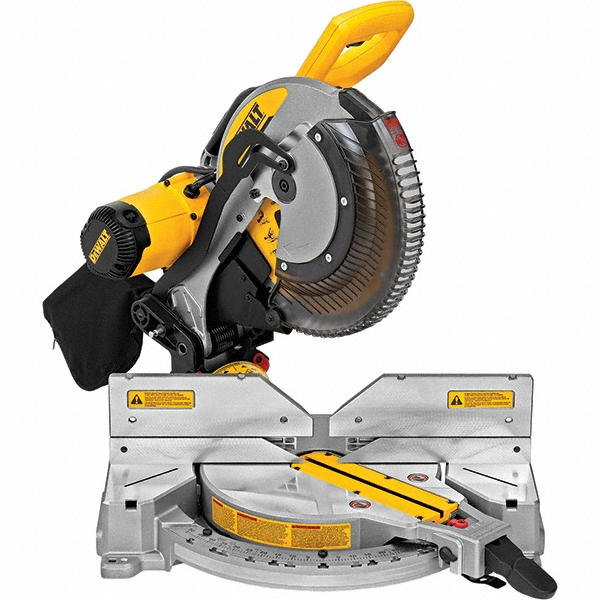
- DeWALT DW716 Miter Saw, 12 in Dia Blade, 2 x 8 in 45 deg, 2 x 10 in at 90 deg Cutting Capacity, 3800 rpm Speed
- Appropriate saw blade
- Workpiece material (wood, plastic, etc.)
- Clamps (if needed for stability)
- Measuring tape or ruler
- Pencil for marking cuts
Personal Protective Equipment:
- Safety glasses
- Closed-toe shoes
- Hearing protection (recommended)
Safety warnings
Follow all safety signs. Safety Goggles are Mandatory. No loose clothing allowed.
In addition:
- Never place hands within 6 inches of the blade path
- Do not operate the saw without the blade guard in place
- Always wait for the blade to reach full speed before cutting
- Never cut freehand- material must be firmly held against the fence
- Do not reach across the blade while it is moving
- Allow blade to come to a complete stop before lifting it
- Disconnect power before making adjustments or changing blades
- Check to make sure all latches are securely engaged
- Do not use if stand is not stable and level (or moves in any way when nudged)
- Provide extra support for large or long workpieces when cutting
- Do not exceed maximum load of 200 pounds on work table
Before start
- Verify the saw is unplugged before inspection
- Inspect blade for damage, dullness, or debris
- Ensure blade guard moves freely and returns automatically
- Confirm fence and table are clean and aligned
- Check that material is free of nails, screws, or defects
- Adjust miter and bevel angles as needed before powering on
- Always adjust fence properly before use
- Clamp small pieces before cutting
PPE Check
Ensure that you have all Personal Protective Equipment (PPE)
- Safety glasses
- Closed-toe shoes
- Hearing protection (recommended)
5m
Setup equipment
- Check electrical cable and be sure it is free from damage (e.g., exposed wire)
- If necessary, plug in the saw to a 120V 60Hz outlet.
- Ensure stable placement of the miter saw on the workbench (equipment should not be wobbling with a gentle shake)
2m
Position saw
- (optional): If cutting material at an angle, set desired miter angle (left/right rotation) (Fig 1A)
- (optional): If cutting material at an angle, set bevel angle if required (tilt of blade) (Fig 1B)
- Using a pencil or marker, mark cut line(s) clearly on the material.
Figure 1. Position saw for: A) Left/right rotation by adjusting miter angle and B) Tilt of blade by adjusting bevel angle.
2m
Position material
- Place material flat on the table
- Use one hand to securely hold the workpiece against the fence (Fig 2A). Use the other hand to operate the saw handle
- Align blade with cut mark (without powering on saw)
- (optional): Use clamps to firmly position material
Note
Critical note: Do not cut extremely small pieces that cannot be safely secured. It is highly recommended to use clamps for securing workpiece
Figure 2. Position material against the fence
3m
Perform cut
- Raise the blade clear of the material before starting the saw
- Press and hold the trigger to start the blade
- Allow blade to reach full speed.
Note
Critical note: Listen for a constant hum from the motor. If the motor sounds abnormal, slows unexpectedly, vibrates excessively, or struggles during cutting, stop immediately and notify shop personnel.
- Double check that no loose clothing may interact with the saw
- Keep hands away from the sawblade at all times
- Using right hand, slowly lower the blade through the material
- Maintain steady pressure-do not force the cut
- Complete the cut thorugh the material
- Release the trigger to stop the blade
- Allow the blade to stop before raising it.
5m
Finish Cut
- Keep blade down until it stops spinning
- Raise blade slowly after it has stopped
- Remove material carefully
- Inspect cut for accuracy
2m
Clean Up
- Turn off power to the saw
- Remove debris from table and surrounding area
- Inspect cord for damage and store neatly away from walkways
- Store equipment properly
- Return reusable PPE (e.g., safety glasses, hearing protection) to proper location
5m
Acknowledgements
We acknowledge the Biological and Agricultural Engineering Department at the University of Arkansas for funding and support.