Jun 12, 2023
Version 1
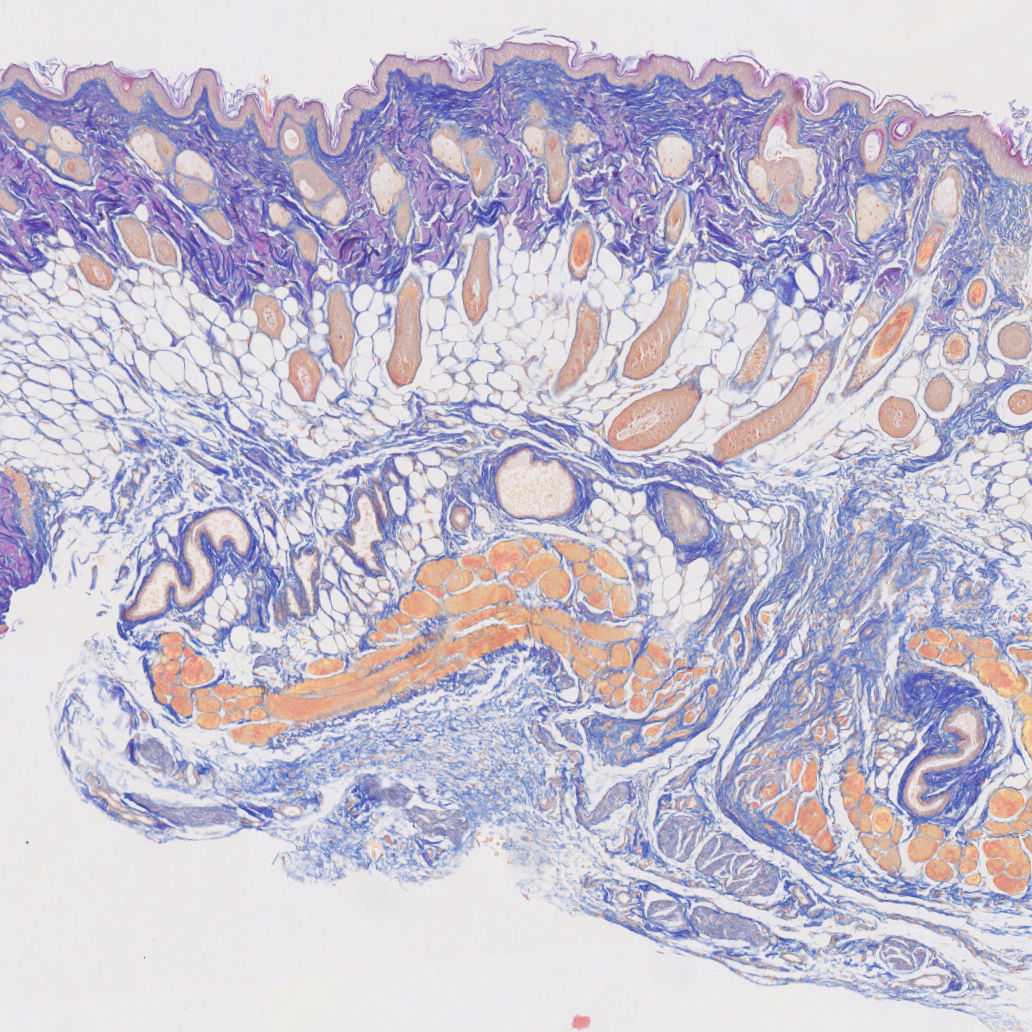
- 1iMM



Protocol Citation: joana.antunes 2023. AFOG. protocols.io https://dx.doi.org/10.17504/protocols.io.bp2l6xkrzlqe/v1
License: This is an open access protocol distributed under the terms of the Creative Commons Attribution License, which permits unrestricted use, distribution, and reproduction in any medium, provided the original author and source are credited
Protocol status: In development
We are still developing and optimizing this protocol
Created: June 12, 2023
Last Modified: June 12, 2023
Protocol Integer ID: 83248
Keywords: dyes any protein deposit, affinity for phosphomolybdic acid, amphoteric dye, phosphomolybdic acid, macromolecules of the tissue, acid fuchsin, agent between tissue structure, staining technique, dye, protein deposit, afog solution, macromolecule, tissue structure, second component of an afog solution, acid, protein, tissue, ischemic cardiac lesion, collagen, particular the regeneration, cell membrane, afog
Abstract
Staining technique largely used to diagnose ischemic cardiac lesions and kidney diseases, in particular the regeneration or scarring of the lesion. The selectivity in this method is due to the different affinity degrees between dyes and the macromolecules of the tissue. A key role is played by phosphomolybdic acid, which acts as a binding agent between tissue structures (collagen, fibrils, cell membranes) and aniline blue (amphoteric dye). Orange G, which is the second component of an AFOG solution, has no affinity for phosphomolybdic acid, and this is why it is used to stain all remaining structures. Acid fuchsin, conversely, dyes any protein deposits selectively.
Protocol materials
1X PBS (Phosphate-buffered saline )
Distilled Water
Bouins solution
Preparation
1h 30m
Warm the cryosections from the -80º freezer toRoom temperature 00:30:00 ;
30m
If gelatin embedded tissue, incubate in 1X PBS (Phosphate-buffered saline ) 00:15:00 37 °C ;
15m
Fix the slides in 4% PFA for 00:05:00 Room temperature
Note
Apply the PFA directly to the slides (PFA 4% can be reused, store at 4ºC)
5m
Wash 1x in 1X PBS (Phosphate-buffered saline ) 00:05:00
5m
Wash 2x in Distilled Water 00:05:00
5m
Heat Bouins solution 60 °C 00:30:00
30m
Staining
Place the slides in Bouin’s solution for 2h at 60ºC;
Continue to stain in Bouin’s solution for an additional 1h at room temp (can be reused 3 times);
Wash slides with dH2O 5-6 times for 5 min until the water comes out clear;
Rinse slides in 1% Phosphomolybdic acid for 5 min (can be reused 2 times);
Rinse slides in dH2O for 5 min;
Rinse slides in AFOG staining solution for 10min (can be reused);
Rinse slides in dH2O for 2 min;