Jul 04, 2025
A modified CTAB method for the simultaneous extraction of host and pathogen total RNA of inoculated conifer plants
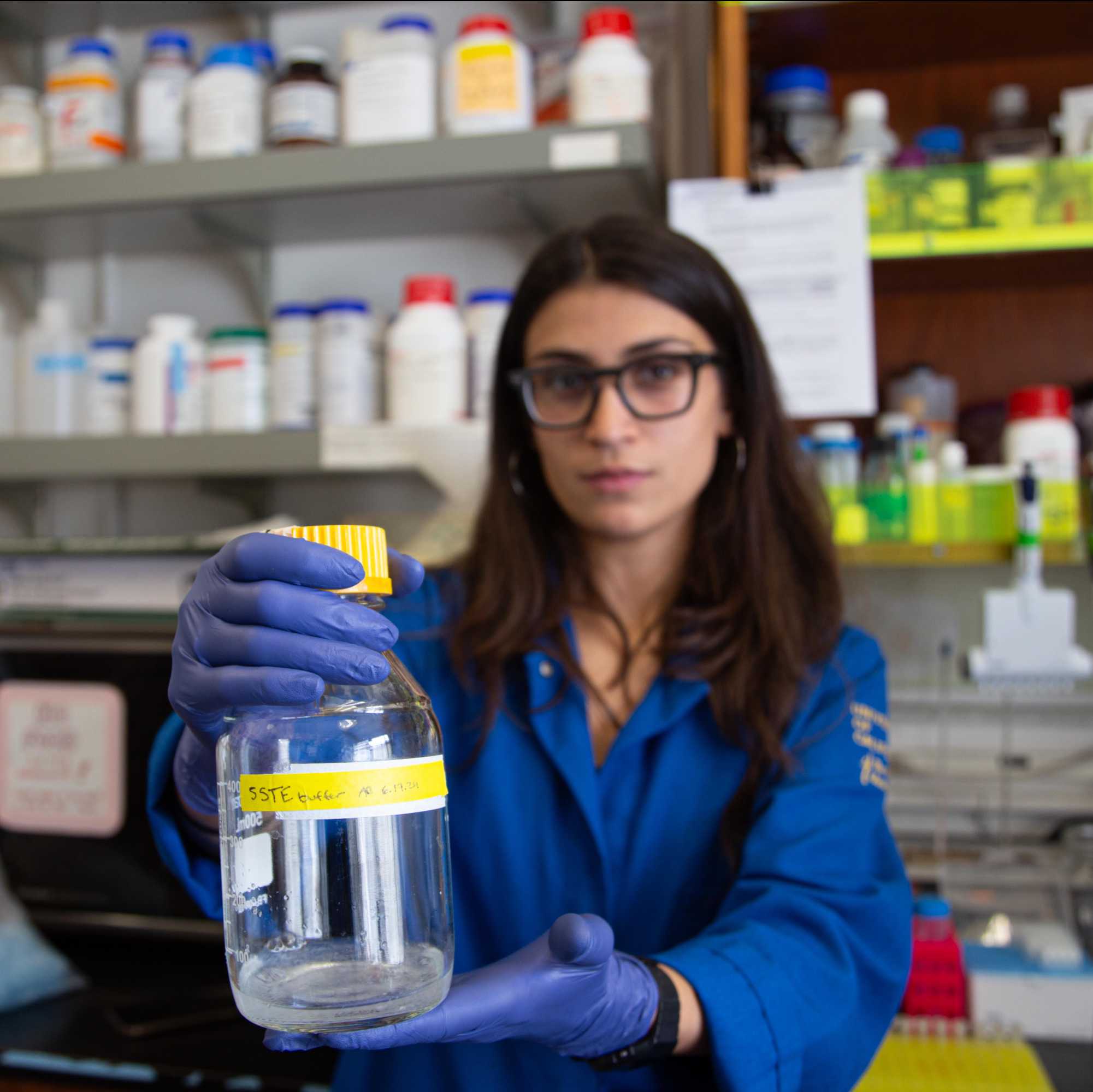
- Clarissa Lopez Del Visco1,
- Edoardo Scali1
- 1University of California, Berkeley
- Edoardo Scali: Corresponding author


Protocol Citation: Clarissa Lopez Del Visco, Edoardo Scali 2025. A modified CTAB method for the simultaneous extraction of host and pathogen total RNA of inoculated conifer plants. protocols.io https://dx.doi.org/10.17504/protocols.io.rm7vz9mr5gx1/v1
License: This is an open access protocol distributed under the terms of the Creative Commons Attribution License, which permits unrestricted use, distribution, and reproduction in any medium, provided the original author and source are credited
Protocol status: Working
We use this protocol and it's working
Created: July 02, 2025
Last Modified: July 04, 2025
Protocol Integer ID: 221626
Keywords: CTAB, RNA, plant tissue extraction, low-cost extraction, high yield extraction, rna with kit, pathogen total rna, rna, yield rna, causing pathogenic fungus, pathogenic fungus, transcriptomic, molecular interaction between cypress plant, causal agent of cypress canker disease, conifer plant, recalcitrant samples such as tree bark, pathogen interaction, total rna, inoculated conifer plant, field of forest pathology, forest pathology, molecular weight rna, ctab method for the simultaneous extraction, bark of tree, pathogen, inoculation of plant, tree bark, cypress canker disease, tree, method for the extraction, multiple applications in biology, ascomycete, cypress plant, extraction, simultaneous extraction, biological process, extract, cupressus semperviren
Abstract
High-quality and high-yield RNA is a powerful source of data that finds multiple applications in biology. Transcriptomics can be utilized to characterize biological processes of well studied systems, as well as non-model organisms. This can produce crucial information that may prove to be an insightful contribution to the field of biology.
In this protocol, we describe a method for the extraction of RNA targeting recalcitrant samples such as tree bark. A layer of living tissues lies below the bark of trees, and it is the area where many processes happen in the development of a tree. In this particular case, we applied this technique for the elucidation of the molecular interaction between cypress plants (Cupressus sempervirens) and the causal agent of Cypress Canker Disease (the ascomycetes fungus Seiridium cardinale).
After the inoculation of plants, and sample collection, we attempted to extract RNA with kits from different vendors, but all of them underperformed. With this protocol, we were able to obtain high-quality and high-molecular weight RNA, suitable for downstream applications. Ultimately, this method has proven to be reliable, low-cost and exceptionally successful.
The outcome of this procedure has allowed us to characterize host-pathogen interaction in a non-model pathosystem. Moreover, we contributed to the field of forest pathology by providing insights pertaining to the molecular interaction between a conifer plant and a canker-causing pathogenic fungus.
Image Attribution
Edoardo Scali
Guidelines
This protocol describes the process necessary for an RNA extraction. The method presented here is based on the protocol described in Chang et al., 1993. This workflow is suitable for obtaining RNA from all plant tissue (e.g. leaves, root, bark), and was specifically designed for conifer trees. It can be used for other plant species and performs well even when attempting to extract RNA form tissue coming from non-plant organisms. The total RNA obtained allows for the downstream applications in transcriptomics analyses, providing samples of high-molecular weight. It is suitable for the application of Dual RNA-seq techniques, in which plant tissues are inoculated with a pathogen.
Materials
Lab Equipment
- Refrigerated microcentrifuge
- Set of pipets (P-1000, P-200, P-20, P-2)
- 50 ml Falcon tubes
- 15 ml Falcon tubes
- 1.5 ml Eppendorf tubes
- 2 ml Eppendorf tubes
- Liquid Nitrogen (LN2)
- Cryo-gloves and goggles for steps involving LN2
- Long forceps for submerging tubes in the LN2
- Autoclave-safe mortar and pestle (we recommend a set of at least 12 so you can work in rounds of 12 samples if processing a large amount)
- Spinner
- Vortex
- Magnetic rack
Chemical preparation
Note: the SSTE buffer, CTAB buffer, and LiCl solution must be mixed and autoclaved before use.
- DEPC treated H2O
- Chloroform:Isoamyl Alcohol (24:1)
- SSTE Buffer:
- 1 M NaCI
- 0.5% SDS
- 10mM TrisHCl (pH 8.0)
- 1mM EDTA (pH 8.0)
- CTAB Extraction Buffer:
- 2% PVP (polyvinylpyrrolidone K 30)
- 100 mM Tris-HCl (pH 8.0)
- 25 mM EDTA
- 2 M NaCl
- 2.67% ß-mercaptoethanol (add just before use)
- 10 M Lithium Chloride solution
- SPRI bead
Safety warnings
This protocol involves the use of harmful chemicals such as beta-mercaptoethanol and chloroform-isoamil alcohol.
It is strongly advised to always work under a chemical hood when handling such harmful chemicals. In particular, wear a mask and double nitrile gloves when handling the chloroform-isoamil alcohol.
It is recommended to place the centrifuge under the chemical hood to avoid exposure to toxic aerosols.
If spilling occurs, act accordingly to your institution's safety guidelines.
Before start
Make sure to work in a clean environment.
Make sure that your laboratory has a well-functioning chemical hood, it is important to utilize it for steps involving beta-mercaptoethanol and chloroform-isoamil alcohol.
Place your centrifuge under the chemical hood in order to avoid inhalation of harmful aerosols.
Clean all bench-tops, centrifuge, and pipet set, with 70% Ethanol and RNAse zap.
Always use filtered pipet tips.
Always use DEPC nuclease-free water for reagent preparations, RNA pellet suspension, and dilutions.
Sample preparation
Assuming that sampling has been done and that tissue collected has been flash frozen by immersion in liquid nitrogen (LN2), and stored in a -80ºC freezer, this first step requires a mortar and pestle as well as LN2.
Before starting: sterilize mortar and pestle in autoclave. We recommend working in batches of 12 or 24 samples so you will need an equal amount of mortar and pestles.
Place the frozen samples' tissue in mortar and pour LN2, careful to not cause tissue to jump out of the mortar.
Use the pestle to grind the sample. It is recommended to keep grinding the sample until a very fine powder is obtained. If needed, gradually add LN2 while grinding to maintain low temperature.
Put the powder in a new sterile vial. A screw cap vial, such as Falcon 15mL tubes is recommended as microcentrifuge tube caps may suddenly pop when re-exposed to room temperature after staying in very low temperatures. NOTE: Glass tubes are also challenging because ink, tape, or stickers to ID samples don't work at very low temperatures.
Store the ground samples in a -80ºC freezer.
Extraction
10m
NOTE: because of the overnight precipitation, it is recommended to start this process in the afternoon.
Before starting: preheat a water bath and a dry thermal bath, both at 65ºC.
Heat the CTAB extraction buffer at 65ºC.
Take samples from the -80ºC freezer and place them on ice or a cool rack.
Inside the chemical hood, add beta-mercaptoethanol 2.67% (20 μL) to each sample.
Add 750 μL of warm CTAB extraction buffer to each sample.
Mix by inverting the tubes, ensuring that the buffer thoroughly makes contact with all of the powdered tissue. Do not shake.
Incubate samples in dry thermal bath for 10 minutes; mix by inverting tubes after 5 minutes. Do not shake.
10m
Washing
20m
Perform the first washing.
Bring the samples back to the chemical hood. Add 750 μL of chloroform:isoamil alcohol (24:1) (CHISAM) to each sample.
Mix by inverting the tubes. Do not shake.
Centrifuge at 4,500 rpm for 20 minutes at room temperature. It is preferable to place centrifuge in chemical hood for the remainder of the extraction process.
Prepare new set of 2mL microcentrifuge tubes.
20m
Collect the supernatant and transfer into the new 2mL microcentrifuge tubes. At this stage, it's not a problem if some plant material ends up with the collected supernatant. Dispose of the remaining liquid.
Perform the second washing.
Add 750 μL of CHISAM to each sample.
Centrifuge at 4,500 rpm for 20 minutes at room temperature.
Prepare new set of 2mL microcentrifuge tubes.
Collect the supernatant and transfer into the new 2mL microcentrifuge tubes. Again, dispose of the remaining liquid.
Overnight precipitation
To each sample, add 1/4 volume of Lithium Chloride (LiCl) 10M.
Place each tube in a styrofoam box filled with ice.
Place the box in a 4ºC freezer or a 4ºC cold room, and leave samples to decant overnight.
Pellet precipitation
30m
Before starting:
1) Preheat a water bath and a heat block at 60ºC.
2) Heat the SSTE buffer at 60ºC.
3) Cool the centrifuge at 4ºC.
Centrifuge samples at 10,000 rpm for 30 minutes at 4ºC.
30m
Remove samples and place them in a styrofoam box filled with ice.
Pellet re-suspension
10m
Add 700 μL of warm SSTE buffer. If needed, pipet to mix the buffer inside the tube and re-suspend the pellet by disturbing it. At this stage, the pellet may be a dark visible brown or a very faint, clear smudge. It is not uncommon to not see the pellet at all.
Incubate samples at 60ºC for 5-10 minutes to re-suspend the pellet.
10m
Washing
20m
Perform the third washing.
Bring the samples back to the chemical hood. Add 700 μL of CHISAM to each sample.
Mix by inverting the tubes. Do not shake.
Centrifuge at 4,500 rpm for 10 minutes at room temperature.
Prepare new 2mL microcentrifuge tubes.
10m
Collect the supernatant and transfer into the new 2mL microcentrifuge tubes. Dispose of the remaining liquid.
Perform the fourth washing.
Add 700 μL of CHISAM to each sample.
Mix by inverting the tubes. Do not shake.
Centrifuge at 4,500 rpm for 10 minutes at room temperature.
Prepare new set of 2mL microcentrifuge tubes.
10m
Collect the supernatant and transfer into the new 2mL microcentrifuge tubes. Dispose of the remaining liquid.
Ethanol wash
1h 34m
Add 2 volumes of cold absolute ethanol.
Incubate at -80ºC for 1 hour.
NOTE: now is a convenient time to prepare the gel for imaging the extracted product.
In the meantime, cool down the centrifuge to 4ºC.
1h
Centrifuge samples at 13,000 rpm for 30 minutes at 4ºC.
30m
Carefully discard the supernatant and place tubes in ice or cold rack.
Tip: do not tilt the tube too quickly to avoid disturbing the pellet; do not tilt more than 90º. At this stage, the pellet should appear as a small, clear or white smudge.
Gently wash with 700 μL of cold 70% ethanol.
Centrifuge samples at 10,000 rpm for 2 minutes at 4ºC.
2m
Gently discard the supernatant and place tubes in ice or cold rack.
Centrifuge samples at 10,000 rpm for 2 minutes at 4ºC.
2m
Gently discard the supernatant and let the tubes air dry in the hood. You can use a P20 pipet to gently remove the excess ethanol to advance the drying stage.
Elution
When the pellet is dry, add 25-50 μL of DEPC H2O.
Note: The amount of water used to elute the samples depends upon the concentration of RNA you expect to obtain. It is recommended to have at least 100 ng/μL to start preparing the library.
Store samples in -80ºC freezer.
Final notes
- This is a very lengthy extraction and takes some time to master. Begin with extracting a small set of just a few samples to gain familiarity with this procedure before increasing to sets of 24 samples.
- It is recommended have a rough estimate of the concentrations and quality by measuring with Nanodrop. For more accurate quantifications, use Qubit.
- It is recommended to make gel images for each extracted sample.
- Before proceeding with library preparation, we suggest measuring RNA integrity with bioanalyzer.
Extra: RNA beads clean up
27m
Note: This last step covers a cleanup procedure using enzymatic DNA digestion and beads. Make sure to bring SPRI beads to room temperature; vortex thoroughly to ensure that the breads are fully resuspended.
Dilute your samples to a concentration of 16.6 μL in 100 μL volume. This amount can be adjusted accordingly with the RNA yield that you have obtained. We recommend obtaining > 1000 ng of total RNA in 100 μL before starting with the clean up process.
Add 1 μL DNAse of your choice and 10 μL of 10x buffer from your DNAse kit.
Incubate at 37º C for 10 minutes.
10m
Add 200 μL (2x volume) of SPRI beads. Mix on touch vortex and spin down.
Incubate at room temperature for at least 5 minutes to maximize recovery.
5m
Carefully place samples on a magnet rack for 5 minutes or until the beads have been fully collected on the tube wall and the solution is visibly clear. You may notice that some beads remain fixed at the bottom of the tube. We recommend gently moving the tube up and down to guide all the beads to the magnet point at the side of the tube in order to maximize RNA recovery.
5m
Remove all supernatant, making sure not to touch the beads. Dispose of the supernatant.
Add 200 μL of freshly prepared 80% ETOH. Again, take care not to disturb the beads.
Incubate at room temperature for 2 minutes without removing the tubes from the magnet or disturbing the beads.
2m
Carefully remove and discard the ETOH.
Repeat steps 15.8 to 15.10 for a total of 2 washes.
Allow remaining ETOH to evaporate by air drying the beads for 3-5 minutes. The beads are sufficiently dry when cracks begin to appear in the bead pellet and no visible liquid remains.
5m
Re-suspend beads in 32 μL of H2O.
Incubate at room temperature for 2 minutes.
Place samples on magnet until supernatant is clear. Again, you may need to guide remaining beads at the bottom to join at the magnet on the side of the tube.
Transfer 30 μL of supernatant to new tube.
Final remarks
At this point the RNA is purified and ready to be used for library preparation.
Protocol references
Chang, S., Puryear, J. & Cairney, J. A simple and efficient method for isolating RNA from pine trees. Plant Mol Biol Rep 11, 113–116 (1993). https://doi.org/10.1007/BF02670468