Dec 30, 2025
A 38-plex PCR MALDI-TOF MS-based assay to detect SNPs common in elite athletes
Peer-reviewed method
- Miftahul Zannah1,
- Ioannis Papadimitriou2
- 1Graduate Program in Molecular Medicine, Faculty of Science, Mahidol University, Bangkok, Thailand;
- 2Department of Physiology, Faculty of Science, Mahidol University, Bangkok, Thailand
- Ioannis Papadimitriou: Corresponding author;
- PLOS ONE Lab ProtocolsTech. support email: [email protected]



External link: https://doi.org/10.1371/journal.pone.0339384
Protocol Citation: Miftahul Zannah, Ioannis Papadimitriou 2025. A 38-plex PCR MALDI-TOF MS-based assay to detect SNPs common in elite athletes. protocols.io https://dx.doi.org/10.17504/protocols.io.eq2ly4b5elx9/v1
Manuscript citation:
Zannah M, Papadimitriou I (2025) A 38-plex PCR MALDI-TOF MS-based assay to detect SNPs common in elite athletes. PLOS One 20(12). doi: 10.1371/journal.pone.0339384
License: This is an open access protocol distributed under the terms of the Creative Commons Attribution License, which permits unrestricted use, distribution, and reproduction in any medium, provided the original author and source are credited
Protocol status: Working
We use this protocol and it's working
Created: November 03, 2025
Last Modified: December 30, 2025
Protocol Integer ID: 231971
Keywords: DNA isolation, Amplification, Dephosphorylation, snps common in elite athlete, high prevalence among elite power athlete, elite power athlete, athletic performance, elite athlete, elite athletic status, prevalent in elite athlete, targeted snp, specific physical fitness characteristic, influence on specific physical fitness characteristic, multiple such snps with the aim, multiple such snp, muscle power, muscle power production, potential influence on muscle power production, physical fitness, such as muscle power, snp, speed gene study, nucleotide polymorphism, specificity of multiplex pcr, plex pcr amplification, exploring genetic factor, various sport, multiplex pcr amplification, suitability for multiplex pcr amplification, strength, flight mass spectrometry, genetic factor, endurance, wide association study
Funders Acknowledgements:
All chemical consumables for this study were covered by Faculty of Science Mahidol University and corresponding author’s Early Career Research Grand A35/2562.
Grant ID: A35/2562
Abstract
There is great demand for a novel technique to facilitate the rapid identification of multiple single-nucleotide polymorphisms (SNPs) prevalent in elite athletes. Case-control and genome-wide association studies (GWAS) have been conducted to investigate an individual’s likelihood for success in various sports, revealing several putative loci associated with elite athletic status. However, it remains challenging to simultaneously detect multiple such SNPs with the aim of examining their influence on specific physical fitness characteristics, such as muscle power, strength or endurance. Here we developed a 38-plex PCR amplification assay, integrated with matrix-assisted laser desorption/ionization time-of-flight mass spectrometry (MALDI-TOF MS), for the identification of 38 SNPs linked to elite athletic performance within a single 38-plex reaction. The SNPs were chosen based on their high prevalence among elite power athletes, potential influence on muscle power production, and suitability for multiplex PCR amplification. The developed protocol simultaneously detected the targeted SNPs in a single tube, using a minimum DNA concentration of 10 ng/μL and achieving a total sample call rate of 93.13%. With further research this new protocol—which integrates the specificity of multiplex PCR and the sensitivity of MALDI-TOF MS—may offer a unique opportunity to deepen our understanding of the genetic basis of physical fitness and may have prospective applications in research initiatives exploring genetic factors that influence athletic performance, e.g. the Speed Gene Study [1].
Guidelines
With further research this protocol can be used for generic profiling of elite athletes.
Step 1: The DNA isolation
37m
Collect the blood (200 µL ) duals using spring loaded lancets with glass capillary tubes and store in EDTA tubes at 5 °C for a maximum of 3 days prior to DNA extraction.
Extract the DNA from white blood cells utilizing bead-based DNA separation methods with the Sbeadex™ blood DNA Kit (Biosearch Technologies, Germany) as described below.
The magnetic rack and the kit were used for the DNA extractions.
Initially, add 1x volume of Lysis Buffer to 200 µL of fingertip blood, followed by the addition of 0.2x volumes of Protease K solution.
Thereafter incubate the samples at 55 °C for 00:20:00 with constant shaking.
20m
Allow the samples to cool briefly to Room temperature , after which add 1.8x the volume of Binding Buffer containing Sbeadex™ magnetic particles. Upon completion of this step, incubate the samples for 00:05:00 with continuous agitation and place into a magnetic rack, ensuring close proximity to the magnets.
5m
Subsequent to this step, discard the supernatant, remove the Eppendorf tube from the magnetic rack, and add 4x volume of Wash Buffer 1 to the sample, followed by 00:05:00 -00:10:00 incubation with constant shaking.
10m
After that, reposition the tube in the magnetic rack, ensuring close proximity to the magnets for approximately 00:02:00 .
2m
Then discard the supernatant, and remove the samples from the magnetic rack. This procedure was subsequently conducted once with the inclusion of Wash Buffer 1 & RNase solution, and once more with the addition of Wash Buffer 2.
Finally, add 0.25x-1x volume of Elution Buffer to the sample, which was then returned to the magnetic rack.
Meticulously transfer the elute to a new Eppendorf tube via pipetting, ensuring that all Sbeadex™ beads remained in the original tube.
Evaluate the quality of extracted DNA using a NanoDrop spectrophotometer (Thermo Fisher Scientific Inc., Massachusetts, United States). Choose the samples with an OD260/280 ratio ranging from 1.8 to 2.0 and an OD260/230 ratio within the range of 2.0 to 2.2 for the subsequent experiments.
The Nanodrop Spectrophotometer used for the experiment.
Step 2: Primer design
The primer design included obtaining a considerable amount of DNA sequences for every targeted locus from the NCBI genome database.
Subsequently align the DNA sequences using the CLUSTAL-W alignment software [2] to pinpoint highly conserved areas for primer design with the Assay Design 4.0 program (Agena Bioscience, Inc., California, United States).
The 104 primers synthesized and used in the experiment.
Enter all targeted gene sequences into the program, adhering to the manufacturer's guidelines. Moreover, the primer design method followed rigorous criteria to reduce primer-dimer formation, hairpin loops, and non-specific priming, hence guaranteeing the synthesis of excellent quality primers.
Furthermore, assess the specificity of the synthesized primers using the BLAST (Basic Local Alignment Search Tool) software to verify optimal primer specificity. Choose only primers demonstrating the maximum specificity for the multiplex PCR based protocol developed in this study.
It is essential to note here that manual modifications, including base alterations and primer sequence changes, were carried out when required to attain uniformity in guanine-cytosine content (%GC) values and melting temperature (Tm) among multiplex primers, hence optimizing PCR amplification protocol.
Synthesize all primers by Macrogen, Inc. in Seoul, Korea and their sequences are shown in Table 1.
| A | B | C | D | |
| Targeted SNPs | Forward Primer Sequence | Reverse Primer Sequence | Extended Primer Sequence | |
| rs10186876 | ACGTTGGATGGATCTCCAGGAGAGAATGTG | ACGTTGGATGTTCCCCAGGAGCTTGTTTTC | aaacTGTGGAGGAAAGTAGA | |
| rs11091046 | ACGTTGGATGGGATTATTCAGGCTTTAGGC | ACGTTGGATGCCTCCACTCAAGTGAAATGC | AGGAATATAATTTATAGC | |
| rs1137070 | ACGTTGGATGCTTAAATGGTCTCGGGAAGG | ACGTTGGATGCCAGAGTCACCAAACTTACC | tGGTGACCGAGAAAGA | |
| rs11549465 | ACGTTGGATGCTTCCAGTTAC GTTCCTTCG | ACGTTGGATGCTTTGAGGACTTGCGCTTTC | TCGATCAGTTGTCA | |
| rs12778366 | ACGTTGGATGGCTAAGGTCCTATCTACATC | ACGTTGGATGTAAGGCTTCTAGGACTGGAG | TCTTATTTCATCTGGTCACCACT | |
| rs13135092 | ACGTTGGATGCCGTCACATAAACAGAACC | ACGTTGGATGTTAGCTTGAAAGGGTGTTG | ggacGGGTGTTGAATTTTA | |
| rs143384 | ACGTTGGATGCGCTGAATGACACCAAAGAG | ACGTTGGATGCCTTTCATGGTTTTTCCTGC | ACCAGAGGCACCTT | |
| rs17602729 | ACGTTGGATGCTGACAAATGGCAGCAAAAG | ACGTTGGATGGCCACCATGATTACAGAAAG | gttaATACAGCTGAAGAGAAA | |
| rs1801131 | ACGTTGGATGCCGAGAGGTAAAGAACGAAG | ACGTTGGATGTCTACCTGAAGAGCAAGTCC | ggGACTTCAAAGACACTT | |
| rs1801282 | ACGTTGGATGGTTATGGGTGAAACTCTGGG | ACGTTGGATGGTTTGCAGACAGTGTATCAG | GGAGATTCTCCTATTGAC | |
| rs1805065 | ACGTTGGATGTCCAGGTGCCTTCTTGATCC | ACGTTGGATGCCAGCTCCATGTAGAACAG | CTTGATCCCGTACA | |
| rs1805086 | ACGTTGGATGGACGGGTCTCAAATATATCC | ACGTTGGATGGTGGATGGAAAACCCAAATG | agACAATACAATAAAGTAGTAA | |
| rs1815739 | ACGTTGGATGCGATCAGTTCAAGGCAACAC | ACGTTGGATGCAGATCTTCTGGATCTCACC | gACTGCCCGAGGCTGAC | |
| rs2070744 | ACGTTGGATGACTGTAGTTTCCCTAGTCCC | ACGTTGGATGAGGTCAGCAGAGAGACTAGG | CAAGCTCTTCCCTGGC | |
| rs2275998 | ACGTTGGATGCTACGTTATTACACCGACGC | ACGTTGGATGAAGCCTCATCTGCTAAGGTG | gcgtCCTAGCTCGTCCTAGGG | |
| rs2290463 | ACGTTGGATGAAGGTGGAGGTAAGGGCTG | ACGTTGGATGAGCATGAGGGCTCCCAACT | ccccTCCCCCCAGGTTGGA | |
| rs2439823 | ACGTTGGATGTAAGTGAGTGACAGGGAAGG | ACGTTGGATGAGACTATCTCACCTTTCAGC | ACCTTTCAGCTCTCTA | |
| rs2854464 | ACGTTGGATGGAATCCTGGTGGAAGTCTTG | ACGTTGGATGGATGCTGCTGAGGATGATG | GGCTGGCTCATTTCCCA | |
| rs2920503 | ACGTTGGATGCTCAGTGGGTTTTTCGAAC | ACGTTGGATGTTCTGGGACATTTTAATGG | cTTAATCTTGATTATATTCAA | |
| rs303760 | ACGTTGGATGTCTTCGATGAGGCCAACAAG | ACGTTGGATGGACAGGACAGGAGGGGACG | ggtaGCGCGGGACCGGCCTTGGC | |
| rs3213537 | ACGTTGGATGAAGAGGCCAGAGAGTATGAG | ACGTTGGATGGGGAGGAGAGAGCTTTTAAG | ATGAGGGTCATGGT | |
| rs3758391 | ACGTTGGATGGCCATAACAAACACTGGCTC | ACGTTGGATGGCACACTGTGACTCCATATC | CAAACACTGGCTCTAGATCTACCA | |
| rs4074992 | ACGTTGGATGTCATCGTCATGACCACCAG | ACGTTGGATGTTGGGCAGCCGAAGATGCAC | ttggGCGGTGCCAGTGCTC | |
| rs41274853 | ACGTTGGATGTCTTTGGTGGGTGGGTTAG | ACGTTGGATGGACACAATTTGTGGAGACCC | cGCCGCCCCCCAGCCCTG | |
| rs4253778 | ACGTTGGATGGGTGGAACACTTGAAGCTTG | ACGTTGGATGTTCTGGAGATCACAACCACC | ttttAAGCTTGATATCTAGTTT | |
| rs4734621 | ACGTTGGATGACCACCACACACAGCTAATC | ACGTTGGATGCAGCCTGGGCATTATAGTG | TGTTTATTTTTTTGTAGAAA | |
| rs55743914 | ACGTTGGATGACTTTCTTTCTTACTCTGC | ACGTTGGATGGTCAAGGCTCGTAAAGTCAG | gTTCTTACTCTGCATACAG | |
| rs558129 | ACGTTGGATGGATCTTAAAATGCAGAGGTC | ACGTTGGATGATTCCCCAGTGTGTCTTTTG | cttaCCTAAATTCAATCACAA | |
| rs56068671 | ACGTTGGATGCAGAAAGAGATATACTGTGG | ACGTTGGATGTTCTTGGTGAATTGACTCC | GGAAAATTAAGCTAAG | |
| rs671 | ACGTTGGATGAGGTCCCACACTCACAGTTT | ACGTTGGATGCCTTTGGTGGCTACAAGATG | CCCACACTCACAGTTTTCACTT | |
| rs680 | ACGTTGGATGAAATTCCCGTGAGAAGGGAG | ACGTTGGATGTCCCTGAACCAGCAAAGAG | AAGAGAAAAGAAGG | |
| rs6905419 | ACGTTGGATGTATCGCCCAGGCTGGAATG | ACGTTGGATGAGGCTGAAGCAGGAGAATG | ATCTCGGCTCACTG | |
| rs699 | ACGTTGGATGGTGGACGTAGGTGTTGAAAG | ACGTTGGATGCTGTGACAGGATGGAAGAC | gGGAAGACTGGCTGCTCCCTGA | |
| rs699785 | ACGTTGGATGGAGTGCAATGGTGCAATCTC | ACGTTGGATGTAATCCTGGCTACTTGGGAG | cttCTCATCGCAAACTCC | |
| rs7247312 | ACGTTGGATGAGATCACACCACTGCACTC | ACGTTGGATGCAAAGTGGGTCAACTGGAAC | ctccTTTTCTGTCTCTTTTT | |
| rs7832552 | ACGTTGGATGGCCTTGACCTCAAAGGAATG | ACGTTGGATGACAACAAGAGTCAAGCACCC | GATAGTGTGAGGTA | |
| rs8111989 | ACGTTGGATGAGCTTTCTAGGAGAAATGGG | ACGTTGGATGCTGACTTCATCCCTCTGTAG | aagTTCTCAAGAACCTGCC | |
| rs9320823 | ACGTTGGATGCTTGGGTGGCTTCAAACTAC | ACGTTGGATGAGAAATGAGGGAGATAAGGG | ttGCCTTTTTCTGTCATGAA |
Table 1. The PCR primers (forward, reverse and extension) sequence of 38 SNPs linked to athletic success in power-related sports.
Step 3: The initial PCR
9m
The initial 5 µL PCR reaction mix contained 0.50 µL PCR Buffer, 0.40 µL MgCl2, 0.10 µL dNTPs and 0.20 PCR Enzyme (Agena Bioscience, California, United States), 1 µL of primer mixture yielding a final concentration of 500 nanomolar (nM) for each forward and reverse primer, 2.0 µL of DNA template, and 0.80 µL of DNase-free distilled water.
The dNTPs, polymerase and other reagents used for the first reaction.
Perform the multiplex PCR amplification assay with a MiniAmp™ Thermal Cycler (Thermo Fisher Scientific, Waltham, MA, USA) in our laboratory at Faculty of Science, Mahidol University.
The MiniAmp™ Thermal Cycler (Thermo Fisher Scientific, Waltham, MA, USA) used for the experiment.
The PCR involved a denaturation at 95 °C for 00:02:00 , followed by 45 cycles of denaturation at 95 °C for 00:00:30 , annealing at 55 °C for 00:00:30 , extension at 72 °C for 00:01:00 , and a final extension at 72 °C for 00:05:00 as shown in Table 2.
| A | B | C | D | E | |
| PCR Reaction | Volume reaction | Temperature | Time | Cycles | |
| Stage 1 | 5 µl | 95 °C | 2 minutes | 1 | |
| Stage 2 | 95 °C | 30 seconds | 45 | ||
| 56 °C | 30 seconds | ||||
| 72 °C | 1 minutes | ||||
| Stage 3 | 72 °C | 5 minutes | 1 | ||
| 4 °C | Hold |
Table 2. The initial multiplex PCR conditions and reaction volume.
9m
Finally terminate the initial PCR reaction by reducing the temperature at 4 °C to end the amplification process.
Step 4: The SAP reaction
45m
After the initial PCR reaction, remove the unincorporated dNTPs using shrimp alkaline phosphatase (SAP) (Agena Bioscience, California, United States).
The reagents used for the SAP reaction.
The SAP reaction mix contained 0.17 µL SAP enzyme, 0.30 µL SAP Buffer and 1.53 µL of DNase-free distilled water.
Perform the dephosphorylation reaction with a MiniAmp™ Thermal Cycler (Thermo Fisher Scientific, Waltham, MA, USA) in our laboratory at Faculty of Science, Mahidol University and involved an initial stage at 37 °C for 00:40:00 , followed by inactivation at 85 °C for 00:05:00 as shown in Table 3.
| A | B | C | D | E | |
| SAP Reaction | Volume reaction | Temperature | Time | Cycles | |
| Stage 1 | 7 µl | 37 °C | 40 minutes | 1 | |
| Stage 2 | 85 °C | 5 minutes | |||
| Stage 3 | 4 °C | Hold |
Table 3. The SAP reaction conditions and volume.
45m
Step 5: The SBE reaction
3m 45s
Subsequent to the SAP reaction, perform the single-base extension (SBE) reaction using a MiniAmp™ Thermal Cycler (Thermo Fisher Scientific, Waltham, MA, USA) in our laboratory at Faculty of Science, Mahidol University. with a mixture of extension reaction mix synthesized in accordance with the iPLEX® Pro and Gold Reagents User Guide [3, 4].
The extension PCR reaction contained 2 µL PCR reaction mix, 0.2 µL iPLEX® Pro Buffer, 0.2 µL iPLEX® Pro Termination Mix, 0.04 µL iPLEX® Pro Enzyme, 0.94 µL Extension Primer and 0.62 of DNase-free distilled water.
The next day, dispense the SBE products onto the SpectroCHIP via a nano-dispenser and then load into the mass spectrometer (MS) for the determination of the molecular mass of the SBE products (Agena Bioscience, California, United States).
Briefly, the SBE reaction begun with an initial step at 95 °C for 00:00:30 , continued by 40 cycles including denaturation at 95 °C for 00:00:05 , and 5 cycles of an annealing phase at 52 °C for 00:00:05 and a denaturation phase at 80 °C for 00:00:05 . Conduct the final extension reaction at 72 °C for 00:03:00 , followed by a hold at 4 °C Overnight as shown in Table 4.
| A | B | C | D | E | |
| Extend Reaction | Volume reaction | Temperature | Time | Cycles | |
| Stage 1 | 9 µl | 95 °C | 30 seconds | 1 | |
| Stage 2 | 95 °C | 5 seconds | 40 cycles | ||
| 52 °C | 5 seconds | ||||
| 80 °C | 5 seconds | ||||
| 52 °C | 5 seconds | ||||
| 80 °C | 5 seconds | ||||
| 52 °C | 5 seconds | ||||
| 80 °C | 5 seconds | ||||
| 52 °C | 5 seconds | ||||
| 80 °C | 5 seconds | ||||
| 52 °C | 5 seconds | ||||
| 80 °C | 5 seconds | ||||
| Stage 3 | 72 °C | 3 minutes | 1 | ||
| 4 °C | Hold |
Table 4. The SBE reaction conditions and volume.
The reagents used for the iPLEX reaction.
3m 45s
Finally terminate this reaction by reducing the temperature at 4 °C to end the amplification process.
Step 6: The MS
The next day, dispense the SBE products onto the SpectroCHIP via a nanodispenser and load them into the mass spectrometer (MS) to determine their molecular mass.
The SPECTROchip used for the experiment.
Evaluate and interpret the molecular mass and nucleotide-related data for individual SBE products obtained from the MS using MassARRAY® Typer Viewer v4.0 software (Agena Bioscience, California, United States).
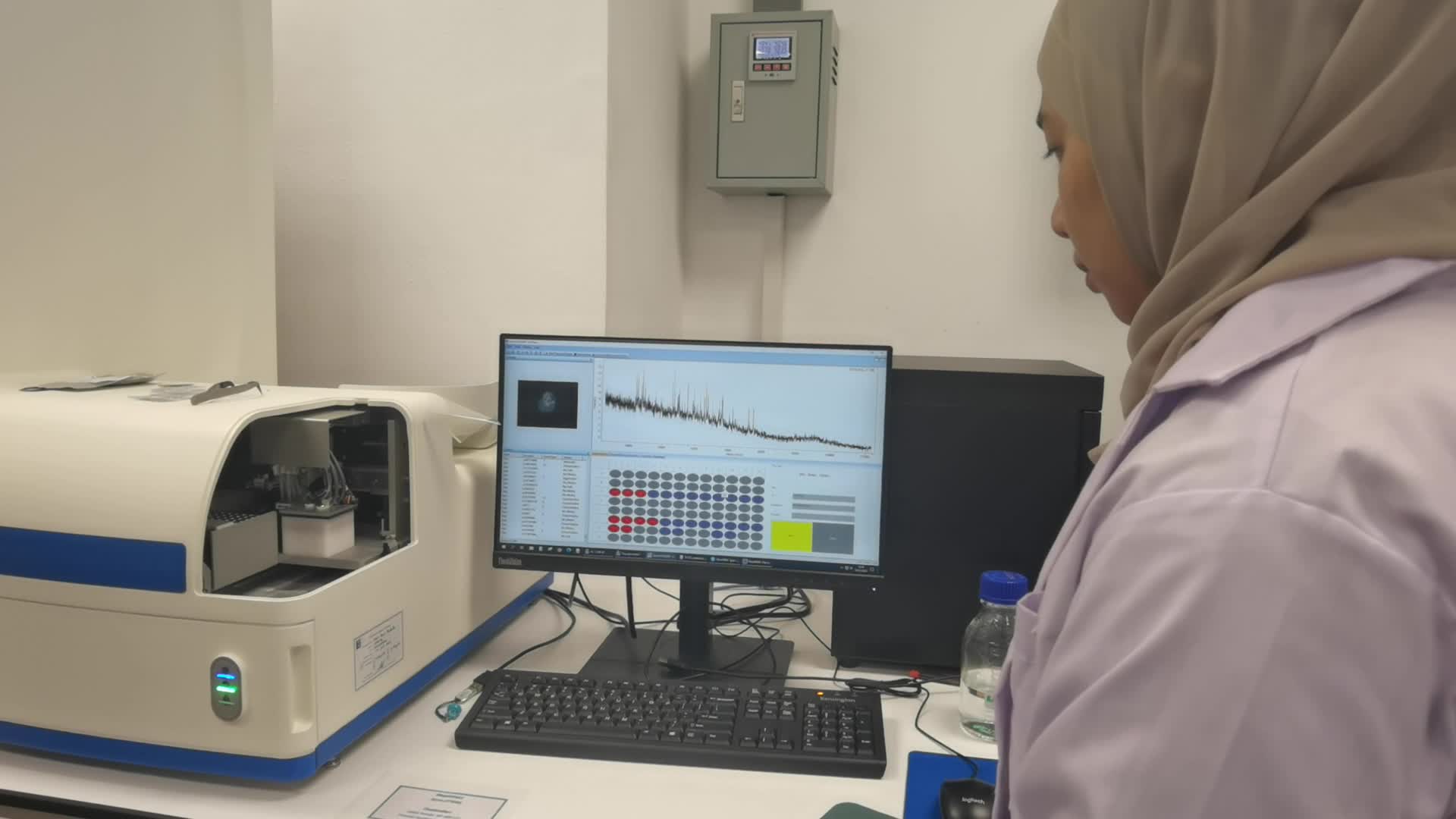
Real-time results (video) and the instrument used for the experiment (picture).
Protocol references
1. Htet S, Zannah M, Moe TH, Wongveerakul P, Charoenpanich N, Saengsirisuwan V, et al. The speed-gene study: methods, study design and preliminary results. BMC Res Notes. 2023;16: 345. doi:10.1186/s13104-023-06617-3
2. Thompson JD, Higgins DG, Gibson TJ. CLUSTAL W: improving the sensitivity of progressive multiple sequence alignment through sequence weighting, position-specific gap penalties and weight matrix choice. Nucleic Acids Res. 1994;22: 4673–4680. doi:10.1093/nar/22.22.4673
3. Millis MP. Medium-throughput SNP genotyping using mass spectrometry: multiplex SNP genotyping using the iPLEX® Gold assay. Methods Mol Biol. 2011;700: 61–76. doi:10.1007/978-1-61737-954-3_5
4. Bradić M, Costa J, Chelo IM. Genotyping with Sequenom. Methods Mol Biol. 2011;772: 193–210. doi:10.1007/978-1-61779-228-1_11