Jul 23, 2016
Lysogeny Broth (LB)
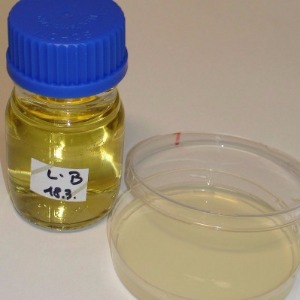
- Steven Burgess1
- 1University of Cambridge



Protocol Citation: Steven Burgess 2016. Lysogeny Broth (LB). protocols.io https://dx.doi.org/10.17504/protocols.io.fcrbiv6
License: This is an open access protocol distributed under the terms of the Creative Commons Attribution License, which permits unrestricted use, distribution, and reproduction in any medium, provided the original author and source are credited
Protocol status: Working
Created: July 21, 2016
Last Modified: March 10, 2018
Protocol Integer ID: 3185
Keywords: lysogeny broth, lb media formulation, use of lb medium, formula of the lb medium, several common formulations of lb, helpful for bacterial growth, molecular microbiologyapplications for the preparation, luria broth, cultivating laboratory recombinant, lennox broth, bacterial growth, abbreviation lb, laboratory recombinant, lysogeny, molecular microbiologyapplication, growing bacteria, isolation of the phages p1, growth of bacteria, lb medium, shigella growth, bacteria, phages p1, lb, protein, recombinant protein, industry standard for the cultivation, essential amino acid, bertani medium, plethora of organic compound, plasmid dna
Abstract
Lysogeny broth (LB), a nutritionally rich medium, is primarily used for the growth of bacteria. The initialism is also commonly, albeit incorrectly, taken to mean Luria broth, Lennox broth, or Luria-Bertani medium. According to its creator Giuseppe Bertani, the abbreviation LB was actually intended to stand for lysogeny broth.[1] The formula of the LB medium was published in 1951 in the first paper of Bertani on lysogeny. In this article he described the modified single-burst experiment and the isolation of the phages P1, P2, and P3. He had developed the LB medium to optimize Shigella growth and plaque formation.[1][2]
LB media formulations have been an industry standard for the cultivation of Escherichia coli as far back as the 1950s.[3][4][5][6][7] These media have been widely used in molecular microbiologyapplications for the preparation of plasmid DNA and recombinant proteins. It continues to be one of the most common media used for maintaining and cultivating laboratory recombinant strains ofEscherichia coli.[8] For physiological studies however, the use of LB medium is to be discouraged.[9]
There are several common formulations of LB. Although they are different, they generally share a somewhat similar composition of ingredients used to promote growth, including the following:
- Vitamins (including B vitamins)
- Trace elements (e.g. nitrogen, sulfur, magnesium)
- Minerals
Peptides and peptones are provided by tryptone. Vitamins and certain trace elements are provided by yeast extract. Sodium ions for transport and osmotic balance are provided by sodium chloride. Tryptone is used to provide essential amino acids to the growing bacteria, while the yeast extract is used to provide a plethora of organic compounds helpful for bacterial growth.
In his original 1951 paper, Bertani used 10 grams of NaCl and 1 gram of glucose per 1 L of solution; Luria in his 'L broth' of 1957 copied Bertani's original recipe exactly.[6] Recipes published later have typically left out the glucose.
From Wikipeida https://en.wikipedia.org/wiki/Lysogeny_broth
Troubleshooting
Tryptone
10 µL
Yeast Extract
5 µL
NaCl
10 µL
Distilled H2O
1 µL
Note
Add up to 1L
Autoclave.
Note
For LB agar add 1.5% (w/v) agar